
Plants
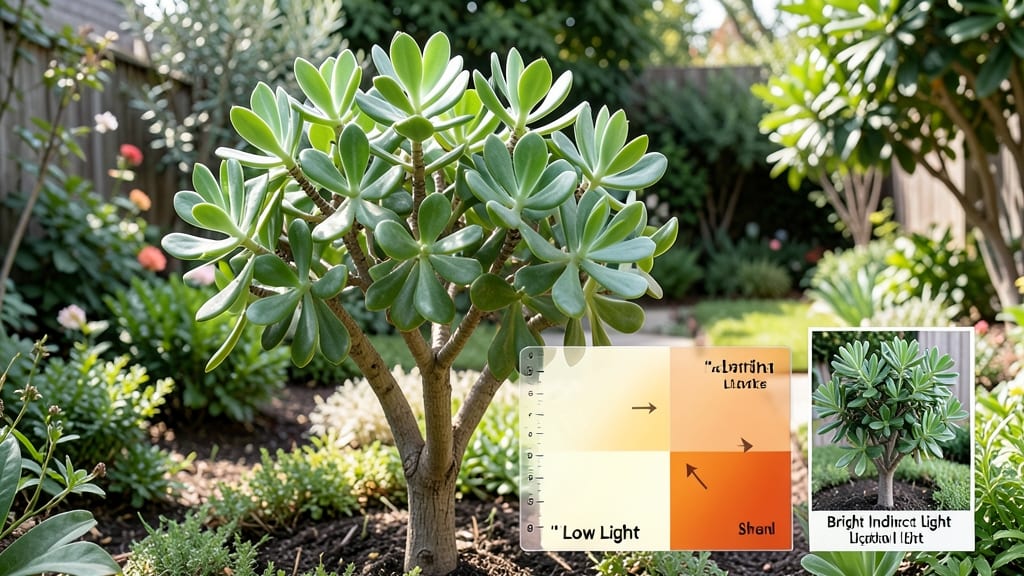
To keep your Jade Plant 🌿 thriving, you might be surprised by how much light this plant actually requires—and getting it wrong can mean the difference between lush green leaves and sad, stretched stems.
Most people assume these succulents love scorching sun, but the truth is, too much direct light can scorch their delicate leaves, while too little leaves them looking weak and leggy.
The sweet spot? Bright, indirect sunlight for 4-6 hours daily, with a few key adjustments depending on whether you're growing it indoors or outdoors.
In this guide, I’ll break down exactly how to spot the perfect light conditions for your Jade Plant, plus what to do when things go wrong. Whether your plant is wilting in a dim corner or turning crispy near a sunny window, you’ll learn how to fix it fast.
Ready to give your Jade Plant the ideal glow? Let’s dive into the light secrets that’ll have it looking its best in no time.
 Best Window Placement
Ideal light requirements for jade plants: bright indirect sunlight explained
Jade plants (Crassula ovata) thrive under bright indirect sunlight, but their light needs often confuse new plant parents. Unlike sun-loving succulents, jade plants balance photosynthesis efficiency with leaf protection—too little light causes stretching, while too much causes sunburn.
Understanding this delicate balance is key to keeping your plant lush and healthy.
Jade plants naturally grow in southwestern Africa, where they adapt to filtered sunlight under shrubs. This means they prefer morning sun (when UV rays are less intense) and afternoon shade. Mimicking these conditions indoors or outdoors ensures optimal growth without stressing the plant.
The ideal light spectrum for jade plants falls between 4,000–6,000 lux, which is roughly the light intensity of a brightly lit office or a south-facing window with sheer curtains. Direct midday sun (especially in summer) can exceed 10,000 lux, which is too harsh for their tender leaves.
Here’s a quick breakdown of how much light your jade plant needs based on its environment:
If your jade plant is placed in a south-facing window, it’s critical to use a sheer curtain to diffuse the light. Without protection, leaves can develop brown, crispy patches—a clear sign of sunburn.
I’ve seen this happen when moving a jade plant from an east-facing window to a south-facing one without adjusting for the stronger afternoon sun.
For indoor growers, positioning your jade plant 2–3 feet away from an east or west-facing window provides the perfect balance. East-facing windows offer gentle morning light, while west-facing windows provide warmer afternoon light without the intensity of midday sun.
Rotate your plant quarter-turns every 2–3 weeks to ensure even growth and prevent leaning toward the light source.
Outdoor jade plants can handle partial shade in hot climates, but they still need at least 2–4 hours of morning sun to thrive. In cooler climates, they can tolerate more direct sunlight, especially during spring and fall.
Always acclimate potted jade plants gradually to outdoor conditions to avoid shock from sudden light changes.
Watch for these visual cues to adjust light exposure:
- Etiolated stems (long, weak stems) = Too little light
- Brown patches or crispy edges = Too much direct sun
- Pale or yellowing leaves = Insufficient light or overwatering
- Compact, glossy leaves = Perfect light balance 🌿
Jade plants are succulents, meaning they store water in their leaves and stems. This adaptation allows them to photosynthesize efficiently even in lower light conditions compared to tropical plants.
However, their chlorophyll production peaks under bright indirect light, which is why they develop their signature rich green color and thick, plump leaves when conditions are ideal.
Pro tip: If your home lacks natural light, consider a grow light with a full-spectrum LED bulb (10,000–12,000K color temperature). Place it 6–12 inches above the plant and provide 12–14 hours of light per day to mimic natural conditions.
This setup works wonders for jade plants in north-facing apartments or basements.
How to adjust light for jade plants in different environments: indoor vs. outdoor solutions
Jade plants (Crassula ovata) are famously low-maintenance, but their light requirements can make or break their health. In indoor environments, they thrive near east or west-facing windows where they get bright indirect sunlight for 4–6 hours daily.
Without adjustments, they’ll stretch toward light or develop weak, leggy stems. Outdoors, they need partial shade in hot climates to avoid sunburn, while cooler regions can handle morning sun exposure.
Your jade plant’s location determines how you’ll adjust its light. Apartment dwellers often rely on grow lights or window placement, while greenhouse growers balance natural light with shade cloths. Even outdoor plants need seasonal tweaks—summer shade and winter sun protection are key.
Let’s break down how to optimize light for every setting, so your jade plant stays lush and vibrant year-round.
Natural vs. Artificial Light for Jade Plants
| Light Source | Pros | Cons |
|---|---|---|
| Natural Light (East/West Window) | Free, promotes natural growth, mimics outdoor conditions | Limited in north-facing rooms, risk of overheating in south windows |
| Artificial Grow Lights (LED/Florescent) | Controlled intensity, works in low-light spaces, year-round consistency | Initial cost, requires 12–16 hours/day, may not replicate full-spectrum sunlight |
| Outdoor Partial Shade | Encourages bushier growth, natural airflow, minimal maintenance | Vulnerable to pests, seasonal light variations, risk of sunburn in peak hours |
💡 Pro Tip: For indoor grow lights, use full-spectrum LEDs 6–8 inches above the plant for 12–14 hours/day to mimic natural light cycles.
If your jade plant lives indoors, start by placing it 2–3 feet from an east or west window. South-facing windows can work, but use a sheer curtain to filter harsh afternoon rays.
In low-light apartments, supplement with a 15W LED grow light on a timer. Rotate your plant quarter-turn weekly to prevent uneven growth toward the light source—a common issue in indoor setups.
Outdoor jade plants need morning sun and afternoon shade, especially in hot climates like USDA Zone 9–11. Use 50% shade cloth during peak summer hours (11 AM–3 PM) to protect leaves from sunburn.
In cooler zones (Zone 6–8), they can handle full morning sun but may need winter protection from frost. Always monitor leaf color—reddish hues signal too much sun, while pale green means more light is needed.
Seasonal adjustments are critical. During winter months, move indoor jade plants closer to windows or extend grow light hours to 14–16 hours/day to compensate for shorter daylight. In summer, outdoor plants may need daily watering (despite their drought tolerance) to cool roots and prevent stress from intense light.
Pro tip: Mist leaves lightly in summer to replicate humidity levels they’d experience under partial shade.
For greenhouse growers, balance natural light with ventilation to avoid overheating. Place jade plants on elevated shelves near north-facing windows for diffused light, or use reflective surfaces (like white walls) to maximize brightness.
If using supplemental lights, opt for cool-white LEDs, which mimic natural light spectra better than warm tones. Always pair light adjustments with well-draining soil—jade plants are succulents and root rot from overwatering is a faster killer than light issues.
Remember, jade plants are flexible but not forgiving. If you notice stretched stems or yellowing leaves, it’s a cry for more light. Conversely, crispy edges or white patches mean too much direct sun. Tweak their environment gradually—sudden changes can shock even the hardiest succulent.
With the right light balance, your jade plant will reward you with thick, glossy leaves and a sturdy, tree-like form for years to come. 🌿