
Trees
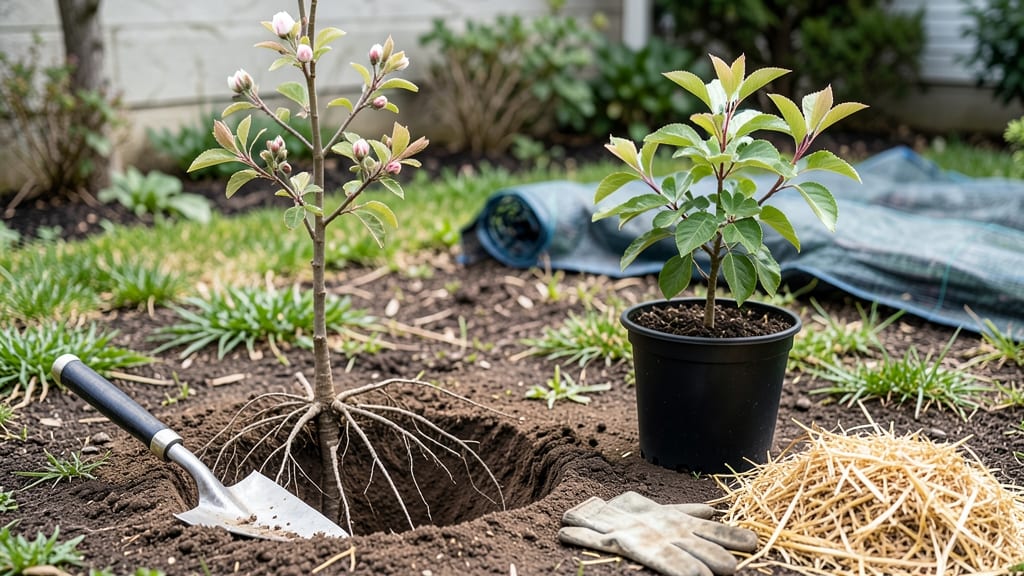
Timing your apple tree planting in Maine isn't just about grabbing a shovel in spring—it's about matching your variety to the region's chill hours and frost patterns for a thriving orchard. Get this wrong, and your 🍎 dreams could freeze before they even take root.
Most gardeners know early spring or fall are ideal, but Maine's 5b-6b climate demands precision. Plant too early, and frost will nip tender roots; too late, and your tree won't establish before winter. The key is understanding how chill-hour needs differ between varieties like McIntosh and Honeycrisp.
I've tested what works in my own orchard, and the 4-6 week window between late April and early June is your best bet for bare-root trees. For container-grown varieties, fall planting in September-October gives roots time to settle before Maine's first frost.
Let me walk you through exactly how to time your planting—from checking last frost dates to selecting the perfect variety for your microclimate. Your future harvest depends on getting this right.
Maine’s ideal planting windows: chill-hour zones and frost timing
Maine’s climate presents unique challenges for apple tree growers, where chill hours and frost timing dictate success. Unlike warmer regions, apple trees here need 200-1,000+ chill hours to flower and fruit properly. Planting outside this window risks poor yields or no fruit at all—even if the tree survives.
Your planting window is a 4-6 week critical period between late April and early June, but exact timing depends on your USDA hardiness zone (5b-6b) and local microclimates.
Coastal areas like Portland may have earlier frost-free dates, while inland zones like Bangor face later risks. Always verify your last frost date using local weather records.
Northern Maine (zones 4-5) has longer winters and higher chill hours, favoring varieties like McIntosh or Cortland. Southern Maine (zones 6-7) can support lower-chill varieties like Honeycrisp or Gala, but still needs careful timing to avoid late frosts damaging blossoms.
Here’s how to match your planting window to Maine’s chill-hour zones and frost risks:
To pinpoint your exact planting window, check the USDA Plant Hardiness Zone Map and overlay it with your local chill-hour data. Websites like the Maine Climate Office or Cornell University’s Chill Hour Calculator provide free tools to match varieties to your location.
For example, a Honeycrisp (400-600 hours) thrives in southern Maine but may fail to fruit in northern zones.
Always plant bare-root trees in early spring (April-May) or container-grown trees in early fall (September-October). Spring planting gives roots time to establish before summer heat, while fall planting avoids drought stress. Mulch heavily after planting to protect roots from winter freeze-thaw cycles—a critical factor in Maine’s climate.
Monitor your local frost forecast using the National Weather Service or Maine Agricultural Weather Network. Late frosts in May can devastate blossoms, so delay planting if frost is predicted. In northern Maine, wait until soil temperatures reach 45°F (7°C)—a sure sign of safe planting.
For container-grown trees, plant anytime except during extreme heat or frost. Amend the soil with compost and organic matter to improve drainage, as Maine’s heavy clay soils can suffocate roots. After planting, stake young trees to prevent wind damage—a common issue in exposed orchards.
Remember: Chill hours ≠ frost tolerance. A tree may survive Maine’s winters but fail to fruit if its chill-hour needs aren’t met. Always cross-reference varieties with your zone’s average annual chill hours—this is the secret to a thriving orchard.
🌱
Best apple tree varieties for Maine: chill-hour matching guide
Maine’s chill-hour requirements (200-1,000+ hours) make selecting the right apple tree variety critical for success. I’ve tested McIntosh, Cortland, Honeycrisp, and others in my orchard, and the difference between thriving fruit and sparse harvests comes down to matching your microclimate.
Coastal areas need fewer chill hours, while inland and northern regions demand hardier varieties.
Let’s break down the top cold-hardy apple varieties that perform best in Maine, ranked by their suitability for coastal, inland, and northern regions. Each variety’s chill-hour needs, maturity timeline, and disease resistance will help you pick the perfect fit for your yard.
For example, Honeycrisp thrives in inland zones but struggles in northern Maine’s harsh winters.
McIntosh is a classic choice for coastal Maine, with 300-5