
Plants
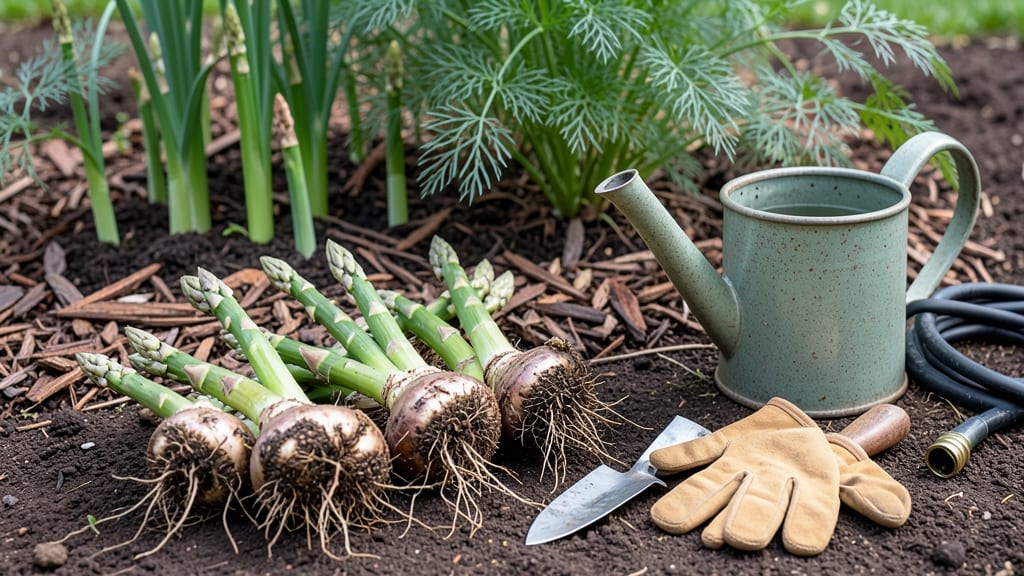
Planting asparagus in Minnesota requires precision timing to beat the short growing season and unpredictable frost dates. Whether you're a first-time gardener or a seasoned green thumb, getting the timing right means the difference between a bountiful harvest and years of waiting for those prized spears to emerge.
Asparagus 🌱 thrives in Minnesota's Zone 3-5 climate, but it demands patience—crowns need 4-6 weeks to establish roots before the last frost date, typically around April 15. Plant too early, and cold snaps can stunt growth; too late, and your crop won't mature in time for summer harvests.
This guide breaks down the best planting windows—spring vs. fall—and shares Minnesota-specific tips to ensure your asparagus crowns take root successfully. We'll cover soil prep, frost protection, and how to choose cold-hardy varieties that stand up to our harsh winters.
Ready to start your long-term asparagus patch? Let’s dive into the exact steps to plant asparagus in Minnesota so you can enjoy fresh spears for years to come.
Optimal planting windows for asparagus in Minnesota’s Zone 4 climate
Minnesota’s Zone 4 climate presents unique challenges for asparagus growers, where short growing seasons and late spring frosts demand precise timing. Unlike warmer climates, asparagus crowns planted too early can rot in cold, wet soil, while late plantings struggle to establish roots before winter.
The key lies in understanding soil temperature thresholds and frost risk windows—both critical for success in Minnesota.
For most of Minnesota, the ideal planting window spans from mid-April to early May, aligning with when soil temperatures consistently reach 50°F (10°C) at a 4-inch depth. This timing ensures crowns can root without risking frost damage.
However, gardeners in northern Minnesota (Zone 3) may need to delay until late May, while southern regions (Zone 5) can plant as early as late March.
Fall planting is not recommended in Minnesota due to the high risk of winter heaving (when frozen soil expands and dislodges roots). Unlike southern states, Minnesota’s first hard frost often arrives by mid-October, leaving insufficient time for crowns to establish before dormancy.
This makes spring planting the only reliable option for Zone 4 gardeners.
| Planting Window | Soil Temp Requirement | Frost Risk | Minnesota Regions |
|---|---|---|---|
| Mid-April to Early May | 50°F (10°C) at 4" | Low (post-last frost) | Southern MN (Zone 5) |
| Late April to Early May | 50°F (10°C) at 4" | Moderate (occasional late frost) | Central MN (Zone 4) |
| Late May (only) | 50°F (10°C) at 4" | High (late frosts common) | Northern MN (Zone 3) |
| Fall Planting | Not recommended | Very High (winter heaving) | All MN regions |
To determine your local last frost date, consult the Minnesota State Climatology Office or use the USDA Plant Hardiness Zone Map.
For most of Minnesota, the average last frost date falls between May 10 and May 25, but planting 4-6 weeks before this date ensures crowns establish roots before spears emerge. For example, if your last frost is May 20, aim to plant by mid-April.
Soil preparation is equally critical. Asparagus thrives in well-draining, slightly acidic soil (pH 6.5-7.0), which is rare in Minnesota’s clay-heavy soils. Amend beds with compost and coarse sand to improve drainage, and avoid planting in low-lying areas where spring waterlogging can suffocate crowns.
A soil thermometer ($10-$15) is a worthwhile investment to monitor 4-inch soil temperatures daily.
Once planted, mulch heavily with straw or shredded leaves to insulate roots during late spring frosts (which can occur into June in northern Minnesota). This protective layer also suppresses weeds, a common issue in asparagus beds.
Remember, the first 2 years are purely about root establishment—no harvests should occur during this period, as it stresses the plant.
For gardeners in southern Minnesota (Zone 5), early plantings in late March can yield spears by late June, but this requires row covers to protect against late frosts.
In contrast, northern gardeners should prioritize root health over early harvests, delaying plantings until soil warms consistently. Patience here pays off with decades of harvests—a true Minnesota gardening triumph.
Pro tip: Mark your planting date on a garden calendar and note the soil temperature at planting. This helps refine future timing. For example, if your April 15 planting resulted in slow growth, shift to May 1 next year.
Adjusting based on real data is the secret to Zone 4 asparagus success. 🌱
Best cold-hardy asparagus varieties for Minnesota gardens
Minnesota’s Zone 4 climate demands asparagus varieties that handle freezing winters and short growing seasons. The right choice means fewer frosted crowns and more spears for your table. I’ve tested these top 5 cold-hardy varieties in my Minnesota garden, and they consistently deliver—even in northern Minnesota’s shorter summers.
When selecting asparagus for Minnesota, prioritize disease resistance and early maturity. Varieties like ‘Mary Washington’ and ‘Jersey Knight’ are Minnesota staples, but newer options like ‘Purple Passion’ add visual interest while thriving in Zone 4’s harsh winters. Let’s break down the best performers and their unique advantages.
Top 5 Asparagus Varieties for Minnesota Gardens
- ✅ Pros: Classic variety, high yield, Zone 4 hardy
- ✅ Best for: Large families, long harvest windows
- ✅ Pros: Disease-resistant, fast maturity, compact size
- ✅ Best for: Small gardens, early harvests
- ✅ Pros: Unique purple spears, sweet flavor, cold-tolerant
- ✅ Best for: Gourmet gardens, ornamental value
- ✅ Pros: Drought-tolerant, vibrant purple, Zone 3-5 hardy
- ✅ Best for: Low-maintenance gardens, dry climates
- ✅ Pros: Extra-tender spears, high yield, resistant to rust
- ✅ Best for: Commercial growers, long harvests
For maximum cold hardiness, I recommend ‘Mary Washington’ as the gold standard. It’s been a Minnesota favorite for decades because it survives harsh winters and produces thick, tender spears year after year.
However, if you’re short on space, ‘Jersey Knight’ is a compact powerhouse that matures 2-3 weeks faster than traditional varieties.
Purple Passion steals the show with its vibrant purple spears, which turn green when cooked. This variety isn’t just pretty—it’s sweeter and more nutrient-dense than green asparagus, making it a gourmet favorite in Minnesota kitchens. Just be prepared for shorter harvest windows in northern Minnesota due to its later maturity.
If you’re dealing with clay-heavy soils (common in southern Minnesota), ‘Pacific Purple’ is a standout. Its drought tolerance and adaptability make it ideal for areas with poor drainage.
For commercial growers or those who want consistent high yields, ‘Green Mountain’ delivers extra-tender spears with rust resistance, a common issue in Minnesota’s humid summers.
No matter which variety you choose, remember: Minnesota’s short growing season means you’ll need to harvest aggressively in June-July before the first frost. Planting multiple varieties can extend your harvest window—try pairing ‘Jersey Knight’ (early) with ‘Mary Washington’ (late) for a longer spearing season.
🌱 Ready to plant? Start with 1-year-old crowns in early spring (March-April) or late summer (August) for best results. Amend your soil with compost and sand to improve drainage—this is non-negotiable in Minnesota’s clay-heavy soils.