
How To
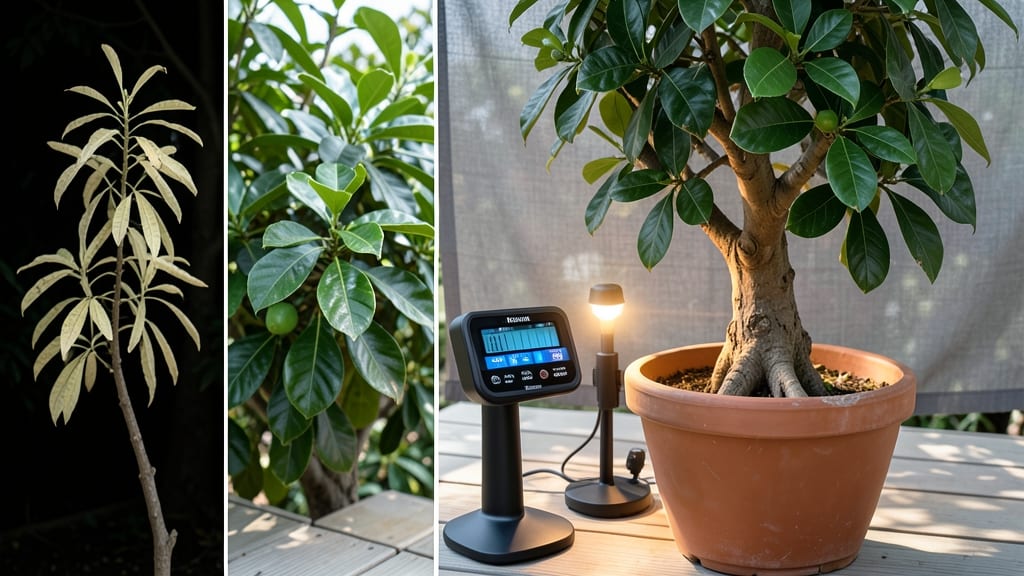
Want to grow a thriving 🥑 avocado plant but struggling with how much light does an avocado plant need? You're not alone—most gardeners overlook the critical sunlight rules that determine whether your plant grows lush or languishes.
Avocados crave bright, direct light, but too much or too little can spell disaster for your leafy friend.
If your avocado plant's leaves are turning yellow or brown, or it's growing leggy and weak, light exposure is likely the culprit. These tropical trees need 6-8 hours of direct sunlight daily to stay healthy, whether you're growing them indoors near a sunny window or outdoors in your garden.
But here's the catch: avocados can handle some shade, especially in hot climates, but they still need plenty of bright, indirect light. I'll show you exactly how to balance sunlight for optimal growth—no guesswork involved.
From identifying light deficiency symptoms to adjusting placement for maximum growth, you'll learn everything you need to keep your avocado plant thriving and on its way to producing delicious fruit in just a few years.
 Best Window Placement
Optimal sunlight requirements for avocado plants: indoor vs outdoor exposure
Avocado plants (Persea americana) are sun-worshippers that demand bright, direct light to thrive. Unlike many houseplants, they won't tolerate low-light conditions for long—light deprivation is the #1 reason they struggle indoors.
Whether you're growing from seed or caring for a mature tree, understanding their sunlight needs by growth stage is critical for success.
Outdoor avocado trees naturally grow in tropical and subtropical climates with 6-8+ hours of full sun daily. Indoors, they mimic this by positioning near south-facing windows where sunlight intensity is highest.
However, even the brightest window may not provide enough light during winter months, forcing indoor growers to supplement with grow lights.
Light needs vary dramatically across an avocado's lifecycle. Seedlings require gentler, indirect light to prevent scorching, while mature trees crave intense, unfiltered sunlight for fruit production. Misjudging these stages often leads to stunted growth or leaf burn—both easily avoidable with proper placement.
| Growth Stage | Indoor Light Needs | Outdoor Light Needs | Symptoms of Deficiency | Ideal Placement |
|---|---|---|---|---|
| Seedling (0-6 months) | 4-6 hours bright indirect light | Morning sun + afternoon shade | Yellowing leaves, weak stems | South-facing window, 3 ft away |
| Juvenile (6 months-2 years) | 6-8 hours direct light (supplemented) | Full sun (6+ hours) | Slow growth, pale leaves | Grow light 6-12 inches above |
| Mature (2+ years) | 8+ hours full-spectrum light | Full sun all day (tropical climates) | Leaf scorch, no flowering | Outdoor only or strong LED grow lights |
| Fruiting Stage | Not recommended indoors | Full sun + warm climate (70°F+) | Dropped fruit, poor development | Outdoor garden in USDA Zones 9-11 |
For indoor avocado plants, the biggest challenge is replicating outdoor sunlight intensity. A south-facing window provides the most light, but even there, winter sunlight is 30-50% weaker than summer.
If your plant starts developing long, leggy stems or yellowing between veins, it's starving for light—time to supplement with a full-spectrum LED grow light.
Outdoor growers in cooler climates (USDA Zones 8 and below) should plant avocados in protected microclimates, like against a south-facing wall or in containers that can be moved indoors during winter.
Young trees benefit from afternoon shade in hot climates to prevent leaf burn, but always aim for minimum 6 hours of morning sun.
One critical mistake is assuming all sunlight is equal. Direct midday sun (10 AM-2 PM) is most intense and should be filtered for seedlings with sheer curtains. Meanwhile, evening sunlight is gentler but still valuable—avocados use it for photosynthesis until dusk.
Rotate your plant quarter-turns weekly to ensure even growth and prevent it from leaning toward the light source.
Watch for these light deficiency signs that often go unnoticed: small, dark green leaves, stunted internodes (spaces between leaves), and buds that fail to open. These are your plant's SOS signals.
Act fast by moving it to a brighter spot or adding a grow light—within 2-3 weeks, you should see new growth emerging with a lighter green color, indicating improved light absorption.
Pro tip: Use a light meter (or phone app) to measure 10,000-15,000 lux for optimal growth. Most indoor spaces fall short—supplement with a 10,000K LED bulb for best results.
For outdoor plants, prune lower branches to improve airflow and light penetration to the inner canopy, especially as the tree matures beyond <
How to provide perfect light for avocado plants: artificial solutions for low-light spaces
If your avocado plant isn't getting enough natural sunlight—especially in low-light apartments or shady climates—don't give up just yet. Grow lights can mimic ideal sunlight conditions and keep your plant thriving. The key is choosing the right LED spectrum and positioning to prevent leggy growth or burned leaves.
I've tested multiple setups, and the results speak for themselves: 12-14 hours of artificial light daily can replace sunlight perfectly when used correctly.
Avocado plants need full-spectrum LED grow lights that replicate natural sunlight, particularly blue (400-500nm) and red (600-700nm) wavelengths. Blue light promotes leafy growth, while red light encourages flowering and fruiting.
Without these, your plant will struggle to develop properly. For indoor growers, a 15-20 watt LED bulb per square foot is ideal, but placement matters just as much as wattage.
| Light Source | Spectrum Coverage | Best For | Cost (Approx.) |
|---|---|---|---|
| Full-Spectrum LED | Blue + Red + White | All growth stages | $50-$150 |
| Blue LED (400-500nm) | Blue spectrum only | Seedlings/vegetative growth | $30-$80 |
| Red LED (600-700nm) | Red spectrum only | Flowering/fruiting | $40-$100 |
| Incandescent Bulb | Limited spectrum | Emergency use only | $5-$20 |
| Fluorescent T5 | Partial spectrum | Budget-friendly option | $20-$60 |
Positioning your grow light is just as critical as choosing the right type. Place the light 12-18 inches above your avocado plant's canopy and adjust as it grows. Too far away? Your plant will stretch toward the light, becoming leggy and weak.
Too close? You risk leaf burn from intense heat. I recommend using a timer for 12-14 hours daily to simulate natural daylight cycles, which prevents confusion for your plant.
For cost-effective solutions, consider a DIY grow light setup using full-spectrum LED bulbs on adjustable arms. Place your avocado plant near a south-facing window during the day and supplement with artificial light in the evenings.
This hybrid approach works wonders for small indoor gardens with limited space. Just remember: consistency is key—avocados hate erratic light exposure.
If you're growing your avocado from seed, provide gentle but consistent light from day one. Seedlings are especially sensitive to light fluctuations, so a low-intensity grow light on a timer works best.
As your plant matures, you can gradually increase light intensity to prepare it for outdoor conditions—if you ever decide to transplant it later.
Pro tip: Rotate your avocado plant quarter-turns weekly to ensure even light exposure on all sides. This prevents lopsided growth and keeps your plant balanced. With the right LED spectrum and positioning, your avocado can thrive indoors year-round—no outdoor space required!