
Plants
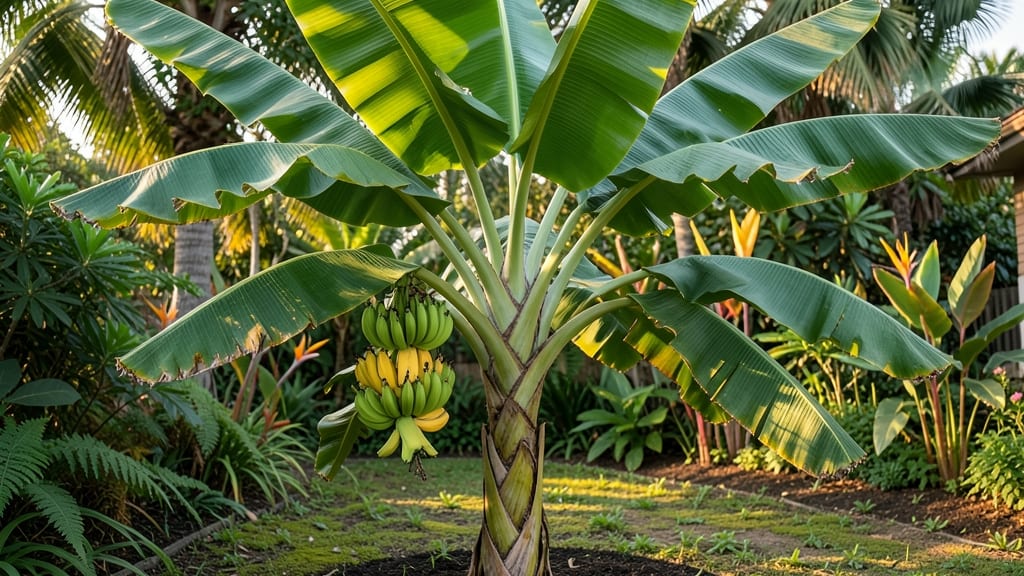
If you’ve ever wondered just how tall a banana plant can grow—think taller than your two-story house—you’re about to get the full picture.
These tropical giants, like the 🍌 Musa spp. varieties thriving in zones 10-12, can stretch anywhere from 15 to 25 feet, depending on the type and care you provide.
But here’s the catch: not all banana plants are created equal. Some dwarf varieties stay compact at just 8-12 feet, making them perfect for containers or small gardens, while standard types can soar to 20+ feet in ideal conditions.
The key? Sunlight, soil, and a little patience—because these plants don’t rush to reach their full height.
If you’re dreaming of homegrown bananas but worried about space, don’t sweat it. I’ll break down the best varieties for tight spots and how to keep them thriving—whether you’re in a frost-free paradise or a cooler climate with a little extra protection.
Let’s dig into the details so you can grow the perfect 🍌 banana plant for your space.
You’ll discover how to maximize height (or keep it manageable), the fastest-growing varieties, and pro tips for spacing, pruning, and care that make all the difference. Ready to turn your backyard—or even a big pot—into a banana paradise?


Banana plant height by variety: from dwarf to giant species
Banana plants are famous for their dramatic growth, but not all varieties reach the same towering heights. Some stay compact enough for containers, while others become architectural giants that need serious space.
The Musa genus includes dwarf varieties that top out at 8 feet and giant cooking bananas that can dwarf your two-story home at 25 feet tall. Your choice of variety determines whether you’ll need a jungle-like backyard or just a large pot on your patio.
Understanding these height differences helps you select the perfect banana for your space. Dwarf varieties like Musa acuminata 'Dwarf Cavendish' are ideal for urban gardens, while standard dessert bananas like Grand Nain need more room.
Even within categories, growth habits vary—some plants grow vertically like trees, while others spread wider. Let’s break down the exact mature heights you can expect from popular varieties and how to support them.
🌱 Pro Tip: Always check your local USDA hardiness zone (10-12 ideal) before planting, as cooler climates may stunt growth or require container culture for winter protection.
| Variety | Type | Mature Height | Best For | Growing Conditions |
|---|---|---|---|---|
| Musa acuminata 'Dwarf Cavendish' | Dwarf Dessert | 8–12 ft | Containers, small gardens | Full sun, well-draining soil |
| Musa velutina 'Ice Cream' | Dwarf Ornamental | 6–10 ft | Patios, tropical accents | Partial shade, humidity |
| Musa balbisiana 'Red Dacca' | Semi-Dwarf Cooking | 12–18 ft | Large gardens, rural areas | Full sun, rich soil |
| Musa acuminata 'Grand Nain' | Standard Dessert | 15–20 ft | Backyards, tropical climates | Warmth, consistent moisture |
| Musa × paradisiaca 'Gros Michel' | Giant Cooking | 20–25 ft | Commercial farms, large estates | Tropical heat, deep soil |
| Musa acuminata 'Lady Finger' | Mini Dessert | 5–8 ft | Containers, balconies | Bright indirect light |
If you’re growing bananas in containers, even the tallest varieties can be managed with proper support. Use sturdy bamboo stakes or trellis systems to guide growth vertically, preventing the pseudo-stem from flopping over.
For dwarf varieties, a 15-gallon pot is often sufficient, while standard dessert bananas may need 200+ gallons of soil to thrive.
Soil quality plays a huge role in height potential. Banana plants thrive in well-draining, slightly acidic soil (pH 5.5–7.0) rich in organic matter. Amend heavy clay with compost or coconut coir to improve aeration, which encourages stronger stem development.
Without proper nutrients, even giant varieties may stay shorter than expected, producing smaller fruit clusters.
💡 Key Insight: The first year of growth focuses on building the pseudo-stem, while the second year is when you’ll see rapid height increases and flowering. Patience is key—don’t expect fruit until the plant reaches at least half its mature height.
For cooler climates (USDA zones 9–11), consider heat-loving varieties like Musa acuminata 'Ice Cream', which tolerates brief temperature dips better than tropical giants. In containers, you can move plants indoors during winter or use row covers to protect young growth.
Even a 10-foot-tall banana can be enjoyed in a greenhouse or sunroom during colder months.
Whether you’re dreaming of a backyard jungle or just want a few potted bananas for harvests, choosing the right variety ensures your space—and your plants—will thrive. Next, we’ll explore how climate, soil, and care can push your banana plants to their full height potential—or keep them compact for small spaces.
🌿
Factors that influence banana plant height: climate, soil, and care
Banana plants are tropical giants, and their height growth is heavily influenced by their environment. While some varieties can reach 20-25 feet in ideal conditions, others stay compact. The key factors determining their height include climate conditions, soil quality, and care practices like watering and fertilizing.
In warmer climates like USDA Zones 10-12, banana plants thrive and grow taller because they receive consistent warmth and sunlight year-round. However, in cooler zones, you’ll need to adjust your approach to maximize height or choose dwarf varieties that adapt better to limited space.
🌱 Key Takeaway: How Tall Does a Banana Plant Grow?
Sunlight is another critical factor—banana plants need 6-8+ hours of direct sun daily to grow to their full potential. Without enough light, their growth slows, and they may produce fewer or smaller fruit bunches.
If you’re growing bananas in containers, place them in the sunniest spot possible, like near a south-facing window or patio.
Soil quality plays a massive role in how tall your banana plant grows. These plants thrive in well-draining, nutrient-rich soil with a slightly acidic pH (around 6.0-7.5). Amending your soil with compost or organic matter ensures your banana plant gets the nutrients it needs to grow tall and strong.
If your soil is poor, consider planting in raised beds or large containers filled with a mix of potting soil and compost.
Watering habits also impact height—banana plants require consistent moisture but can’t tolerate soggy soil. Overwatering leads to root rot, while underwatering stunts growth. Aim to water deeply every 2-3 days (or daily for container plants) and always in the morning to prevent fungal diseases.
Mulching around the base helps retain moisture and keeps roots cool.
Finally, fertilizing regularly boosts height growth. Use a balanced fertilizer (10-10-10) every 4-6 weeks during the growing season, and add extra nitrogen in spring to encourage rapid stem development. In cooler climates, reduce feeding in fall and winter to match the plant’s slower growth cycle.
With the right conditions, even cooler climates can support banana plants—just choose dwarf varieties or grow them in containers that you can move indoors during winter. The key is mimicking their tropical home with warmth, sunlight, and consistent care. 🌿