
Plants
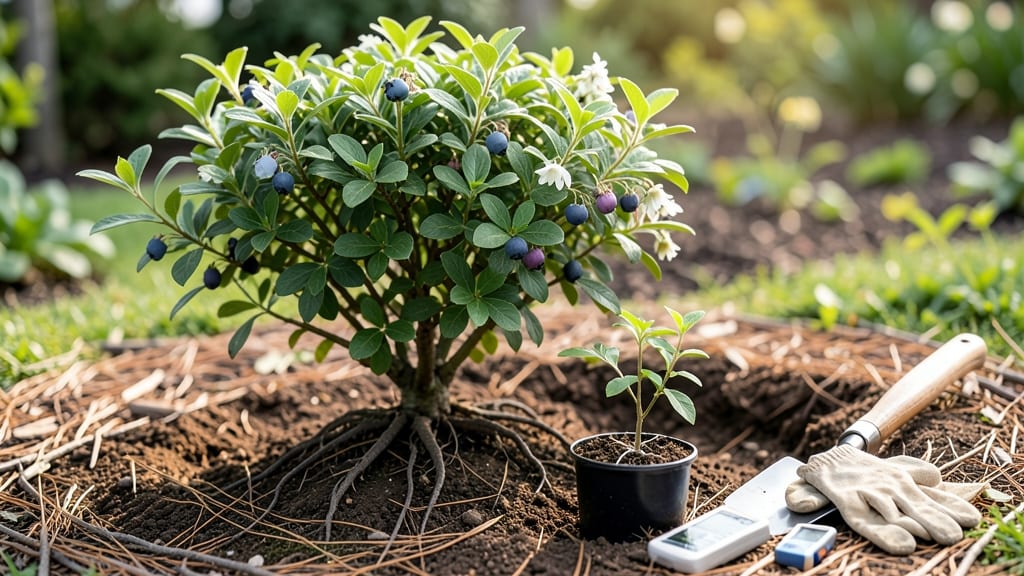
Planting your 🫐 blueberry bush at the wrong time in North Carolina can mean the difference between a thriving harvest and years of disappointment. The key isn’t just picking a season—it’s understanding how your local climate zone (like 6a-8b) interacts with your chosen variety’s chill hour needs.
Most gardeners in NC assume spring is the only option, but fall planting actually gives your bushes a head start by letting roots establish before summer heat stress arrives.
I’ll show you exactly when to plant in your specific region—whether you’re in the mountains or the coastal plains—and how to prep your soil for maximum success.
You’ll also discover how to adjust for your microclimate, from adjusting soil pH to mulching strategies that protect against NC’s humid summers. By the end, you’ll know not just when to plant, but how to set your blueberry bushes up for a bountiful harvest in just a few seasons.
Let’s dive into the best planting windows for your zone—and the simple steps to ensure your bushes thrive year after year.
Best planting months for blueberry bushes in NC based on chill hours
North Carolina’s diverse climate—from the Coastal Plain’s mild winters to the Mountains’ crisp air—means blueberry planting times vary dramatically. The key factor? Chill hours, which determine whether your ‘Duke’ or ‘Premier’ bushes will thrive.
Southern NC varieties need 300–500 chill hours, while Mountain varieties can handle 800–1,000+ hours. Plant at the wrong time, and you’ll risk stunted growth or no fruit at all.
Soil temperature matters just as much as chill hours. Blueberries need 40–50°F soil to root successfully. In Zone 7b–8a (most of NC), this means planting in late winter or fall.
But in the Mountains (Zone 6a), you’ve got a narrower window before spring warmth arrives. Let’s break it down by region to avoid costly mistakes.
⚠️ CRITICAL NOTE: Bare-root bushes must be planted while dormant (no leaves), while container-grown bushes can handle fall or early spring planting. Never plant when soil is frozen or soggy!
In Southern NC (Zones 8a–8b), where winters are short, focus on February–March for bare-root bushes or September–October for container-grown plants. Varieties like ‘Premier’ (500 chill hours) do best here, but avoid planting after March 15—soil warms too quickly, and roots won’t establish before summer heat arrives.
For the Piedmont (Zones 7a–7b), your window is tighter: January–February for bare-root or September for containers. ‘Duke’ (600 chill hours) thrives here, but watch for late frosts in March. If you plant in fall, do it by October 15 to let roots harden off before winter.
The Mountains (Zone 6a) offer the most flexibility due to longer winters. Plant container-grown bushes in October–November or bare-root in March. ‘Jersey’ (900+ chill hours) loves this climate, but avoid spring planting after April 1—frost risk spikes, and young plants can’t handle it.
Pro tip: Check your local frost dates (e.g., March 15 in Raleigh, April 15 in Asheville). Plant 4–6 weeks before the last expected frost for spring planting, or 6–8 weeks before the first frost for fall. Use a soil thermometer—if temps are above 50°F, wait.
One more critical factor: soil pH. Blueberries demand acidic soil (pH 4.5–5.5). Test your soil before planting—if it’s too alkaline, amend with sulfur or peat moss. Skip this step, and your bushes will yellow and drop leaves, no matter how perfect your timing is.
Ready to plant? Grab your gloves and shovel, then dig in! The best time to plant is now—just check your region’s chill hours first to avoid summer stress or winter freeze.
Top 5 blueberry varieties for NC gardens and their ideal planting times
North Carolina gardeners have three main blueberry categories to choose from: Southern highbush, rabbiteye, and half-high varieties. Each thrives in different NC microclimates, from the coastal plains to the mountains.
The best time to plant depends on your variety’s chill hour needs and maturity rate—some produce fruit in just 2 years, while others take 4+ years.
For Southern highbush varieties like ‘Tifblue’, aim for late winter to early spring (February–March) when soil temperatures rise above 50°F.
These varieties handle NC’s humid summers well but need consistent moisture. Rabbiteye types like ‘Powderblue’ prefer fall planting (September–October) to establish roots before winter, while half-high varieties like ‘Bluegem’ offer a middle ground with spring or fall flexibility.
Here’s a quick comparison of the top 5 NC-friendly varieties, their planting windows, and key traits to watch for:
If you’re in NC’s Piedmont region (Zones 7a–7b), ‘Tifblue’ is a top pick for its fast maturity and disease resistance. For coastal areas (Zone 8a–8b), ‘Powderblue’ thrives with fewer chill hours.
Meanwhile, ‘Bluegem’ is ideal for small gardens due to its compact size (4–5 feet tall) and self-pollinating nature.