
Plants
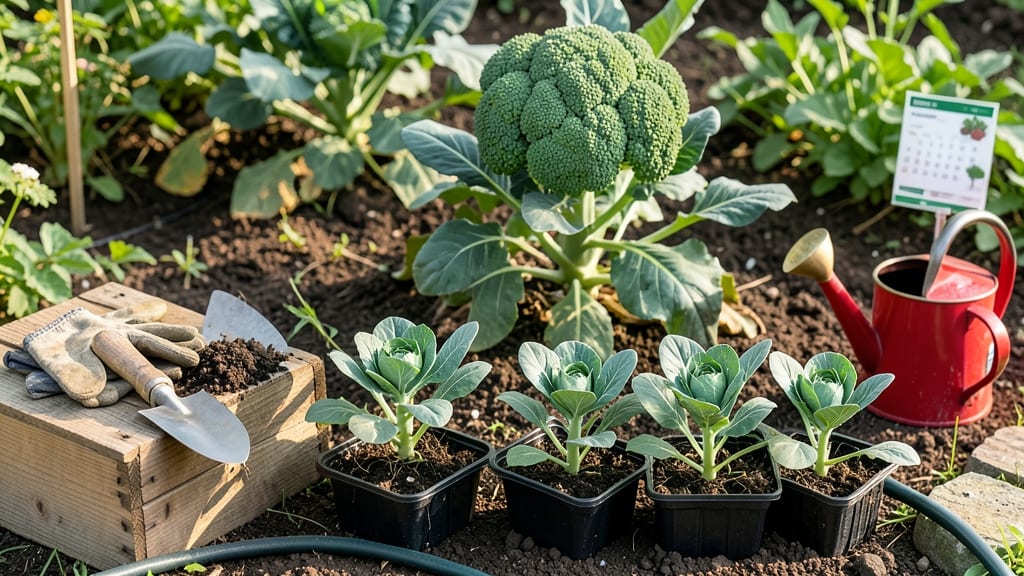
Timing your 🥦 broccoli planting in Indiana isn’t just about the calendar—it’s about outsmarting the region’s unpredictable frost dates and soil shifts that can turn your hard work into bitter disappointment.
With Indiana’s Zone 6a climate, planting too early risks frost damage, while waiting too long may leave you scrambling for fall harvests before the first freeze hits.
I’ve grown broccoli in Indiana for years, and the difference between a thriving garden and a failed one often comes down to those critical 2-3 week windows before your last frost date.
Whether you’re sowing seeds in early spring or planning a fall crop, knowing exactly when to start gives your plants the head start they need to grow strong and flavorful.
In this guide, I’ll walk you through the ideal planting schedule for Indiana—from calculating your frost-free dates to adjusting for microclimates that can vary even within the same county.
You’ll also discover how to extend your harvest season with succession planting, so you’re enjoying fresh broccoli from late spring through crisp fall.
Ready to turn your Indiana garden into a broccoli powerhouse? Let’s dive into the exact steps that’ll have you harvesting bold, healthy heads all season long—no guesswork required.
Best planting windows for broccoli in Indiana’s Zone 5-6 climate
Indiana’s Zone 5-6 climate offers two prime windows for growing broccoli: early spring and late summer. Timing is critical because cold snaps or heat waves can ruin your crop.
For spring plantings, aim for 4-6 weeks before your last frost date, while fall plantings should happen 8-10 weeks before the first frost. Northern Indiana (e.g., Gary, South Bend) has later frost dates than southern regions (e.g., Evansville, Louisville), so adjust accordingly.
Broccoli thrives in cool-season temperatures between 45°F and 75°F. Soil temperatures below 40°F slow germination, while above 80°F causes bolting (premature flowering). In Indiana, this means starting seeds indoors 6-8 weeks before transplanting or sowing directly when soil reaches 45°F. Use a soil thermometer to avoid guesswork.
Here’s how Indiana’s microclimates affect planting:
• Northern Indiana: Last frost averages April 15-May 1 (e.g., Fort Wayne). Plant spring broccoli March 20-April 15 and fall broccoli August 1-September 15.
• Central Indiana: Last frost around April 1 (e.g., Indianapolis). Adjust spring plantings to March 1-April 10 and fall to July 31-August 31.
• Southern Indiana: Last frost as early as March 15 (e.g., Louisville). Start spring plantings February 28-March 20 and fall July 15-August 15.
| Planting Window | Indiana Region | Soil Temp Requirement | Action | Notes |
|---|---|---|---|---|
| Early Spring | Northern (Zone 5) | 45°F+ | Start indoors March 15-April 1 | Transplant after April 15 |
| Early Spring | Central (Zone 5-6) | 45°F+ | Start indoors March 1-April 1 | Transplant after March 28 |
| Early Spring | Southern (Zone 6) | 45°F+ | Start indoors Feb 28-March 15 | Transplant after March 15 |
| Late Summer | Northern (Zone 5) | 50°F+ | Direct sow August 1-Sept 15 | Use row covers for frost protection |
| Late Summer | Central (Zone 5-6) | 50°F+ | Direct sow July 31-Aug 31 | Choose fast-maturing varieties |
| Late Summer | Southern (Zone 6) | 50°F+ | Direct sow July 15-Aug 15 | Harvest before first frost (Oct 15) |
For direct sowing, broadcast seeds ¼-inch deep in rows spaced 18-2
How to extend your broccoli season in Indiana: succession planting tips
Indiana’s short growing season and sudden temperature swings can leave gaps in your broccoli harvest—but succession planting turns those challenges into opportunities. By staggering your plantings, you can enjoy fresh broccoli heads from late spring through crisp fall, even in Zone 5-6.
The key is timing your sowings to avoid bolting (flowering too early) while maximizing your garden’s potential.
My favorite strategy involves three planting waves: early spring, mid-summer, and late summer. Each wave targets a different harvest window, ensuring you’re never without this nutrient-packed veggie.
For Indiana, this means starting seeds indoors in early March for spring transplants, direct-sowing in late April, and another round in early August for fall crops.
✅ 5 Proven Succession Planting Steps for Indiana Broccoli
- Start early: Sow seeds indoors 4-6 weeks before your last frost date (typically March 1-15 in Indiana). Use cold frames or a sunny windowsill to jumpstart growth.
- Direct-sow in spring: Plant seeds outdoors 2-3 weeks before your average last frost (around April 15). Space them 18-24 inches apart for optimal growth.
- Mid-summer transplant: Purchase cold-hardy varieties like 'De Cicco' or 'Waltham 29' in early August. Transplant them 8-10 weeks before your first frost (aim for early September planting).
- Protect young plants: Use floating row covers or lightweight fabric to shield seedlings from Indiana’s unpredictable temperature drops. Remove covers during the day to prevent overheating.
- Mulch heavily: Apply 3-4 inches of straw mulch around plants to insulate roots and retain moisture. This extends the growing season by 2-3 weeks in both spring and fall.
For fall plantings, focus on cold-hardy varieties that tolerate light frosts. Varieties like 'Belstar' or 'Packman' thrive in cooler temperatures and can produce sweet, compact heads even as temperatures dip into the 30s°F.
These varieties are also less likely to bolt when exposed to Indiana’s shortened daylight in late summer.
Don’t forget to harvest regularly to encourage continuous production. Cut the main head when it’s firm and tight, then watch for side shoots (also called "baby broccoli") that will form along the stalk.
These side shoots are just as delicious and can be harvested for weeks after the main head is gone.
With these strategies, you’ll transform Indiana’s challenging climate into a broccoli-growing advantage. Succession planting isn’t just about quantity—it’s about consistency, ensuring you always have fresh, homegrown broccoli on your table, no matter the season.