
Plants
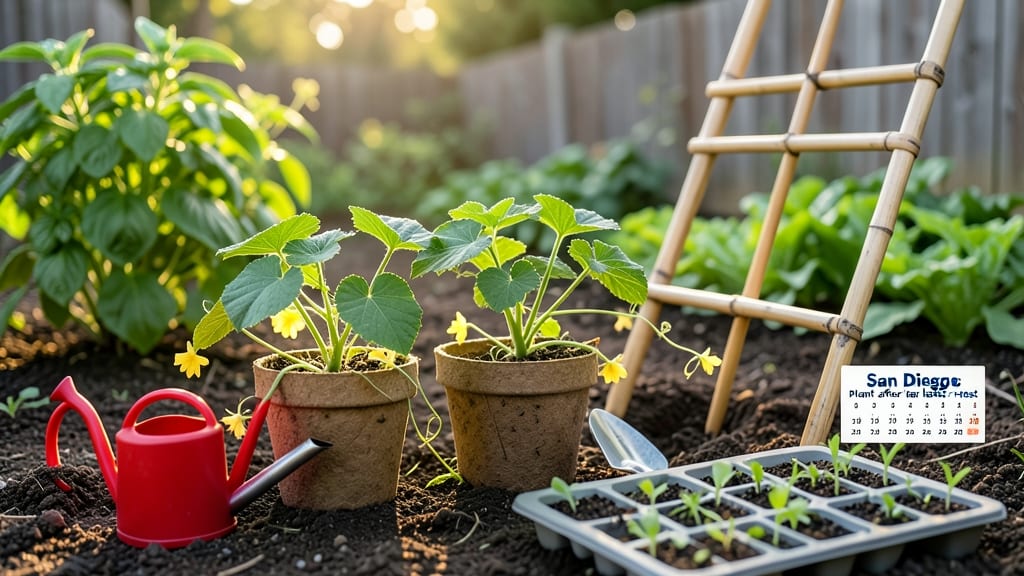
Planting cucumbers in San Diego isn’t just about grabbing seeds and sticking them in the ground—it’s about mastering the perfect timing between coastal breezes and inland heat to avoid bitter fruit or wilted vines.
With no frost to worry about but summer temps that can push 90°F, knowing when to start makes all the difference for your 🥒 harvest.
Most gardeners here swear by two key windows: spring (February-March) and fall (September-October), but coastal areas near the ocean can handle early starts a month earlier than inland spots. The trick? Soil needs to hit 60°F—any cooler, and your seedlings will languish.
Whether you’re direct-sowing in raised beds or transplanting in containers, I’ll break down the exact schedule for both microclimates. Plus, I’ll share my go-to tips for beating heat stress and keeping your vines productive all season long.
Ready to grow cucumbers that actually taste fresh? Let’s dive into the planting calendar that’ll have you harvesting crisp, sweet 🥒s from March through November—no guesswork required.
San Diego coastal cucumber planting schedule: avoid heat stress in summer
San Diego’s coastal areas offer a unique gardening advantage—mild winters and cool summers—but timing is critical to avoid heat stress and fruitless vines.
Unlike inland regions, coastal gardeners must work around coastal fog and temperature fluctuations between 60°F and 85°F. Planting too early risks chilling injury, while late starts may lead to bitter cucumbers from summer heat.
The optimal coastal planting windows are February–March for spring harvests and September–October for fall production. These periods balance soil warmth (60°F+) with cooler air temperatures, reducing stress on young plants. Coastal fog also provides natural moisture retention, but you’ll still need to monitor soil conditions closely.
Here’s how to align your planting schedule with San Diego’s coastal microclimate for maximum yields:
For direct sowing, wait until soil reaches 60°F—test with a soil thermometer or press your finger into the soil; if it feels cool to your touch, wait another week.
Coastal areas near La Jolla or Pacific Beach may experience delayed warming due to ocean breezes, so adjust your timeline accordingly.
Prepare your soil with 2–3 inches of compost and a balanced fertilizer (5-10-10) to support rapid growth. Coastal soils often lack organic matter, so amending with aged manure or worm castings improves drainage and moisture retention. Avoid fresh manure, which can burn young roots.
Choose heat-tolerant varieties like ‘Marketmore 76’ or ‘Straight Eight’ for summer resilience. These varieties thrive in 75°F–85°F conditions, while ‘Lemon Cucumber’ handles coastal humidity better than standard slicing types. Trellis your plants to improve air circulation and reduce disease pressure from foggy mornings.
Watering is critical—coastal cucumbers need 1–2 inches of water weekly, but adjust for foggy mornings. Water early morning to prevent fungal issues, and mulch heavily with straw to retain moisture. Avoid wetting leaves, which can trigger powdery mildew in humid conditions.
Harvest begins 55–70 days after planting, depending on variety. Pick cucumbers frequently to encourage production—overripe fruit leads to bitterness and vine decline. Store harvested cucumbers in the fridge for up to 1 week to maintain freshness.
Pro tip: Succession plant every 2 weeks in spring and fall to extend your harvest. By staggering plantings, you’ll enjoy cucumbers from March through November without gaps in production.
Inland San Diego cucumber planting: hotter climate means earlier starts
Inland San Diego’s warmer microclimate (USDA Zone 10a) lets you plant cucumbers 2–3 weeks earlier than coastal areas. While coastal gardeners wait until February–March, inland gardeners can start seeds indoors in January or direct-sow by mid-February. This head start helps cucumbers establish roots before summer’s intense heat arrives.
For a second harvest, aim for August–September planting. The key is timing your cucumbers to avoid 100°F+ heat waves, which stress plants and lead to bitter fruit.
Inland areas like Escondido, Ramona, and El Cajon often see 10–15°F hotter temps than coastal zones, so shade and water management become critical.
⚠️ WARNING: Common Mistake ⚠️
To protect your cucumbers, use 30–50% shade cloth during peak summer (June–August). This reduces soil temps by 10–15°F and prevents blossom-end rot, a common issue in inland heat.
Install shade cloth before planting—afterward, it’s too late to adjust. Pair it with drip irrigation to keep roots cool and consistent.
Watering is non-negotiable in inland San Diego. Cucumbers need 1–2 inches of water weekly, but daily deep watering in summer prevents blossom-end rot. Water at soil level (not leaves) to avoid fungal diseases like powdery mildew.
Mulch with straw or wood chips to retain moisture and regulate soil temperature.
For container growing, choose bush varieties like ‘Bush Champion’ and use 5-gallon pots with moisture-retentive soil. In-ground plants benefit from black plastic mulch, which warms soil in spring and suppresses weeds. Monitor for cucumber beetles—use row covers for young plants until they’re established.
With these adjustments, inland San Diego gardeners can enjoy two bumper crops: one in spring and another in fall. The secret? Start early, shade smart, and water deeply—your vines will thank you with crisp, sweet cucumbers all season long. 🥒