
Plants
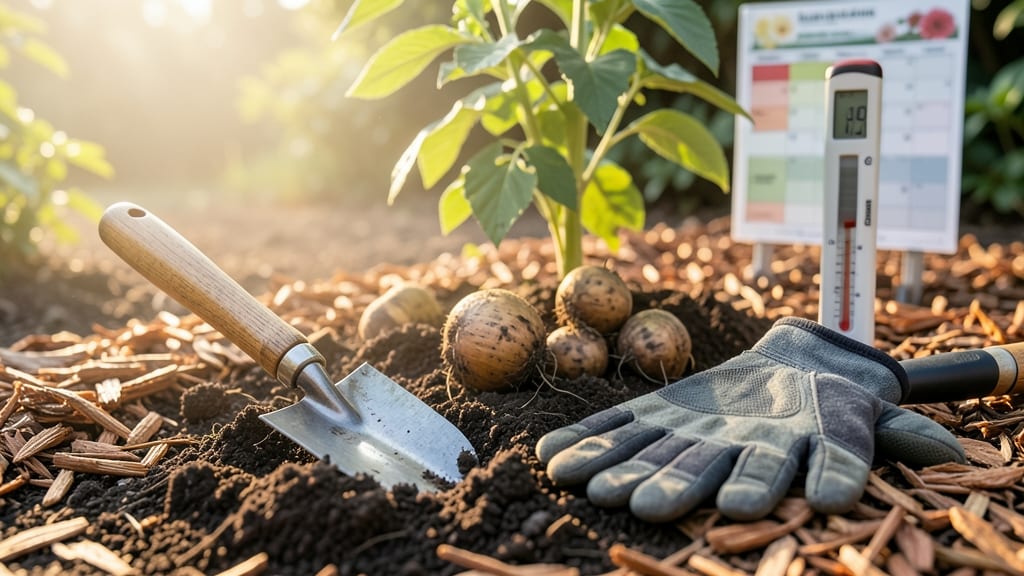
Planting dahlias in Zone 6a at the wrong time means watching your 🌸 tubers rot in cold soil or your blooms arrive too late for the season.
The key isn't just waiting for frost-free days—it's about soil warmth, tuber readiness, and avoiding the 4-6 week window that separates success from disappointment.
I've learned the hard way that rushing dahlias into the ground too early—even if the air feels warm—can leave your tubers vulnerable to lingering frost. Meanwhile, planting too late risks stunted growth before your summer blooms even begin.
Let me show you exactly when to plant in Zone 6a, so you can enjoy those showstopping dahlias from July through October.
Most gardeners focus only on frost dates, but the real secret lies in soil temperature. We'll cover how to check it, when to start tubers indoors (if needed), and how to prepare your garden bed for maximum success.
Trust me, these small adjustments make all the difference between a wilted mess and a garden full of vibrant blooms.
Once you've got the timing right, I'll share my top tips for post-planting care—like mulching and watering—that keep your dahlias thriving all season. With the right approach, you could even extend your blooming time well into fall using simple protective strategies. Let's get those dahlias growing!

Exact weeks before last frost to plant dahlias in Zone 6A (with soil temperature rules)
In Zone 6A, the ideal window to plant dahlia tubers is 4-6 weeks before your last expected frost date. For most areas, this lands between mid-April and early May, but don't rush—soil temperature matters more than calendar dates.
Tubers need consistent soil temps of 60°F+ to sprout reliably, and Zone 6A's spring can be unpredictable. Planting too early risks rot from cold soil, while waiting too long may stunt early growth.
Your last frost date in Zone 6A typically falls around April 15, but microclimates vary. If you're in a low-lying area or near water, delay planting by 1-2 weeks. Conversely, south-facing slopes or urban heat islands may warm up faster.
Always check your local Almanac frost predictions and verify soil warmth with a soil thermometer—it's the only way to plant with confidence.
Now, let's break down the exact timing for different dahlia varieties. Early bloomers like 'Café au Lait' and 'Bishop' can handle cooler soils, while late-season varieties like 'Galaxy' need warmer conditions to perform. The comparison below shows how timing shifts based on variety type.
| Variety Type | Soil Temp Requirement | Planting Window (Weeks Before Last Frost) | Microclimate Adjustment |
|---|---|---|---|
| Early Varieties (e.g., 'Bishop', 'Café au Lait') | 55-60°F | 5-6 weeks before last frost | Can plant 1 week earlier in warm microclimates |
| Mid-Season Varieties (e.g., 'Thomas Edison', 'Karma Choc') | 60-65°F | 4-5 weeks before last frost | Delay by 1 week in cold microclimates |
| Late Varieties (e.g., 'Galaxy', 'Arabian Night') | 65°F+ | 3-4 weeks before last frost | Use black plastic mulch to warm soil faster |
For Zone 6A gardeners, I recommend planting early varieties first (around April 15-20) to maximize bloom time. If your soil is still cold, use black plastic mulch to raise temperatures by 5-10°F. Bury the plastic directly under the tubers—it works like a mini greenhouse.
Pro tip: Cut X-shaped slits in the plastic where you'll plant to prevent overheating.
Tuber size also affects timing. Large tubers (3+ inches) can handle cooler soils better than small ones. If you're working with baby tubers, wait until soil reaches 65°F+ or start them indoors 6-8 weeks before last frost.
Use seed-starting mix in pots and keep them in a sunny window or under grow lights until danger of frost passes.
Once planted, mulch heavily with straw or shredded leaves to maintain soil warmth. Dahlias are sensitive to temperature swings, and mulch helps stabilize roots. In Zone 6A, where nights can still dip into the 40s°F in May, this step is non-negotiable.
I've seen dahlias bolt to flower too early when soil temps spike after a cold snap—always monitor with a thermometer.
After planting, water deeply but infrequently—dahlias hate soggy soil. Aim for 1-2 gallons per plant every 5-7 days, increasing to every 3-4 days once buds form. In Zone 6A, June is the sweet spot for dahlia care—consistent warmth and longer days trigger their best blooms.
If you're in a dry microclimate, consider a drip irrigation system to avoid fungal issues from overhead watering.
Remember, Zone 6A's first frost typically arrives around October 15, but don't let that fool you. Some years, early October frosts can catch gardeners off guard. To extend your season, harvest tubers before the first frost and store them in cool, dry conditions.
With proper timing, you can push dahlias to bloom until mid-October—just don't wait until the last minute!
Finally, mark your calendar for next year: Set reminders for soil temperature checks in early April and tuber prep in late March. Zone 6A's variable spring makes dahlia planting an art, not a science.
The key is patience and preparation—your dahlias will reward you with months of stunning blooms if you nail the timing. 🌸
5 Critical mistakes that ruin dahlia planting in Zone 6A (and how to avoid them)
Planting dahlias in Zone 6A requires precision—one wrong move, and your tubers can rot, your stems can fail to sprout, or your blooms might never appear.
I’ve seen gardeners skip soil prep and still get stunning dahlias, but I’ve also seen others plant at the wrong depth and watch their tubers waste away. The key is understanding what goes wrong and how to fix it before it’s too late.
Even experienced growers make these mistakes: planting too early, burying tubers too deep, or ignoring soil drainage. In Zone 6A, where frost dates can vary by weeks, timing is everything.
Let’s break down the top 5 mistakes and how to avoid them so your dahlias thrive from May through October.
Zone 6A’s soil temperature must reach 60°F+ for tubers to sprout. Planting too soon (before mid-May) risks rot from cold, damp soil. Wait until the ground warms—use a soil thermometer to confirm.
Dahlias need 4-6 inches of soil over their eyes (growth points). Planting deeper than 6 inches suffocates the tuber, while planting too shallow (under 3 inches) exposes it to frost damage. Mark your tubers with a toothpick to track depth.
Dahlias demand well-draining soil with organic matter. Amend clay soil with compost or sand and avoid planting in low spots where water pools. A pH of 6.5-7.0 is ideal—test your soil before planting.
Mulch with 2-3 inches of straw or shredded leaves to retain moisture and regulate soil temperature. Without mulch, temperature swings in Zone 6A can stress young plants, leading to stunted growth or leaf scorch.
Zone 6A’s first frost often hits by mid-October. Use row covers or black plastic mulch to extend the season. For late bloomers, cover plants with burlap sacks when nighttime temps drop below 40°F.
One of the biggest misconceptions is that dahlias can handle any soil as long as you water them enough. But in Zone 6A’s heavy clay or sandy soils, drainage becomes a nightmare.
I once planted dahlias in a low-lying area, and by July, the tubers were rotting from waterlogged soil. The fix? Raised beds with gravel at the bottom and a 50/50 mix of compost and native soil.
Another common mistake is assuming all dahlias grow at the same rate. Dwarf varieties like ‘Mignon’ sprout faster than giant varieties like ‘Galaxy.’ If you’re planting a mix, start dwarf tubers first (around mid-May) and delay tall varieties until late May when soil is warmer.
This staggered approach ensures all plants get the sunlight and nutrients they need.
Protecting your dahlias from late-season frost is just as critical as planting at the right time. I’ve used frost blankets to shield my dahlias in October, and it’s made all the difference.
Even a light frost can damage tender leaves, but a heavy frost will kill the plant entirely. If you’re pushing for fall blooms, monitor your local frost forecast and be ready to cover plants by 7 PM.