
Trees
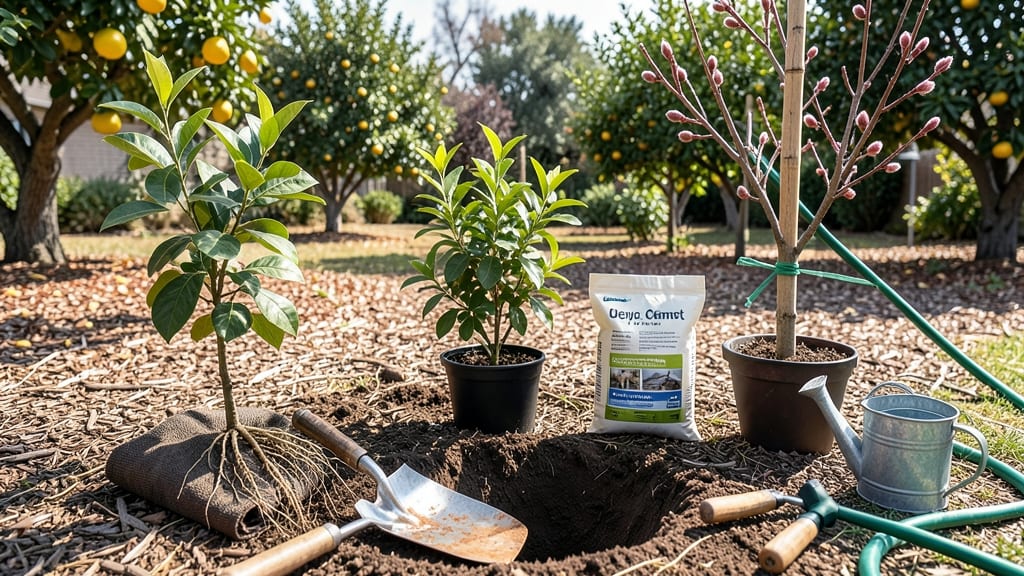
Planting a 🍎 fruit tree in California might seem simple—after all, the weather is mild most of the year—but timing it wrong can mean the difference between a thriving orchard and a struggling sapling.
The key lies in understanding your region’s chill-hour needs and microclimates, especially when coastal areas and inland valleys behave like entirely different worlds.
Most California gardeners swear by late fall to early spring as the best window for planting, when cooler soil temps and reduced water stress give young roots a fighting chance.
But whether you’re in the 8-11 USDA zones or a high-desert area, the rules shift depending on whether you’re growing citrus year-round or stone fruits that need a winter chill.
In this guide, I’ll break down the exact months to plant—from November’s dormancy prep to spring’s last-chance opportunities—and how to adjust for your specific fruit tree variety. You’ll also learn how to prep soil, choose the right rootstock, and avoid common pitfalls like late frosts or overwatering.
Ready to turn your backyard into a fruitful paradise? Let’s get those 🍎 trees in the ground at the perfect time for your corner of California.
California fruit tree planting calendar by chill-hour zones
California’s diverse climate—from coastal fog belts to inland valleys—creates a unique challenge for fruit tree growers. Unlike traditional planting guides, timing here depends on chill-hour requirements (the number of hours below 45°F needed to trigger flowering).
A peach tree in USDA Zone 9 needs only 300–500 chill hours, while an apple tree in Zone 7 demands 800–1,200 hours. Planting outside these windows risks weak root establishment or failed fruit set.
Most California gardeners focus on fall planting (November–February) for bare-root trees, but container-grown varieties offer flexibility. Spring planting is riskier unless you’re in Zone 10 or growing low-chill varieties like plums or figs.
Below, we break down the best windows by chill category and zone, with trade-offs for each approach.
For low-chill varieties like peaches or plums, fall planting (November–December) gives roots time to establish before summer heat. In Zone 9, I’ve seen Elberta peach trees thrive when planted in December—just water deeply and mulch heavily.
Spring planting works too, but only if you use container-grown trees (they adapt faster to heat).
Medium-chill trees (apples, cherries) need cooler soil temps to avoid transplant shock. In Zone 8, aim for October–November. If you miss this window, January–February planting is your backup—but warm the soil first with black plastic mulch for 2–3 weeks.
I once planted a Gala apple tree in February and lost 30% of its roots to heat stress.
High-chill trees (pears, apricots) are only viable in Northern California (Zones 5–7). Plant them only in fall (November–December) to ensure dormancy. Spring planting is nearly impossible—they’ll bolt into growth and fail to flower.
For example, a Bartlett pear in Zone 6 planted in March will likely produce no fruit the next year.
Citrus is the exception: it thrives with zero chill hours and can be planted year-round. However, February–March is ideal in Zone 10 to avoid late-winter frosts. I’ve seen Valencia orange trees planted in July survive, but they struggle to establish roots before summer dormancy kicks in.
Regional microclimates add another layer. Coastal areas (e.g., Santa Barbara) have milder winters, so spring planting (February–March) works for low-chill varieties. Inland valleys (e.g., Fresno) can plant medium-chill trees as late as January.
Always check your local first frost date—in Sacramento (Zone 9), it’s November 15, while in Los Angeles (Zone 10), frost is rare.
Pro tip: Use a chill-hour calculator (like the one from UC Davis) to match your tree to your zone. For example, a Satsuma mandarin needs only 100–200 chill hours, making it perfect for Zone 10 spring planting.
Meanwhile, a Fuji apple requires 1,000+ hours, limiting it to Zone 6 fall planting.
If you’re in a transition zone (e.g., Zone 8–9), consider intermediate varieties like Redhaven peaches (400–500 hours) or Stanley plums (500–600 hours). These bridge the gap between low- and medium-chill needs. Just be prepared to hand-pollinate if winters are unusually warm.
Finally, remember: bare-root trees plant best in winter (dormant season), while <
Best fall planting months for fruit trees in California (and why it works)
Fall is my top recommendation for planting fruit trees in California because the cooler soil temperatures and reduced evaporation create perfect conditions for root establishment. Unlike spring, fall planting avoids the heat stress that can shock young trees during their first growing season.
The 3-month window from October to December gives you flexibility while still allowing roots to grow before winter dormancy.
California’s diverse microclimates mean timing varies slightly by region. Coastal areas like San Francisco and Santa Barbara can plant later into December, while inland zones like Sacramento and Fresno should aim for October to early November.
The key is to plant 4-6 weeks before the first frost—typically mid-November in most areas.
- ✅ Cooler soil temps (60-70°F) reduce transplant shock compared to summer heat
- 💧 Reduced water stress—less evaporation means roots establish faster with consistent moisture
- 🌱 Dormancy alignment—trees enter winter rest with strong root systems
- 🌡️ Frost protection—young trees have time to harden off before winter chill
- 🛒 Better nursery selection—fall brings fresh bare-root stock with higher survival rates
For coastal California, prioritize November planting since mild winters allow later installation. Inland areas should plant by early November to avoid early frosts that can damage tender roots. Citrus trees (like lemons and oranges) are exceptions—they thrive with December planting since they’re frost-sensitive and prefer warmer soil.
Preparing your soil is critical. Test your soil pH (ideal range: 6.0-7.0) and amend with compost or aged manure to improve drainage. In California’s heavy clay soils, mix in sand or perlite to prevent waterlogging. For container planting, use a well-draining potting mix with 50% organic matter.
After planting, focus on deep watering (15-20 gallons per tree) and mulching with wood chips to retain moisture. Avoid fertilizing in the first 8-12 weeks—let roots establish before encouraging top growth.
In Southern California, where winters are nearly frost-free, you can even plant bare-root trees in January for a late-winter boost.
Fall-planted fruit trees often outperform spring-planted ones because they spend their first winter with established roots, ready to burst into growth when spring arrives.
With proper timing and soil prep, you’ll set your trees up for decades of productive harvests—whether you’re growing pears in the Sierra foothills or avocados in San Diego. 🌳