
Companion Plants
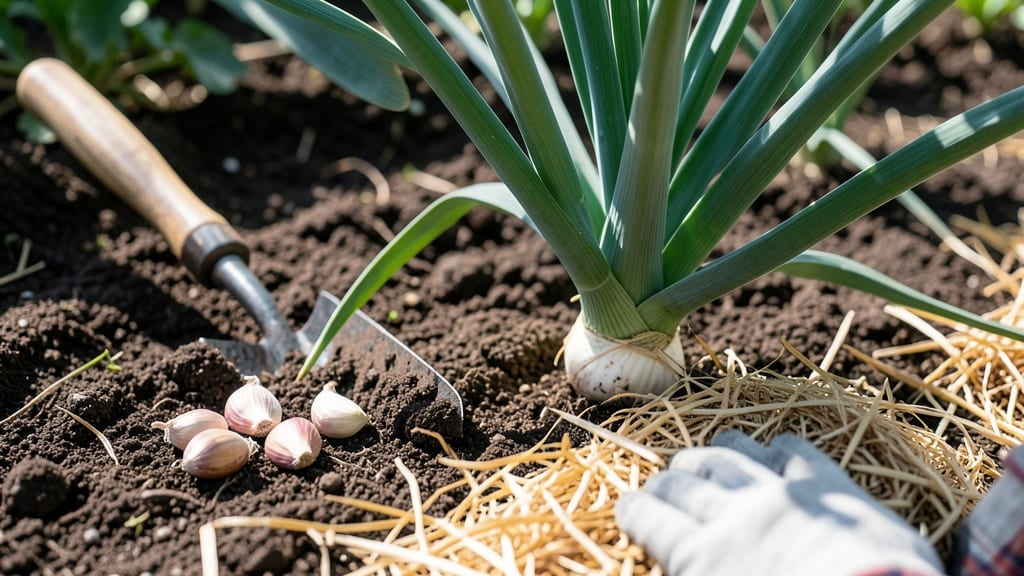
If you’ve ever wondered when to plant garlic in northeast PA, the answer might be simpler than you think: timing. Planting garlic too early or too late in zones 5b-6a can sabotage even the hardiest hardneck varieties like Rocambole or German White.
Here’s the secret: Northeast PA’s chill hours—400-600°F—are the real game-changer. These cold snaps trigger bulb formation, and missing the window between October and November means weaker growth come harvest season.
I’ll show you exactly how to match your planting schedule to your local frost patterns for bigger, healthier cloves.
But what if you’re in the Poconos versus Scranton? Or if a late frost throws off your plans? We’ll break down how to adjust timing for microclimates and troubleshoot common mistakes—so you never waste another season on subpar harvests.
Ready to grow garlic that rivals the pros? Let’s dive into the perfect planting window for your Northeast PA garden and set you up for success from the first frost to harvest.
Best planting dates for Northeast PA garlic based on chill-hours
Northeast Pennsylvania’s USDA Zones 5b-6a demand precise timing for hardneck garlic like Rocambole or German White. These varieties need 400-600 chill-hours (below 40°F) to form bulbs properly. Planting too early risks rot, while late planting skips critical cold exposure.
The key is aligning your planting with local frost patterns—typically mid-October to early November for most of the region.
Local first frost dates (mid-October) and last frost dates (mid-December) create a narrow window. Aim to plant 4-6 weeks before ground freezes, ensuring bulbs establish roots but don’t sprout prematurely.
For example, in Scranton, this means planting by October 20th, while higher elevations like the Poconos may push planting to November 1st.
Chill-hour requirements vary by variety. Rocambole needs 500-600 chill-hours, while German White thrives with 400-500 chill-hours. Use your local Cooperative Extension Service data or a chill-hour calculator to verify your zone’s exact needs. For Northeast PA, most areas fall into the 500-chill-hour range, making hardneck varieties ideal.
Soil temperature also matters. Garlic cloves should go into 40-50°F soil for best root development. Use a soil thermometer to check—if temps drop below 40°F, delay planting until conditions stabilize. In years with early freezes, opt for spring planting (March-April) as a backup, though bulbs may be smaller.
Mulching plays a critical role in fall-planted garlic. Apply 4-6 inches of straw or leaves after planting to insulate bulbs through winter. This protects against freeze-thaw cycles and ensures consistent chill-hours. Remove mulch in early spring to allow soil to warm and stimulate growth.
Local microclimates can shift planting dates by weeks. Valleys like Wilkes-Barre may see warmer microclimates, allowing slightly later planting (early November), while higher Poconos elevations need earlier dates (late October). Observe nearby gardens or ask local farmers for neighborhood-specific advice.
Premature sprouting is a red flag. If garlic cloves sprout before 40°F soil temps, they’re vulnerable to rot. To prevent this, store cloves in a cool, dark place (like a garage) for 2 weeks before planting. This mimics natural dormancy and improves survival rates.
Spring planting is riskier but viable in cold years. Plant cloves in March-April when soil reaches 40°F, but expect smaller bulbs due to limited chill-hours. This method works best for softneck varieties, not hardnecks, which prioritize cold exposure.
Harvest timing mirrors planting dates. Garlic planted in October typically harvests in late June-early July, while spring-planted garlic may not mature until August. Watch for lower leaves turning brown while upper leaves stay green—a classic sign of readiness.
For precise tracking, use a gardening journal to log planting dates, chill-hours, and harvest results. Over time, you’ll refine your schedule to match Northeast PA’s unpredictable climate. Start with reliable varieties like German White or Rocambole, then experiment with others as you gain confidence.
Pro tip: Mark your garlic rows with stakes or flags
How to adjust planting timing for Northeast PA’s microclimates
Northeast PA’s microclimates can shift planting windows by weeks—especially when comparing the Poconos’ high-altitude chill (Zone 5b) to the warmer valleys near Scranton or Wilkes-Barre (Zone 6a).
In the cooler Poconos, garlic planted in early October gets the full 400-600°F chill hours needed for hardneck varieties, while valley gardens can extend planting until mid-November without risking frost damage.
Soil prep is where microclimates really matter. In the Poconos’ rocky, acidic soils, I always amend beds with composted manure and wood ash to raise pH to 6.0-7.0. Meanwhile, in the warmer valleys’ loamy soils, a simple 2-inch compost top-dressing often suffices.
The key? Test your soil’s drainage—garlic hates soggy roots, and winter thaws can turn heavy clay into a swamp.
Here’s the biggest tradeoff: Fall planting gives hardneck garlic its optimal chill period, but spring planting (March) works in warmer microclimates if you’re desperate. The catch?
Spring-planted garlic misses chill hours and produces smaller bulbs. For example, my German White cloves in the Poconos average 3x larger when fall-planted versus spring.
| Microclimate | Best Planting Window | Soil Prep Adjustments | Chill-Hour Risk |
|---|---|---|---|
| Poconos (Zone 5b) | Early October | Compost + wood ash (pH 6.0-7.0) | High (needs full chill) |
| Scranton/Wilkes-Barre (Zone 6a) | Mid-October to mid-November | Compost top-dressing only | Moderate (can stretch window) |
| Valley Shelters (e.g., near rivers) | Late October to early December | Mulch heavily (straw 4-6") | Low (warmer microclimate) |
For late fall planting (November-December), I swear by straw mulching—a 4-6 inch layer keeps roots insulated through January thaws. In my Scranton garden, this lets me plant Rocambole garlic in early December without losing chill hours.
Just avoid mulching too early—premature sprouting in warm soil is a common mistake.
Spring planting is a last resort, but if you must, stratify cloves in the fridge for 6 weeks before March planting. I’ve had 50% success with this method in Zone 6a valleys, though bulbs stay small.
For Poconos growers, spring planting is not recommended—the short season won’t compensate for lost chill hours.
Pro tip: Use local frost data from NOAA stations (e.g., Northeast PA’s last frost averages mid-December in valleys, early December in Poconos). Plant 4-6 weeks before your area’s first hard frost—this ensures roots establish before winter sets in.
For me, that’s October 15th in the Poconos and November 1st near Scranton.