
How To
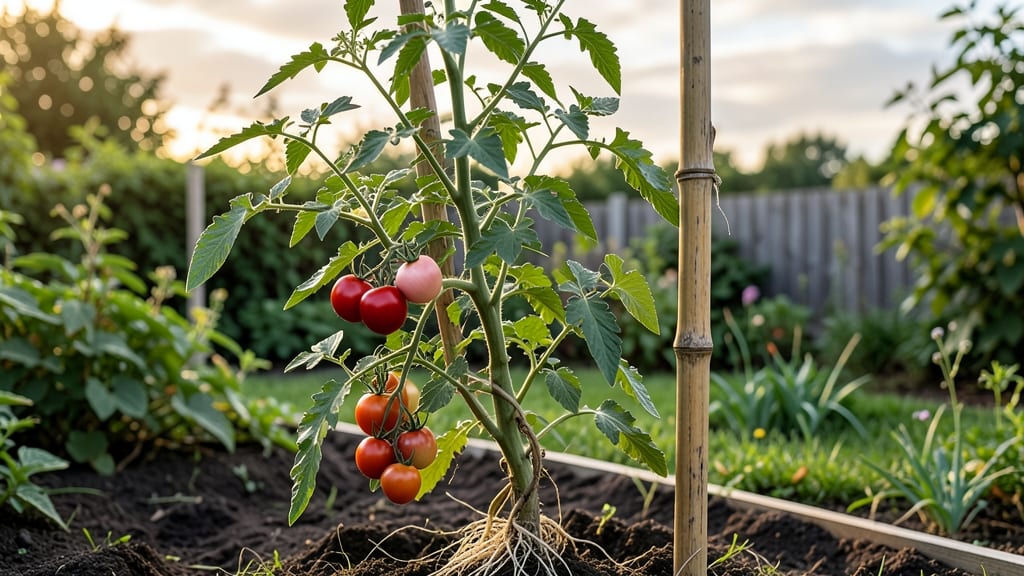
If you're planning your garden layout this spring, knowing how tall will a tomato plant grow could save you from overcrowding or wasted space.
Some varieties stay compact enough to tuck into containers, while others climb like vines to the sky—making the difference between a neat, organized plot and a jungle of tangled stems.
Tomatoes fall into two main categories: determinate types that top out at 3 to 4 feet, perfect for small spaces, and indeterminate varieties that can stretch up to 6 feet or more if left unchecked.
Without proper support, those towering plants might flop over, leaving your fruit vulnerable to rot or pests.
I’ll break down the height ranges for popular varieties, from cherry tomatoes that stay under 3 feet to heirlooms that need sturdy cages or trellises. You’ll also learn how pruning and training techniques can help control growth, whether you’re working with limited space or dreaming of a lush, vertical garden.
By the end, you’ll know exactly how much room to allocate for your 🍅 plants—so you can maximize yields without sacrificing your garden’s layout. Let’s get growing!


Tomato plant heights by variety: determinate vs indeterminate growth explained
When planning your tomato garden, one of the first questions I ask myself is: how tall will my tomato plants grow? The answer depends entirely on whether you're growing determinate (bush) or indeterminate (vining) varieties.
These two growth patterns completely change how you'll design your garden space, trellis needs, and even harvesting strategy. Let me break down the key differences and what you can expect from each type.
Determinate tomatoes are the bush-type varieties that grow to a specific height—usually between 3 to 5 feet—and then stop. They produce fruit all at once, making them perfect for canning or heavy harvests in a short window.
Indeterminate tomatoes, on the other hand, keep growing indefinitely (until frost) and can reach heights of 6 to 12+ feet if left unchecked. This means they need sturdy support and continuous pruning to manage their size and direct energy toward fruit production.
Understanding these growth patterns helps avoid common mistakes like overcrowding determinate plants or neglecting support for indeterminate varieties.
For example, a 4-foot determinate plant like 'Roma' needs at least 18 inches of space between plants, while a 10-foot indeterminate like 'Sungold' requires 3 to 4 feet of vertical space and a strong trellis. Let’s dive into the specifics with real-world examples.
⚠️ NON-NEGOTIABLE VISUAL ELEMENT ⚠️
If you're growing determinate varieties like 'Roma' or 'Celebrity', expect a neat, bushy plant that tops out around 4 feet. These plants are ideal for small gardens or containers because they don’t require trellising. The trade-off?
They produce fruit all at once, so you’ll need to can or freeze extras if you don’t plan to eat them fresh immediately. For example, 'Bush Early Girl' typically matures in 55–60 days and stays compact at 3–4 feet, making it a favorite for early-season harvests.
On the other hand, indeterminate varieties like 'Brandywine' or 'Sungold' are the climbing champions of the tomato world. Without proper support, they can sprawl 10 feet or more, but with a sturdy trellis or cage, you can train them to grow vertically.
This not only saves space but also improves air circulation, reducing the risk of disease. For instance, 'Cherokee Purple' can reach 6–8 feet and produces heirloom-quality fruit throughout the season, but it needs
How to estimate tomato plant height for your garden layout
Estimating tomato plant height is the first step to designing a functional garden layout. Without accurate measurements, you might end up with overcrowded plants or wasted space. For example, a 6-foot indeterminate variety needs completely different support than a 3-foot determinate bush.
I’ve learned the hard way—once I planted a towering 'Sungold' next to a compact 'Tiny Tim' without realizing the height difference, and the result was a tangled mess!
To plan correctly, start by identifying whether your chosen varieties are determinate (bush-type) or indeterminate (vining). Determinate tomatoes grow to a fixed height—usually 3 to 4 feet—and produce fruit all at once.
Indeterminate varieties, however, keep growing until frost and can reach 6 to 10 feet if left unchecked. This distinction alone can change how you space your plants by 50% or more.
Here’s how to estimate height and space needs:
- 📏 Measure mature height: Check seed packets or plant tags for expected heights. For example, 'Celebrity' determinate tomatoes stay under 3 feet, while 'Brandywine' indeterminate varieties can exceed 8 feet.
- 🪴 Account for support structures: Indeterminate varieties need trellises, stakes, or cages that add 1 to 2 feet to their effective height. A 6-foot plant with a 5-foot cage now occupies 11 feet of vertical space.
- ✂️ Plan for pruning: Pruning indeterminate tomatoes by 30-50% can reduce height by 2 to 3 feet while improving airflow and fruit quality. For example, a 'Sungold' pruned to 4 feet might still yield just as well as an unpruned 8-footer.
- 🌱 Consider container gardening: Compact varieties like 'Tiny Tim' or 'Patio' thrive in 5-gallon pots and stay under 2 feet tall. This frees up ground space for other crops or pathways.
- 📐 Use spacing guidelines: Determinate tomatoes need 18 to 24 inches between plants, while indeterminate varieties require 24 to 36 inches (or more if trellised vertically).
For indeterminate varieties, trellising is a game-changer. I’ve seen 'Cherokee Purple' plants grow 10 feet tall when left unsupported, but with a sturdy trellis, they stay manageable while producing 20% more fruit.
Use wooden stakes, tomato cages, or A-frame trellises—just ensure they’re buried 12 inches deep for stability. If you’re short on space, consider vertical gardening with wall-mounted trellises or hanging baskets for cherry tomatoes.
Pruning isn’t just for height control—it’s also about air circulation and disease prevention. When I first started gardening, I avoided pruning because I thought it reduced yield.
But after learning to remove suckers (side shoots) and lower leaves, my 'Beefsteak' tomatoes grew 2 feet taller with fewer pests and produced larger fruit. Start pruning when plants are 12 inches tall, focusing on removing suckers larger than 1 inch.
If you’re working with limited space, container gardening is your best friend. Dwarf varieties like 'Tiny Tim' or 'Micro Tom' fit perfectly in 5-gallon buckets or window boxes, staying under 2 feet tall.
Just ensure containers have drainage holes and are at least 12 inches deep to accommodate roots. For larger varieties, use fabric grow bags that can hold 10-gallon capacity—these are lighter than clay pots and prevent root circling.
Pro tip: Sketch your garden layout before planting. Draw height markers for each plant and include support structures. This visual will help you spot potential issues, like shading from taller plants or overcrowding.
And remember, overestimating space is better than underestimating—you can always add more plants later, but you can’t fix a flopped-over tomato giant! 🌱