
Watering
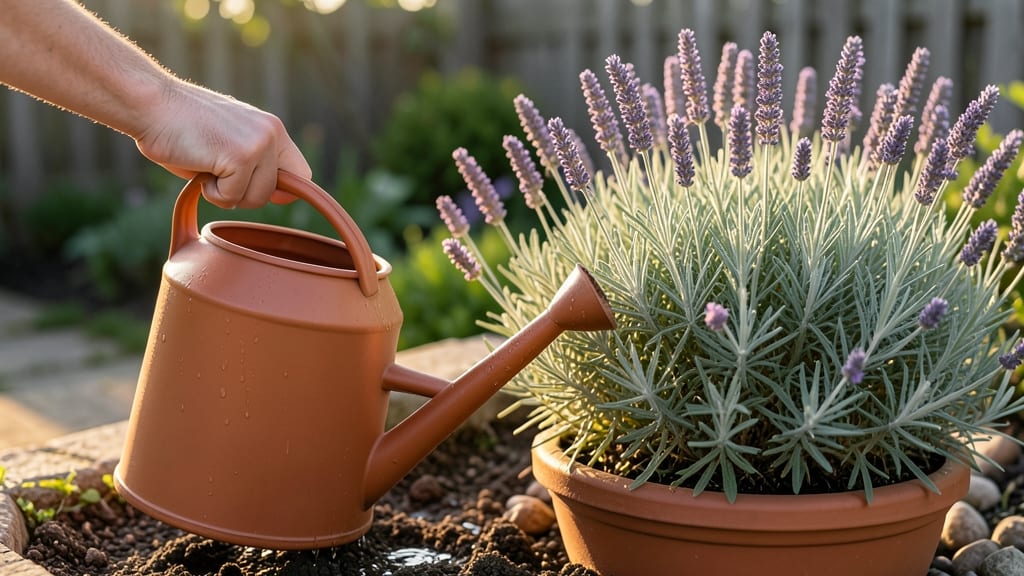
Wondering how much water your lavender plant 🌿 really needs? You might be overcomplicating it—lavender thrives on neglect, not constant care, and getting this right could mean the difference between lush blooms and a sad, wilted mess.
Most gardeners assume lavender needs frequent watering, but the truth is, overwatering is the #1 killer of these drought-loving plants. The key is understanding when to water deeply and when to let the soil dry out completely between sessions.
I’ll break down the exact schedule you need to keep your lavender happy without drowning its roots.
Whether you’re growing lavender in pots or planted directly in your garden, the rules change slightly—but the goal stays the same: well-drained soil and water only when the top inch feels bone-dry. Let’s dive into the simple, science-backed routine that’ll have your lavender blooming like a pro.
You’ll learn how to spot the signs of thirst (or too much love) and adjust your watering habits by season. Trust me, your lavender will thank you with fragrant blooms and healthy growth all season long.

How much water does a lavender plant need per week?
Lavender thrives on drought-resistant care, and its water needs are often misunderstood. Unlike thirsty annuals, lavender hates soggy soil—overwatering is the #1 killer of these fragrant shrubs. The key? Deep, infrequent watering that mimics Mediterranean rainfall patterns where lavender evolved.
Most gardeners water too often, leading to weak stems and root rot. Let’s fix that with science-backed guidelines tailored to your climate.
Your lavender’s water needs depend on soil type, container size, and season. Sandy soil drains quickly, while clay holds moisture too long. Potted lavender dries out faster than in-ground plants.
And summer heat demands less frequent watering than spring’s cooler temps. We’ll break it down by season, plus introduce the finger test—a foolproof way to check moisture without guesswork.
| Season | Watering Frequency | Depth | Soil Moisture Goal | Best Time |
|---|---|---|---|---|
| Spring | Every 7-10 days | 6-8 inches deep | Dry top 2 inches | Morning (6-9 AM) |
| Summer | Every 10-14 days | 8-10 inches deep | Dry top 3 inches | Early morning |
| Fall | Every 2-3 weeks | 4-6 inches deep | Dry top 1 inch | Late morning |
| Winter | Monthly (if no rain) | 2-3 inches deep | Slightly moist | Avoid watering |
| Potted Lavender | Every 5-7 days | Until water runs out drainage holes | Dry top 1 inch | Morning |
Start by checking your lavender’s soil moisture before watering. Stick your finger 2 inches deep into the soil—if it feels dry, it’s time to water. If it’s damp, wait another day.
This finger test prevents overwatering better than any schedule. Pro tip: Use a soil moisture meter ($10 at garden centers) for accuracy, especially in containers where soil dries faster.
New lavender plants need more frequent watering (every 5-7 days) for the first 2-3 months to establish roots. After that, taper off to the seasonal schedule above. The goal is to encourage deep root growth, not shallow, thirsty roots.
Water deeply at the base of the plant, avoiding the foliage to prevent fungal diseases like powdery mildew.
During summer, lavender enters dormancy mode—its growth slows, and water needs drop. If your lavender wilts in heat, it’s often underwatered, but check for overwatering first.
Yellowing leaves or mushy stems? You’ve watered too much. Brown, crispy foliage? It’s thirsty. Both extremes stress lavender, so adjust based on soil conditions, not just the calendar.
Mulching helps lavender retain moisture without smothering roots. Use 2-3 inches of gravel or straw around the base (keep it 2 inches away from the stem to prevent rot). Organic mulch like wood chips breaks down and can compact soil, while gravel stays loose.
For potted lavender, add a layer of pebbles to the saucer to improve drainage and reduce evaporation.
Rainfall complicates watering schedules. If you get 1 inch of rain (check a rain gauge), skip your watering day. Lavender’s native Mediterranean climate gets sporadic downpours, not steady rain.
In humid climates, water even less—lavender dislikes damp air. For arid regions, increase the gap between waterings to 14-21 days in summer.
Signs of overwatered lavender include yellowing leaves, blackened stems, or a foul smell from the soil. Underwatered lavender shows grayish-green foliage and wilting despite dry soil. Both conditions weaken the plant’s
Signs your lavender is overwatered vs. underwatered (and how to fix it)
Lavender plants 🌿 are masters of survival, but even they’ll send you SOS signals when their watering routine is off. The key is learning to read their leaf texture and stem condition—two dead giveaways that reveal whether you’re drowning or starving your plant.
I’ve seen gardeners accidentally kill thriving lavender just by watering "just in case," so let’s decode these visual clues before it’s too late.
Start by checking the soil moisture with your finger—if the top inch feels damp, hold off on watering. Lavender roots need air almost as much as water, and soggy soil suffocates them.
The difference between overwatered and underwatered lavender often comes down to this simple test, but the plant’s appearance will confirm your diagnosis instantly.
Overwatered Lavender ❌
Leaves turn pale or yellowish, especially at the base
Soft, squishy stems that collapse when touched
Black or brown spots on leaves or stems
How to Fix It
Let soil dry completely between waterings
Add perlite or sand to heavy soil
Cut back yellow/mushy stems to healthy growth
Underwatered Lavender ❌
Leaves turn brown and brittle at the edges
Stems droop but don’t snap back when hydrated
New growth is sparse or nonexistent
How to Fix It
Soak soil until water runs out drainage holes
Use gravel or straw to retain moisture
Water every 7-10 days in summer, less in winter
If your lavender’s leaves are yellowing and the stems feel mushy, you’ve likely overwatered—this is a classic sign of root rot, which spreads quickly in soggy conditions. The fix? Stop watering immediately and let the soil dry out completely.
I’ve revived many lavender plants by simply halting water for 2-3 weeks and improving drainage with perlite or coarse sand.
On the flip side, brittle brown leaves and wilted stems scream "underwatered!" Lavender stores water in its stems, so if they’re dry and crispy, it’s a clear signal to water deeply—not just a quick spritz.
Aim for 1-2 inches of water per session, delivered right at the soil base to avoid wetting the foliage, which can lead to fungal issues.
Pro tip: Water your lavender in the early morning to give foliage time to dry before evening. This simple habit prevents fungal diseases while ensuring roots get the hydration they need without drowning. Trust your lavender’s signals—it’s far more resilient than you think!