
Watering
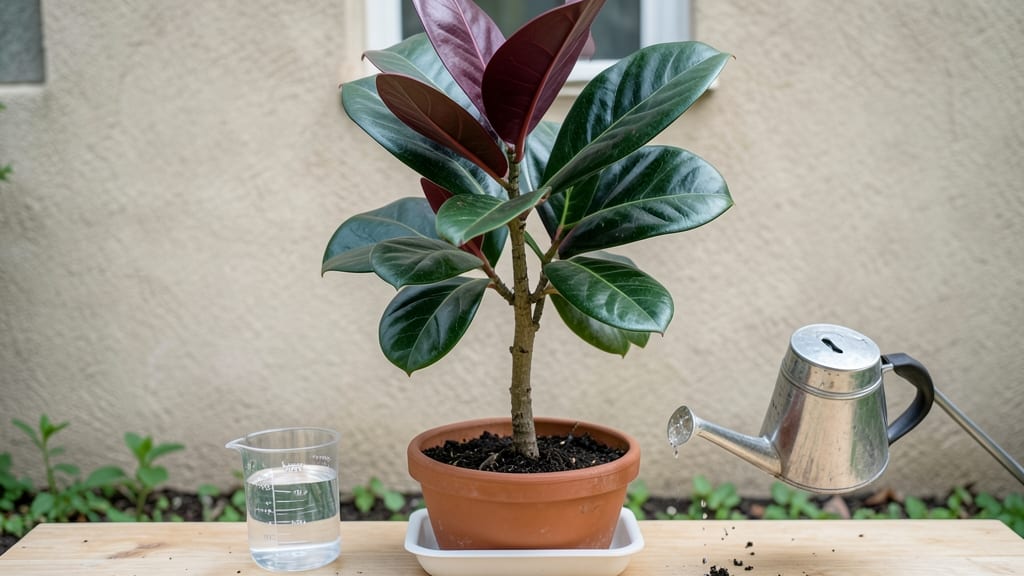
If you're wondering how much water a rubber plant needs, you're probably watering it wrong—and you're not alone. The truth is, most people overwater their rubber plants, turning their glossy leaves into a sad, yellow mess without even realizing it.
This tropical beauty actually thrives on a drier schedule than you'd think. Unlike thirsty succulents, rubber plants store water in their stems, but that doesn't mean they want to sit in soggy soil. The key is finding that sweet spot between too much and too little water.
In this guide, I'll break down the exact watering schedule your rubber plant needs to stay lush year-round—whether you're dealing with dry winter air or humid summer days.
You'll learn the simple "finger test" to check soil moisture, spot the warning signs of overwatering before it's too late, and adjust your routine for different seasons.
By the end, your rubber plant will be thriving with those signature deep green leaves, and you'll finally have the confidence to keep it happy without guessing. Let's get that watering routine right!

How often to water a rubber plant (by season & pot size)
Rubber plants (Ficus elastica) thrive on a consistent but cautious watering routine. Unlike succulents, they hate soggy soil but also struggle with drought. The key? Water deeply but infrequently, adjusting for your home’s humidity and pot size.
My rubber plant’s leaves stayed glossy for years once I mastered this balance—here’s how you can too.
Seasonal changes drastically alter your rubber plant’s water needs. In spring and summer, growth peaks, so the soil dries faster. But in fall and winter, its tropical roots slow down, needing far less moisture.
Even a 5°F temperature drop can halve your watering frequency. Ignore these shifts, and you’ll either drown its roots or watch its leaves crisp at the edges.
Pot material matters more than you’d think. Terracotta pots wick moisture away, so they need watering 2-3 days earlier than plastic. Meanwhile, self-watering containers can stretch intervals to 3 weeks in winter.
I swapped my ceramic pot for plastic last year, and my watering schedule now follows a predictable rhythm—no more guesswork.
🌱
| Season | Pot Size (Diameter) | Watering Frequency | Soil Check Depth | Notes |
|---|---|---|---|---|
| Spring | 6-8" | Every 5-7 days | 1-2 inches | Active growth phase |
| Summer | 6-8" | Every 7-10 days | 1.5-2.5 inches | Increase frequency if near AC |
| Fall | 6-8" | Every 10-14 days | 2-3 inches | Growth slows; reduce water |
| Winter | 6-8" | Every 3-4 weeks | 3-4 inches | Near dormancy; minimal water |
| Spring | 10-12" | Every 7-10 days | 2-3 inches | Larger pots retain moisture |
| Summer | 10-12" | Every 10-14 days | 2.5-3.5 inches | Check top 3 inches |
💧 Pro Tip: Always water until liquid runs from drainage holes—no exceptions!
My go-to method? The finger test. Stick your index finger 1-2 inches deep into the soil. If it feels dry, water thoroughly. If it’s still damp, wait 2
5 Signs your rubber plant is overwatered (and how to fix it)
Your rubber plant (Ficus elastica) thrives on routine, but too much water can turn its vibrant leaves yellow and mushy in days. The problem? Overwatering often goes unnoticed until it's too late.
I've seen this happen with my own plants—one minute they're lush, the next they're drooping and smelling sour. The key is recognizing the early signs before root rot sets in.
Start by checking the soil moisture with your finger. If the top 1-2 inches feel damp, hold off on watering. Rubber plants prefer their soil to dry out slightly between waterings.
But if you're seeing these 5 warning signs, your plant is already in distress—and it's time to act fast.
🚨 Overwatering Crisis Alert!
Your rubber plant needs well-draining soil and moderate watering—never soggy conditions. Here’s the exact fix:
- Stop watering immediately—let soil dry completely for 3-5 days.
- Repot in fresh, fast-draining mix (add perlite or orchid bark).
- Trim mushy stems with sterilized scissors to prevent spread.
Pro Tip:
Use a moisture meter or stick test—if water drips out, you’re overdoing it.
First, watch for yellowing leaves, especially on the lower stems. This is your plant’s SOS signal—it’s drowning in excess moisture. Unlike nutrient deficiencies, overwatered yellow leaves stay soft and often develop brown edges.
I once thought my plant had a pest problem until I noticed the mushy stems and realized it was waterlogged.
Next, inspect the stem and leaves for a telltale sign: black or brown spots that spread rapidly. These are signs of fungal growth, like root rot or stem rot, which thrive in wet conditions.
If you see these, your plant is in critical condition and needs urgent care. Gently squeeze the stem—if it feels mushy or hollow, it’s already compromised.
Don’t overlook the soil surface. If it smells foul or has a white, crusty residue, that’s mold or algae—a classic overwatering red flag. This happens when excess moisture sits on top, creating the perfect environment for harmful microbes.
To fix this, remove the top layer of soil and replace it with fresh, dry potting mix.
Here’s how to revive your plant: Repot it immediately in a container with drainage holes and a mix of cactus or orchid soil blended with perlite. Water lightly only when the top 2 inches of soil feel bone-dry.
Place it in bright, indirect light and avoid watering for at least 5 days to let the roots recover.
Finally, adjust your watering habits. Rubber plants need deep but infrequent waterings. In spring and summer, water every 1-2 weeks, while in fall and winter, reduce to every 3-4 weeks.
Always check the soil first—if it’s still moist, wait. With these fixes, your rubber plant can bounce back in 4-6 weeks, regaining its glossy, healthy leaves.