
Companion Plants
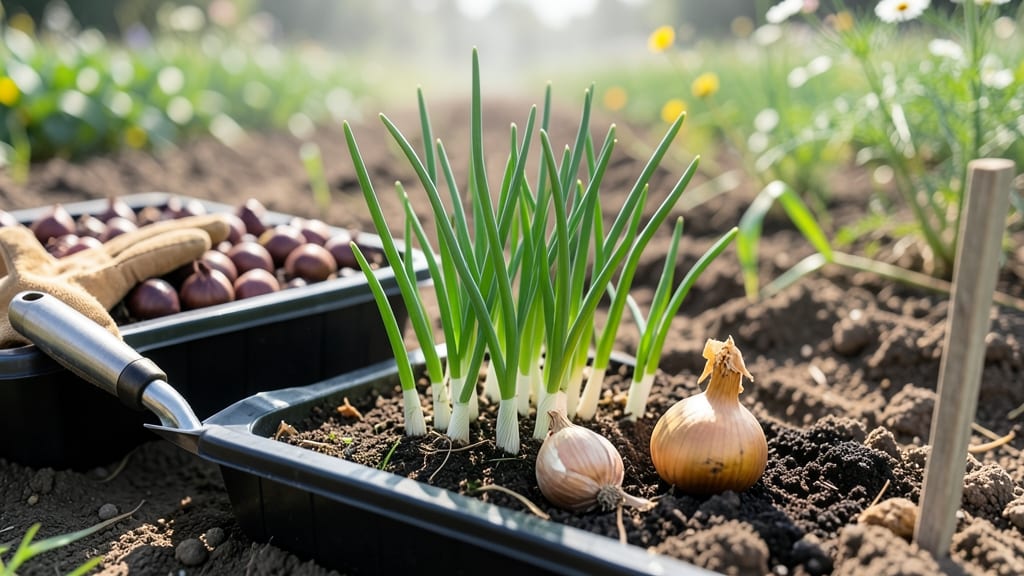
Timing your 🧅 onion planting in Zone 6 could mean the difference between a bountiful harvest and wasted effort. If you plant too early, cold soil will stall germination, leaving you with nothing but frustration.
But get the timing right, and you'll unlock onions that grow fast and strong—no guesswork required.
The key is understanding your soil's temperature, not just the calendar. Onions need consistent warmth between 50°F and 60°F to sprout reliably, which in Zone 6 typically means waiting until early spring (March-April) or late summer (August) for fall varieties.
Planting too soon risks slow starts, while waiting too long can lead to bolting before harvest.
I've learned the hard way that rushing onions into cold soil is a recipe for disappointment. That's why I'll show you exactly how to test your soil's readiness and adjust your planting schedule for fast germination—no matter whether you're using sets, seeds, or transplants.
Let's get those onions growing the right way.
Whether you're a first-time gardener or a seasoned pro, these tricks will help you avoid common mistakes and maximize your harvest. With the right timing and a little preparation, you'll be pulling up plump, flavorful onions in no time—just in time for summer cooking or fall storage.

Best planting windows for onions in Zone 6 by month
Zone 6 gardeners know timing is everything when planting onions. The difference between a bountiful harvest and wasted effort often comes down to understanding your soil temperature and frost dates.
Onions thrive in soil between 40°F and 60°F, making early spring and late summer the sweet spots for planting.
In Zone 6, your last average frost date typically falls around April 15, while the first frost arrives around October 15. These dates create two prime planting windows: early spring (March-April) and late summer (August). Let's break down the best months for each approach.
| Planting Window | Best Months | Soil Temp | Days to Maturity | Notes |
|---|---|---|---|---|
| Spring Planting | March-April | 45°F-60°F | 90-120 days | Plant 4-6 weeks before last frost for fastest growth |
| Early Spring (Sets) | February-March | 35°F-45°F | 100-120 days | Use cold-hardy varieties like 'Texas Early White' |
| Fall Planting | August | 50°F-60°F | 120-150 days | Plant 8-10 weeks before first frost for overwintering |
| Late Summer (Sets) | July-August | 40°F-50°F | 90-100 days | Best for short-day varieties like 'Candy' |
For spring planting, aim to get your onions in the ground by mid-April in most of Zone 6. This gives them enough time to establish roots before summer heat arrives.
If you plant too late, your onions may bolt or produce small bulbs. I always test my soil temperature with a simple soil thermometer to ensure it's above 45°F before committing.
Zone 6 has subtle regional variations that can shift your ideal planting window by 1-2 weeks. For example, areas like western Iowa (Zone 6a) can plant slightly earlier than central Pennsylvania (Zone 6b).
Check your local USDA frost maps to fine-tune your schedule. Even a 10-day difference can mean the difference between perfect bulbs and disappointing harvests.
Fall planting offers a second chance for Zone 6 gardeners. By planting in late August, you give onions time to develop before winter sets in. These overwintered onions often produce larger bulbs than spring plantings because they experience cooler temperatures during bulb formation.
Just be sure to use shorter-day varieties that won't bolt prematurely.
Pro tip: If you're planting from seed rather than sets, start indoors 8-10 weeks before your last frost date. Onion seeds germinate best at 60°F-70°F, so use a seedling heat mat if your indoor temperatures run cooler.
I've found that transplanting seedlings at the 4-6 leaf stage gives them the best start in Zone 6's variable spring weather.
Don't overlook succession planting as a strategy for continuous onion harvests. After your initial spring planting, follow up with transplants every 2-3 weeks through early June. This staggered approach ensures you have fresh onions ready to harvest throughout the summer.
Just remember that later plantings will produce smaller bulbs, so they're better suited for green onions or shallots.
One common mistake in Zone 6 is waiting too long to plant in spring. If you miss your March-April window, don't despair—you can still try planting in early May for a late summer harvest.
However, these onions will likely be smaller and more prone to bolt (flower prematurely) as summer temperatures rise. For best results,
Soil temperature secrets for faster onion germination
Onions are famously finicky about soil temperature, and in Zone 6, getting this right can mean the difference between a thriving crop and a failed experiment. The ideal germination range for onions is 50°F to 60°F, but many gardeners accidentally plant too early when soil is still chilly.
I've seen firsthand how cold soil delays germination by weeks, leaving seeds rotting in the ground instead of sprouting.
Testing your soil temperature is simpler than you think. Use a soil thermometer (just $10 at garden centers) to check the temperature at a depth of 1 inch—this is where onion seeds will be planted.
If your readings are below 50°F, wait at least 7-10 days before planting, as soil warms 5-10°F per week in spring. Patience here saves weeks of frustration later.
⚠️ callout warning ⚠️
🚨 Don't Plant Too Early!
Zone 6 Warning: Planting onions before soil reaches 50°F risks seed rot or stunted growth. In my 6a climate, March plantings often fail if soil is still 45°F—wait until late March or early April for reliable germination.
Pro Tip: Use black plastic mulch to warm soil 5-10°F faster if you're eager to plant early.
Once your soil is ready, planting depth matters just as much as timing. Onion seeds should go ½ inch deep, while onion sets (small bulbs) need only 1 inch of coverage. Deeper planting may seem safer, but it slows germination and increases rot risk in cold soil.
I've found that shallow planting with a light mulch layer (like straw) keeps moisture consistent while allowing soil to warm faster.
Mulching is your secret weapon for maintaining that 50°F-60°F sweet spot. A 2-inch layer of straw or grass clippings insulates the soil, preventing temperature swings that can shock young seedlings. In my garden, mulched beds stay 5°F warmer than unmulched ones on chilly mornings.
Just avoid thick layers—too much mulch can trap moisture and invite fungal diseases like onion smut.
If you've already planted and germination is slow, don't panic. Try covering the bed with clear plastic or row fabric for 3-5 days to trap heat. I've rescued many a cold-soaked seed batch this way. Just remove the cover once sprouts appear to prevent overheating.
For future plantings, consider starting seeds indoors 4-6 weeks before your last frost (around March 1st in Zone 6) and transplanting when soil warms up.
Remember, onions are cool-season crops that tolerate light frosts but despise heat. If your soil stays above 70°F for more than a week, onions will bolt (send up flowers) instead of forming bulbs.
That's why fall plantings in August often work better than late-spring ones—cooler nights keep soil temperatures in that 50°F-60°F goldilocks zone longer.