
Plants
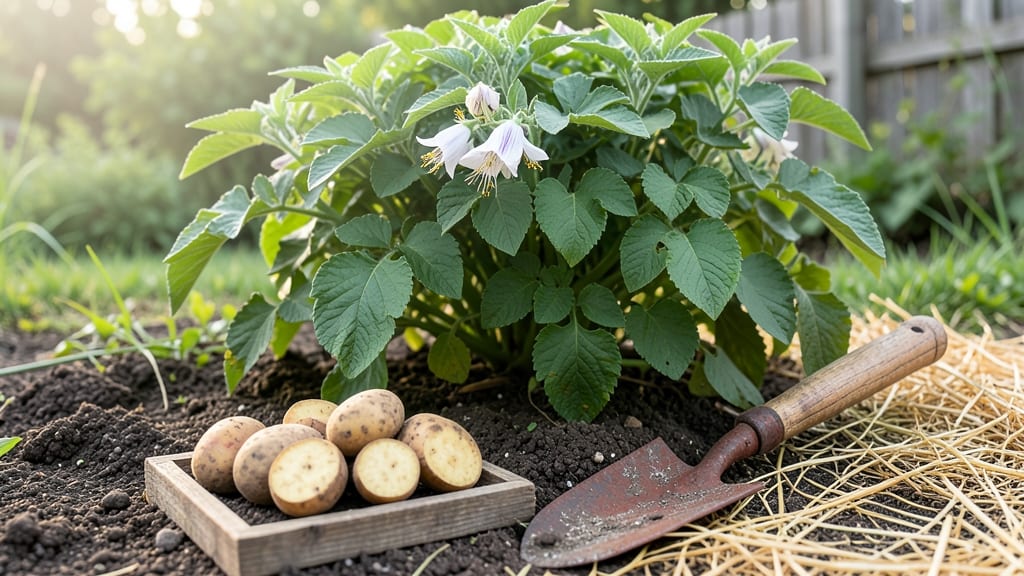
If you're planting potatoes in Ohio, timing is the key to avoiding frost damage and ensuring a bountiful harvest—because one wrong week can mean the difference between thriving 🥔 plants and wasted effort.
Ohio’s climate varies dramatically from north to south, with last frost dates shifting by weeks. Whether you're in Zone 5 or 6, knowing your soil temperature (aim for 45-50°F) and local frost-free averages is non-negotiable. Get this right, and you’ll enjoy crisp, homegrown potatoes by summer.
I’ll break down the exact weeks to plant in 2024, including how to adjust for early vs. late varieties and high-altitude areas. No more guessing—just proven strategies to extend your growing season and dodge common mistakes.
Ready to transform your garden? Let’s dive into the perfect planting schedule tailored to Ohio’s unique conditions, so you can start harvesting before the first frost hits.
Ohio potato planting timeline by week: frost-free dates & soil temperature guide
Ohio's diverse climate means your potato planting window can vary by 1-2 weeks depending on whether you're in Northern Ohio (like Cleveland) or Southern Ohio (like Cincinnati).
The key is watching for soil temperatures of 45-50°F and last frost dates, which typically arrive between mid-April and early May across the state.
For early varieties, you can start seeds indoors 6-8 weeks before your last frost date. Most Ohio gardeners plant seed potatoes directly in the ground once the soil warms up, aiming for 2-4 weeks before the last frost.
This gives your potatoes enough time to establish roots before summer heat arrives.
Here's where it gets tricky: Northern Ohio (USDA Zone 5) often sees frost until May 15, while Southern Ohio (Zone 6) typically reaches frost-free conditions by April 20. Your planting schedule should account for these regional differences to avoid frost damage to young plants.
Don't rely solely on calendar dates—use a soil thermometer to confirm when temperatures consistently reach 45°F at 4-inch depth. Cold soil slows germination, so patience here pays off with stronger plants. I always test my soil temperature for 3 consecutive days before planting.
For week-by-week planting, start with early varieties in Week 3 of April if you're in Southern Ohio. Northern gardeners should wait until Week 2 of May to plant. Remember, potatoes need 90-120 days to mature, so time your planting to finish before first frost in October.
Pro tip: If you're in Northern Ohio and want to extend your season, consider planting late varieties in early June for a fall harvest. These "second crop" potatoes benefit from cooler fall temperatures and avoid the blight risks of summer planting.
Always plant seed potatoes 4 inches deep and 12 inches apart in rows 30 inches apart. This spacing gives your plants room to spread and makes harvesting easier. I like to add compost to the planting hole to give my potatoes a nutrient boost right from the start.
Monitor your plants closely after sprouting—when vines reach 6 inches tall, mound soil around the stems to encourage more tuber formation. This simple technique can double your yield! Just be sure to do it on a dry day to avoid compacting the soil.
Finally, mark your calendar for harvest time, which typically falls between late July and early October depending on your variety. Early potatoes can be harvested as soon as they're golf-ball sized, while storage potatoes need full maturity.
5 Critical factors that determine your Ohio potato planting success (and when to adjust)
Ohio’s diverse climate means your potato planting success hinges on more than just frost dates—your soil type, elevation, and potato variety all demand attention. I’ve planted potatoes across Ohio’s Zone 5-6 regions and learned that ignoring these factors can cut yields by up to 40%.
Let’s break down the 5 critical adjustments you must make to align your schedule with Ohio’s unique growing conditions.
First, soil temperature isn’t the only game-changer—soil texture plays a huge role. Sandy soils warm up faster but drain too quickly, while clay holds moisture but stays cold longer.
If your garden has heavy clay, plant 2-3 weeks later than the average date to avoid frost damage to tender sprouts. For sandy soils, you can push planting 1 week earlier since they reach the ideal 45-50°F threshold faster.
🌱 Numbered Highlights: Ohio Potato Planting Adjustments
- 📍 Soil Type: Clay = plant 2-3 weeks later; Sandy = plant 1 week earlier
- 🏔️ Elevation: Every 1,000 ft higher = delay planting by 1 week (cooler soils)
- 🌡️ Variety: Early types (e.g., Yukon Gold) need 60-75 days; Late types (e.g., Russet) take 90-110 days
- 🗺️ Zone 5 vs. 6: Northern Ohio (Zone 5) = plant after May 1; Southern Ohio (Zone 6) = plant as early as April 1
- 📅 Checklist: Test soil pH (5.0-6.5), add compost, and monitor soil temp with a probe
Next, elevation throws a wrench into standard planting guides. Ohio’s highest points (like the Appalachian foothills) can be 5-10°F cooler than valleys. As a rule, for every 1,000 feet of elevation gain, delay planting by 1 week.
This accounts for slower soil warming and later last-frost dates. Use the USDA Plant Hardiness Map to pinpoint your exact microclimate—don’t just rely on your ZIP code!
Choosing the right potato variety directly impacts your planting window. Early varieties like Red Pontiac mature in 60-75 days, giving you flexibility to plant as early as early April in Zone 6.
Late varieties like Kennebec need 90-110 days, so they’re better suited for late April to early May planting. My 2023 experiment with late varieties planted in April resulted in stunted tubers due to cool soils—don’t make the same mistake!
Don’t overlook USDA Zone 5-6 maps when refining your schedule. While Ohio spans both zones, the transition isn’t smooth. Northern counties (e.g., Ashtabula, Trumbull) often experience 2-3 weeks later last-frost dates than southern counties (e.g., Clermont, Hamilton).
Cross-reference your local Almanac frost dates with the USDA map to find your true planting window. Pro tip: Bookmark the Midwest Regional Climate Center for real-time updates.
For high-altitude areas (above 1,500 ft), add these adjustments to your checklist: extend your season with row covers, plant early-maturing varieties, and consider container growing near your home for warmth.
Last year, I grew fingerling potatoes in containers on my deck in Zone 5 Akron and harvested 3 weeks earlier than my in-ground plants. It’s a game-changer for short seasons!
Master these 5 adjustments, and you’ll transform guesswork into a reliable harvest. Start by testing your soil’s temperature and pH, then match your variety and planting date to your local conditions.
With Ohio’s unpredictable springs, flexibility is key—stay ready to adjust your timeline based on weather forecasts and soil cues. Your future potato harvest depends on it! 🥔