
Plants
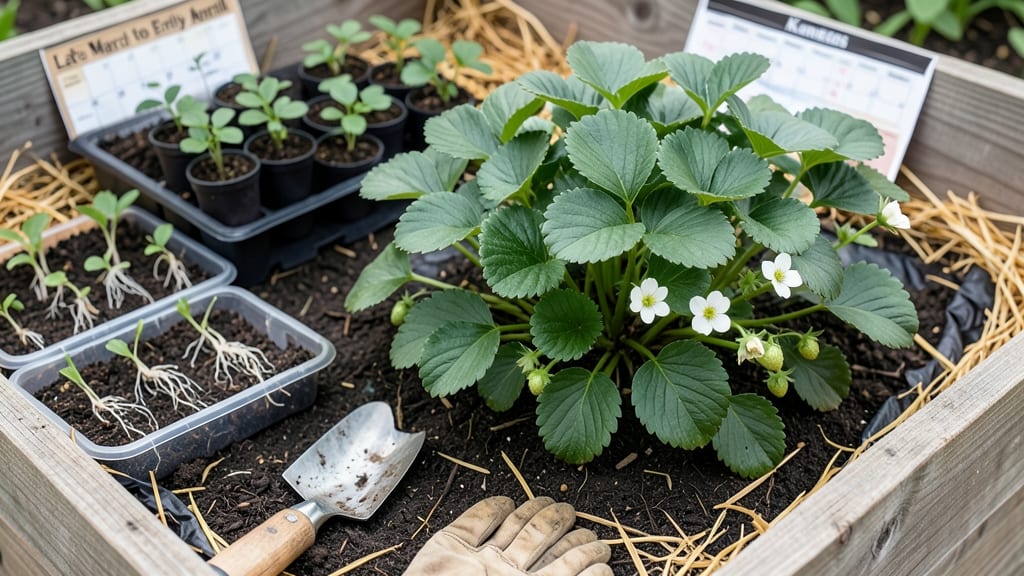
Planting strawberries in Kansas at the wrong time can mean the difference between a bountiful harvest and wasted effort—especially when frost dates loom just weeks apart.
With USDA Zone 6a conditions, timing your 🍓 strawberries for either spring or fall planting is critical to avoid early frost damage or missed growing seasons.
Most Kansas gardeners swear by early spring planting in March or April, giving plants 6-8 weeks to establish roots before the last frost hits around April 15.
But did you know fall planting—between August and September—can also yield a productive crop the following year? The key lies in understanding your strawberry variety and local microclimates.
Whether you're working with bare-root plants or potted varieties, proper soil prep and frost protection can extend your growing window. I’ll walk you through the exact steps to maximize your strawberry yield, from soil temperature checks to mulching techniques that work in Kansas’ unpredictable climate.
Ready to enjoy homegrown berries from June to July? Let’s dive into the perfect planting schedule—plus the top varieties that thrive in your zone—so you can skip the guesswork and start harvesting sooner.
Best strawberry planting months in Kansas by variety (June-bearing vs. everbearing vs. day-neutral)
Kansas’ variable climate makes timing critical for strawberry success. The last frost date typically falls around April 15 in most regions, but Wichita and Kansas City can vary by 1-2 weeks. Choosing the right strawberry variety and planting window ensures your berries thrive from June through October.
June-bearing varieties produce one massive harvest in late spring/early summer, while everbearing plants offer two smaller harvests. Day-neutral strawberries keep producing all season long. Each type has optimal planting windows to maximize yields in Kansas’ USDA Zone 6a.
Spring planting (March-April) is ideal for all varieties, but fall planting (August-September) works for everbearing and day-neutral types. The key is avoiding freezing soil temperatures below 40°F, which can stunt root growth.
For June-bearing varieties, prioritize spring planting (March-April) to align with Kansas’ natural flowering cycle. These plants need 6-8 weeks of chilling below 45°F to set fruit, so avoid fall planting unless you’re in Zone 7 near the Missouri border.
Everbearing strawberries like 'Ozark Beauty' thrive with both spring and fall plantings. In Wichita’s drier climate, add 2-3 inches of mulch after planting to retain moisture. Fall-planted everbearers often produce smaller berries but extend your harvest into October.
Day-neutral varieties such as 'Seascape' are my top recommendation for Kansas gardeners. They produce continuously from June through October, making them perfect for Kansas City’s longer growing season. Plant them in August-September for a spring harvest the following year.
Regional adjustments matter: Southern Kansas (e.g., Garden City) can plant 1-2 weeks earlier than Northern Kansas (e.g., Hays). Use your local Cooperative Extension office frost dates to fine-tune timing. For example, Kansas City’s last frost averages April 10, while Wichita’s is closer to April 15.
Pro tip: Soil temperature is more critical than air temperature. Use a soil thermometer to confirm 50°F+ before planting. In cool springs, delay until soil warms naturally. For fall plantings, aim to get roots established 4-6 weeks before first frost.
After planting, water deeply (1 inch per week) and avoid overhead watering to prevent fungal diseases like gray mold. In Wichita’s high winds, stake plants or use low tunnels to protect berries. With the right timing, you’ll enjoy homegrown strawberries from June through October!
How to extend Kansas strawberry season: soil prep, mulching, and frost protection tips
Kansas’ unpredictable spring frost dates can turn a promising strawberry crop into a sad, frozen disappointment—but don’t let that stop you. The secret to a long, productive strawberry season lies in three key strategies: soil preparation, smart mulching, and frost protection.
These techniques help your 🍓 plants establish roots early, retain warmth, and survive late frosts that can hit as late as April 15 in many regions.
I’ve learned the hard way that simply planting strawberries in March or April isn’t enough. Without proper soil prep, your plants may struggle to take root before the first frost.
And if you’re planting in fall (August-September) for an early spring harvest, mulching becomes even more critical to insulate roots through winter. Let’s break down the exact steps to give your strawberries the best possible start.
⚠️ Critical Warning: When to Plant Strawberries in Kansas
Planting too early risks frost damage, while planting too late delays harvest. In USDA Zone 6a, aim for these ideal windows:
- Spring: March 15–April 15 (4–6 weeks before last frost)
- Fall: August 1–September 15 (6–8 weeks before first frost)
Pro Tip: Use a soil thermometer—strawberries need soil temps of at least 40°F to thrive.
Before you even think about planting, test your soil’s pH—strawberries thrive in acidic soil (5.5–6.5). If your soil is too alkaline, amend it with peat moss or sulfur 2–3 weeks before planting. I once skipped this step and ended up with yellowing leaves and stunted growth.
Don’t make my mistake! Mix in 2–3 inches of compost to improve drainage and fertility, as Kansas’ clay-heavy soils can compact easily.
Once your soil is ready, mulching is your best friend for extending the season. Straw mulch (not hay, which can harbor weeds) works wonders by retaining moisture and insulating roots from temperature swings. Apply a 3–4 inch layer around plants, leaving a 1-inch gap around the crown to prevent rot.
For extra frost protection, top with black plastic mulch in early spring—it warms the soil 5–10°F faster than bare ground.
When late frosts threaten (and they will in Kansas!), act fast. Cover plants with frost cloth or old bedsheets before sunset and remove them by 10 AM to let sunlight in. For bare-ground plants, use row covers supported by hoops to create a microclimate.
I’ve saved entire beds this way—even when temperatures dropped to 28°F. Water your plants before a frost (but not after)—moist soil retains heat better than dry soil.
For fall-planted strawberries, double down on mulch to protect roots through winter. A 6-inch layer of straw can keep soil temps 10°F warmer than unmulched beds. In early spring, remove old mulch and replace it with fresh to prevent fungal diseases like gray mold.
With these techniques, you’ll enjoy ripening berries as early as June—or even a second harvest in fall if you plant everbearing varieties!