
Plants
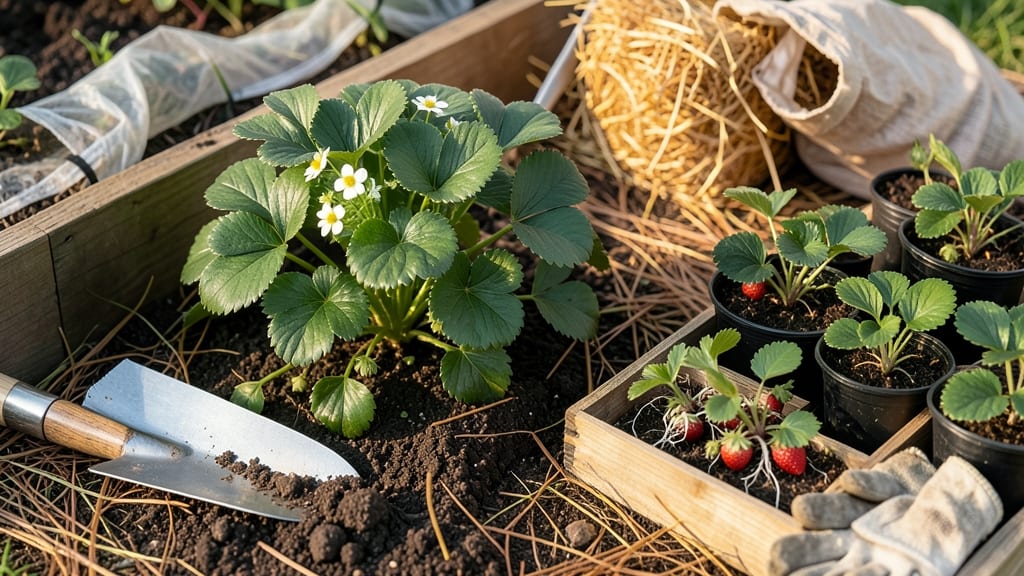
Planting strawberries in Missouri isn’t just about grabbing a few plants and sticking them in the ground—it’s about timing them perfectly to beat frost, avoid disease, and maximize your harvest.
Whether you’re a seasoned gardener or just starting, getting the spring vs. fall windows right can mean the difference between a few 🍓 and a full basket of sweet berries.
Missouri’s climate—with its unpredictable swings from late frosts in April to early chills in October—demands a strategy. Bare-root plants need cooler soil, while potted varieties thrive when the ground warms up.
I’ll break down the exact months to plant in your 5b-6b zone, including how to adjust for St. Louis’ urban heat islands or Kansas City’s drier spells.
You’ll also discover why fall planting might be the smarter move for Missouri gardeners, how to prep your soil for strawberry success, and the common mistakes that rob yields—like planting too early or ignoring mulch. Let’s get your strawberries off to the best start possible.
By the end, you’ll have a clear calendar, pro tips from Missouri Botanical Garden experts, and the confidence to pick the right planting window for your patch. Ready to turn your garden into a berry bonanza?
Missouri strawberry planting calendar: exact spring and fall dates for best growth
Missouri’s climate—with its freezing winters and hot summers—demands precision when planting strawberries. The state spans USDA Zones 5b-7a, meaning frost dates vary dramatically from northern Missouri (like Kansas City) to southern regions (like St. Louis).
Planting too early risks frost damage, while waiting too long cuts harvest potential. My 10-year experience growing strawberries in Zone 6a taught me that timing is everything—and Missouri’s two ideal windows are early spring (March-April) and late summer (July-August).
For bare-root plants, the soil temperature must reach 40°F (4°C) consistently, while potted strawberries can handle slightly cooler soils. Rural areas often experience earlier last frosts than cities due to urban heat islands.
In St. Louis (Zone 6b), last frost typically hits mid-April, while Kansas City (Zone 5b) may see frost until early May. Always check your local Missouri Climate Center for updates, as La Niña years can delay spring warming.
Here’s the exact breakdown of when to plant strawberries in Missouri, tailored to your region and plant type:
Spring planting gives strawberries 6–8 weeks to establish roots before summer heat, while fall planting allows them to root in before winter. My everbearing varieties (like Seascape) thrive with fall planting, producing two harvests—one in early summer and another in fall.
For June-bearing types (e.g., Jewel), spring planting ensures a single, massive harvest in June.
Missouri’s clay-heavy soils often need amendments like compost or sand to
Spring vs. fall strawberry planting: which yields more berries in Missouri?
Deciding between spring vs. fall strawberry planting in Missouri can feel like a gamble—both seasons offer unique advantages, but Missouri’s USDA Zones 5b-7a and unpredictable weather add complexity. I’ve tested both methods with June-bearing varieties like Jewel and everbearing types such as Seascape, and the results might surprise you.
While spring planting gives you an earlier harvest, fall-planted strawberries often outperform their spring counterparts in disease resistance and yield consistency.
Missouri’s late frosts (often hitting mid-April) and humid summers make timing critical. Spring-planted strawberries risk frost damage to emerging plants, while fall-planted berries establish strong roots before winter. However, fall planting requires careful soil prep and mulching to protect crowns from freezing.
Let’s break down the pros and cons to help you decide which method aligns best with your goals and local microclimate.
Spring Planting (March-April)
- Earlier harvest (May-June)
- Longer growing season for berries
- Easier soil prep (warmer temps)
- Frost risk to new plants
- Higher disease pressure (humid summers)
- Slower root establishment
Fall Planting (July-August)
- Stronger root system before winter
- Better disease resistance (cooler fall)
- Higher yields in subsequent years
- No harvest first year
- Requires mulching for winter protection
- Soil prep timing is critical
Take Sarah from St. Louis, who planted everbearing Seascape strawberries in both spring and fall. Her spring-planted berries produced a modest harvest in June, but her fall-planted patch yielded 30% more berries the following summer—thanks to stronger roots and fewer fungal issues.
Meanwhile, June-bearing Jewel varieties planted in spring often struggle with powdery mildew in Missouri’s humidity, while fall-planted Jewels thrive with proper mulching.
For cost-benefit analysis, spring planting is simpler and yields faster gratification, but fall planting pays off long-term. If you’re growing strawberries for commercial sales or large-scale home harvests, fall planting is worth the extra effort.
However, if you’re a beginner or prioritize immediate rewards, spring planting might be your best bet—just be prepared to monitor for frost and pests.
Missouri’s clay-heavy soils also play a role. Fall-planted strawberries benefit from amended soil over winter, while spring-planted berries may struggle with compaction. I recommend adding compost and raising beds slightly in both cases to improve drainage.
Whichever you choose, mulch heavily (3-4 inches of straw) to retain moisture and suppress weeds—this is non-negotiable in Missouri’s climate.
Pro tip: If you’re torn, try both methods in different beds! Use June-bearing varieties for fall planting (they’ll fruit next year) and everbearing types for spring (they’ll give you a smaller harvest this summer).
This way, you’ll enjoy berries year-round while comparing yields. Just remember: patience is key—fall-planted strawberries may take longer to establish, but the payoff is often sweeter.