
Companion Plants
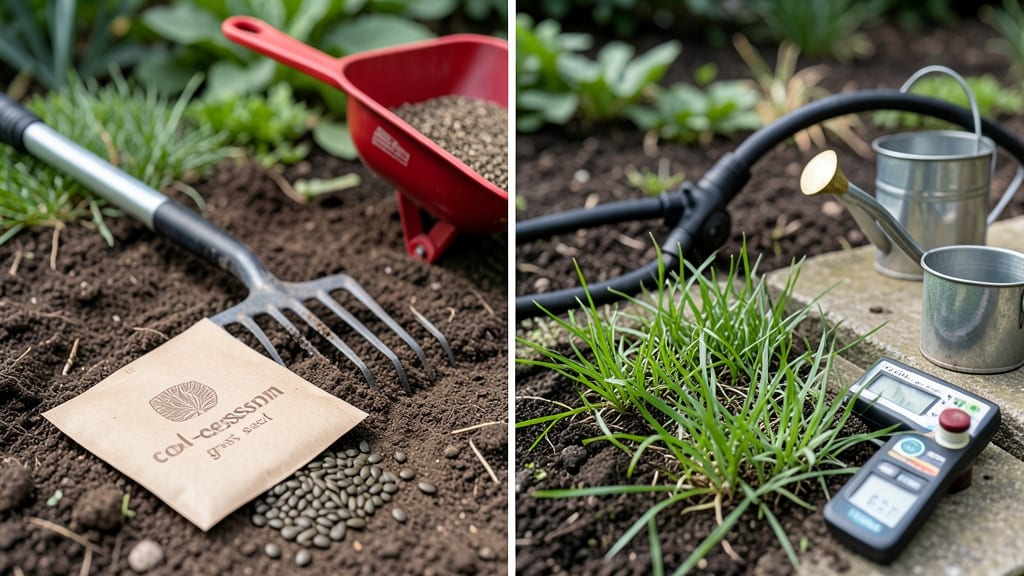
Planting grass seed at the wrong time in spring can leave you staring at bare patches for weeks—even months—while your neighbors enjoy a vibrant lawn. The secret to fast, even germination lies in understanding your local frost dates and soil temperature, not just the calendar.
For most of the U.S. (especially Zone 6a like me), the ideal window opens 4-6 weeks before your last frost date, typically late March to early April.
This timing ensures your 🌱 grass seed meets warm soil without racing against summer heat, giving it the best chance to establish strong roots before summer stress hits.
Why does this matter? Because rushing too early risks frost damage, while waiting too long means slower growth and weaker grass. I’ll break down exactly how to time it—plus soil prep tricks and watering secrets—to turn your patchy lawn into a lush carpet by summer.
Skip the guesswork: Learn the exact weeks to plant for your region, plus pro tips to avoid common mistakes that kill germination before it starts.
Best weeks before last frost to plant grass seed in spring for optimal germination
Getting your grass seed timing right in spring is like catching a wave—too early and you risk frost damage, too late and summer heat stunts growth. The sweet spot is planting 4-6 weeks before your average last frost date, when soil temperatures hit 55-65°F for consistent germination.
This window gives seedlings enough time to establish roots before summer stress kicks in.
For most U.S. regions, this translates to late March through early May, but your exact timing depends on whether you're growing cool-season grasses (like Kentucky bluegrass or fescue) or warm-season grasses (like Bermuda or Zoysia).
Cool-season varieties need that early window, while warm-season grasses can wait until late spring when soil warms further.
Here’s the data-backed breakdown of when to plant based on your climate zone and grass type, plus soil temperature thresholds to watch:
In northern climates (Zones 3-6), aim for late March to early April for cool-season grasses. For example, if your last frost is May 15, plant by April 1-15. Check your local USDA Plant Hardiness Zone—colder zones (like Minnesota or Maine) need that earlier window to avoid late frosts.
Southern regions (Zones 7-10) can plant earlier because milder winters mean less frost risk. Warm-season grasses here thrive when planted mid-March to late April, as soil warms faster. For instance, in Florida or Texas, Bermuda grass can go in as early as late February if soil temps are right.
Moisture is just as critical as timing. After planting, keep soil consistently moist (not soggy) for 2-3 weeks—this is when roots establish. Use a light mulch layer (like straw) to retain moisture and protect seedlings from temperature swings. Water early morning to prevent fungal risks from evening dampness.
Pro tip: Test your soil temperature with a soil thermometer (available for $10 at garden centers). Cool-season grasses need 55°F+ to germinate, while warm-season types stall below 65°F. If temps dip, delay planting or use a frost blanket to shield seedlings.
Regional adjustments matter—check your local extension service for hyper-local frost dates. For example, Chicago’s last frost is around May 15, so plant Kentucky bluegrass by April 15. Meanwhile, Atlanta’s April frost risk is lower, so late March works for tall fescue.
Remember: Seedling establishment takes 3-4 weeks. If planted too late, summer heat will stress young grass. For fastest germination, pair the right timing with loose, well-draining soil and light raking to ensure seed-to-soil contact.
By following these data-backed weeks and soil temp rules, you’ll give your grass seed the best shot at thick, uniform growth before summer takes over. Happy planting! 🌱
How to prepare your lawn for spring grass seed planting: step-by-step soil and weather checklist
Once you’ve locked in the perfect spring planting window, the real work begins with soil prep and weatherproofing. I’ve learned the hard way that skipping these steps leads to patchy germination—even with the best seed.
The key is creating an environment where your grass seedlings can thrive without competition from weeds or temperature swings.
Start by testing your soil pH—most grasses prefer a neutral range of 6.0 to 7.5. If your soil is too acidic or alkaline, amend it with lime (to raise pH) or sulfur (to lower it) at least 2 weeks before planting.
My local extension office even offers free soil tests—definitely worth the time!
🌱 Step-by-Step Lawn Prep Checklist
- 1 Test soil pH (aim for 6.0-7.5) and amend if needed
- 2 Kill weeds with glyphosate (2 weeks before planting) or vinegar spray (for organic gardens)
- 3 Till soil 2-3 inches deep to loosen compaction and mix in 1-2 inches of compost
- 4 Rake for smooth seedbed—remove debris and create a fine, crumbly texture
- 5 Schedule irrigation—water lightly twice daily (morning/evening) for first 2 weeks
- 6 Protect seedlings with frost blankets or straw mulch if night temps drop below 40°F
After tilling, spread a thin layer of starter fertilizer (high in phosphorus) to encourage root development. I swear by a 10-20-10 ratio for new lawns—it gives that initial growth boost without burning tender seedlings. Just be sure to water it in thoroughly to activate the nutrients.
Weatherproofing is often overlooked, but it’s critical for spring planting. If your forecast shows unpredictable temperature swings, cover newly seeded areas with frost blankets or straw mulch at night. This creates a microclimate that shields delicate seedlings from late frosts while still allowing sunlight to penetrate.
Finally, set up a consistent watering schedule—light, frequent watering (twice daily) keeps the soil moist but not soggy. Use a rain gauge or tuna can to measure ½ inch of water per session.
My neighbor’s lawn looked perfect until I saw his sprinklers running all day—overwatering suffocates roots just as much as underwatering.