
Planting
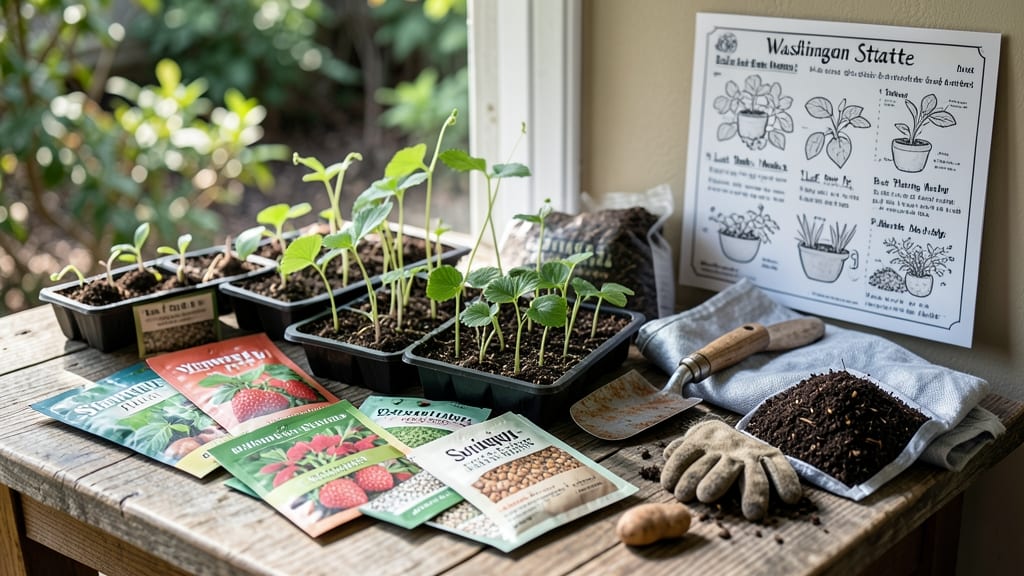
When to plant a garden in Washington State can make all the difference between a lush, productive harvest and a disappointing failure—especially when Seattle’s coastal mild winters collide with the Palouse’s late frosts.
Whether you're planting 🌱 peas in March or saving space for fall kale, knowing your USDA zone and elevation is the key to success.
I’ve learned the hard way that one-size-fits-all planting charts won’t cut it here. The Puget Sound’s Zone 8 might be ready for tomatoes by early May, while Zone 7 in Spokane still needs row covers until June.
Let me break down the exact windows—including microclimate tweaks—that’ll help you avoid frost traps and maximize your garden’s potential.
You’ll discover how to stretch your growing season with cold-hardy crops, when to start seeds indoors (hint: garlic goes in October!), and why some years demand a 2-week shift in your usual schedule. No more guessing—just reliable, region-specific advice tailored to Washington’s quirks.
Ready to turn your garden into a year-round powerhouse? Let’s dive into the month-by-month schedule that’ll keep your soil happy, your plants thriving, and your harvests bountiful—no matter where you are in the state.
Washington State planting timelines by USDA Zone and elevation
Washington State spans USDA Zones 7-9, but elevation and microclimates create dramatic differences in planting windows. Coastal areas like Seattle (Zone 8) may have mild winters, while inland Spokane (Zone 6) or mountain regions (up to 5,000 ft) face earlier frosts.
Understanding these variations ensures your vegetables, flowers, and perennials thrive year-round.
Use these last-frost-date guidelines to time your plantings precisely. Coastal areas can start 4-6 weeks earlier than inland zones, while high-elevation gardens may need to wait until late May or June for frost-sensitive crops.
Always check your local USDA Plant Hardiness Zone Map and adjust for elevation—every 1,000 ft gain adds ~5°F cooler temps.
Key adjustments by elevation:
- 0-1,000 ft (coastal/inland lowlands): Plant early March to mid-April for cool-season crops.
- 1,000-3,000 ft (foothills): Delay until mid-April to early May for frost-sensitive plants.
- 3,000-5,000 ft (mountains): Wait until late May to June for warm-season crops.
| Zone/Elevation | Last Frost Date | Cool-Season Planting | Warm-Season Planting | Perennial Planting |
|---|---|---|---|---|
| Zone 7 (0-1,000 ft, e.g., Yakima) | Mid-April | Early March - Late April | Mid-May - Early June | Early April - Late May |
| Zone 8 (0-1,000 ft, e.g., Seattle) | Late March - Early April | February - Late April | Early April - Mid-May | Early March - Early May |
| Zone 9 (coastal, e.g., Long Beach) | January - Early February | January - Early April | February - March | December - Early April |
| Zone 7 (1,000-3,000 ft, e.g., Wenatchee) | Early May | Late March - Early May | Mid-June - Early July | Late April - Late May |
| Zone 6 (3,000-5,000 ft, e.g., Mt. Rainier foothills) | Late May - Early June | Early May - Late May | Late June - Early July | Late May - Early June |
For coastal gardens (Zones 8-9), prioritize early spring plantings like peas, spinach, and kale in February-March. Inland areas (Zones 7-8) can start broccoli, cabbage, and carrots by late March, while tomatoes, peppers, and basil should wait until after Memorial Day to avoid frost.
High-elevation gardens (3,000+ ft) often have shorter growing seasons.
Focus on fast-maturing varieties like bush beans, radishes, and lettuce, and use row covers to extend the season. Perennials like lavender and Russian sage thrive in these cooler climates and can be planted as early as April.
Use the National Weather Service’s frost prediction tools or local Cooperative Extension offices (e.g., WSU Extension) for real-time adjustments. For example, Spokane’s last frost often occurs 2-3 weeks later than Seattle’s, even though they’re the same zone due to inland cold pockets.
Pro tip: Test your soil temperature before planting. Most cool-season crops need soil at 40-50°F, while warm-season crops like tomatoes and cucumbers require 60°F+ soil. A simple soil thermometer ($10) prevents costly mistakes.
Remember, microclimates matter. A south-facing slope warms up faster than a north-facing garden, and urban heat islands (like Seattle’s downtown) can push planting dates 1-2 weeks earlier than rural areas. Observe your garden’s unique patterns for 3+ years to refine your schedule.
For container gardening, adjust timelines by 1
How to adjust planting dates for Washington’s unpredictable weather patterns
Washington’s microclimates create challenges—Zone 7 areas like Yakima can experience late frosts in May, while Zone 9 spots in Whatcom County may face heat spikes in July. The key is flexibility: adjust planting dates based on real-time conditions, not just averages.
I’ve learned to use row covers and cold-hardy varieties to protect tender plants, while also planning for late-season harvests that thrive in cooler fall temperatures.
Start by monitoring local frost dates—tools like the National Weather Service or AgWeatherNet provide real-time alerts. For example, spinach and peas can handle light frosts, so I plant them 2–3 weeks before the last expected frost in Zone 8.
Meanwhile, tomatoes and peppers need warmer soil, so I wait until mid-May in inland areas or early April near the coast. This timing ensures roots establish before heat stress sets in.
Here’s how I adjust planting dates for Washington’s unpredictable weather:
- 1 Use row covers for early spring or late fall plantings. A floating row cover can add 4–8°F protection, letting me plant lettuce or kale 3 weeks earlier in Zone 7 without frost damage.
- 2 Choose cold-hardy varieties like ‘Early Girl’ tomatoes or ‘Red Norland’ potatoes, which tolerate 40°F soil temps. These thrive in Zone 6–8 and extend the harvest window by 2–3 weeks compared to standard varieties.
- 3 Plant late crops like garlic or broccoli in August for fall harvests. These handle cool nights and even light frosts, ensuring a second harvest when summer crops fade.
- 4 Adjust for elevation: Add 1–2 weeks to planting dates for every 1,000 ft above sea level. For example, Zone 7 in the Cascade foothills may need late-May plantings for tomatoes, while Zone 9 near Bellingham can start in early April.
- 5 Use succession planting for high-value crops like bush beans or radishes. Sow every 2 weeks from April to July to stagger harvests and avoid blight risks from prolonged heat or rain.
For Zone 9 gardeners, heat is the bigger threat. I’ve switched to shade-cloth for cucumbers and squash in July to prevent fruit scorch. Meanwhile, in Zone 7, I prioritize fast-maturing varieties like ‘Quick Pick’ peas or ‘Cherry Belle’ radishes to harvest before the first fall frost in October.
These tweaks turn Washington’s unpredictable weather into an advantage.
Pro tip: Keep a gardening journal to track your local frost dates and heat spikes. Over 3 years, I’ve narrowed my planting windows by 10–14 days, reducing wasted seeds and maximizing yields.
Start with one or two test beds each season to refine your timing—your future harvest will thank you!
🌱