
Plants
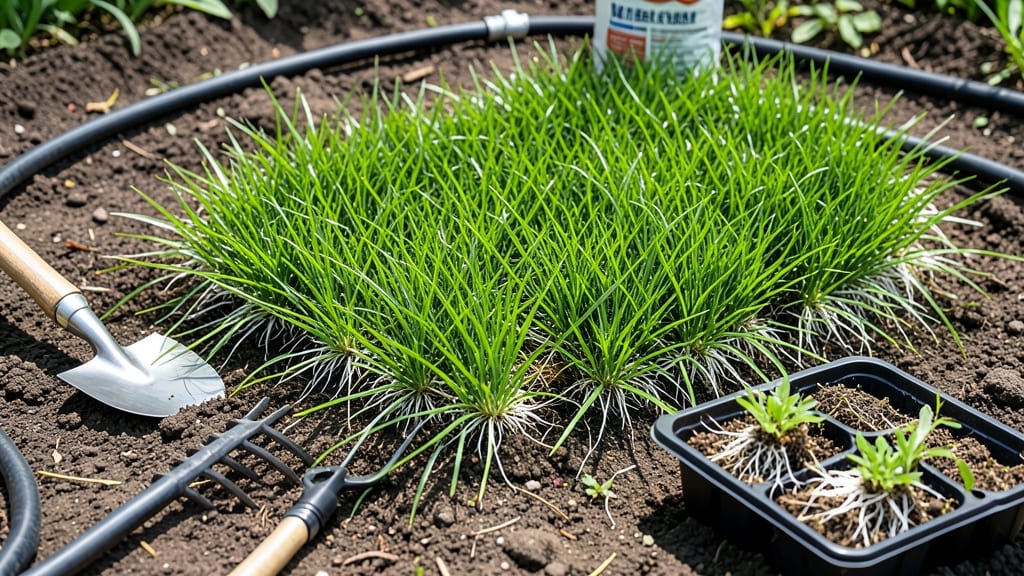
Planting Bermuda grass in Phoenix isn't just about timing—it's about survival in 110°F+ heat. The key to a thick, drought-resistant lawn starts with planting between late April and early June, when soil temps are warm enough to kickstart growth but not so scorching they shock young roots.
Most gardeners in USDA Zone 9b make the mistake of planting too early, only to watch their grass struggle as summer arrives.
By waiting until after the last cool snap (usually around March 15), you give your 🌱 Bermuda grass a fighting chance to establish deep roots before the real heat hits.
This isn't just theory—it's what works for Phoenix lawns. I've seen firsthand how grass planted in May thrives where February starts fail. The secret? A combination of proper soil prep, strategic watering, and choosing the right heat-tolerant varieties like TifTuf or Celebration.
Ready to transform your yard into a lush, low-maintenance oasis? Let's break down exactly how to time your planting, prep the soil, and keep your Bermuda grass green through Phoenix's brutal summers—without wasting water or money.
Optimal planting windows for Phoenix Bermuda grass success
Phoenix’s 110°F+ summers demand precise timing for Bermuda grass success. Planting too early risks weak roots before heat stress, while late planting may leave your lawn struggling to establish before dormancy. The ideal window balances soil warmth and rainfall—critical for Phoenix’s USDA Zone 9b climate.
Bermuda grass thrives in warm-season conditions (65°F+ soil temps), making late spring to early summer the prime period. This schedule ensures roots establish before summer’s peak heat, while avoiding the dormancy risks of fall planting.
For Phoenix, this means targeting April through early June—when daytime highs hit 90°F+ but overnight lows stay mild.
🌱
| Planting Method | Best Months | Soil Temp Requirement | Establishment Time | Key Consideration |
|---|---|---|---|---|
| Seed | April–May | 65°F+ (consistent) | 6–8 weeks | Needs frequent watering (1–1.5" weekly) |
| Sod | Late April–June | 70°F+ (faster growth) | 3–4 weeks | Instant coverage; avoid summer heat stress |
| Spring Seed (Risky) | March (early) | 55°F+ (variable) | 8–10 weeks | Slow growth; prone to fungal issues |
| Fall Planting | September–October | N/A (dormant) | Weak or none | Avoid—grass goes dormant before establishing |
For seed planting, aim for April–May when soil temps consistently stay above 65°F. Seeds need moisture and warmth to germinate, and Phoenix’s scorching June+ temps can bake seeds before they sprout. Use a soil thermometer to confirm readiness—ideal temps are 70°F+ at 2-inch depth.
Sod offers a faster solution, with late April–June being ideal. Sod rolls establish 3–4 weeks faster than seed, giving roots a head start before summer’s peak. However, avoid planting sod in July or August—the intense heat can cause root desiccation and poor establishment.
💧
Phoenix’s low humidity and high evaporation rates mean watering is critical during establishment. For seeds, maintain consistent moisture (1–1.5" weekly) until germination. Sod requires deep watering every 2–3 days for the first 2 weeks to encourage root growth into the soil.
One common mistake is planting Bermuda grass in early spring (March). While soil may seem warm, cool nights can stunt growth, and seeds may rot before germinating. Similarly, fall planting is a gamble—grasses go dormant by October, leaving little time for roots to establish before winter.
To maximize success, test your soil’s pH (6.0–7.5 ideal) and drainage before planting. Bermuda grass prefers sandy loam with good aeration—critical for Phoenix’s clay-heavy soils. Amend with compost or sand if needed to improve drainage and prevent waterlogging.
☀️
Once established, Bermuda grass enters summer dormancy in Phoenix by July, turning brown but remaining alive. Focus on deep, infrequent watering (1" every 10–14 days) to maintain roots. Resume regular mowing (1–1.5" height) in September as temps drop, signaling new growth.
How to prepare Phoenix soil for heat-resistant Bermuda grass
Phoenix’s triple-digit summers demand more than just heat-tolerant grass—your soil must be prepped to handle the arid conditions and intense sun exposure. Bermuda grass thrives when planted in well-amended soil that retains moisture while preventing compaction.
Start by testing your soil pH, which should ideally range between 6.0 and 7.0 for optimal Bermuda grass performance.
Most Phoenix soils are alkaline and sandy, which drains too quickly for young grass roots. To combat this, mix in 2–3 inches of compost or aged manure into the top 6 inches of soil.
This improves water retention and adds essential organic matter for root development. For larger areas, consider using a soil conditioner like peat moss or coconut coir to boost moisture-holding capacity.
⚠️ callout warning
Phoenix’s heavy clay soils bake hard in summer, suffocating roots. Never plant Bermuda grass directly into compacted clay without sanding or gypsum amendments. Test soil drainage first—if water pools after 6 hours, amend with 50% sand and 50% compost by volume.
Pro Tip: Spread a 1-inch layer of gypsum over clay soils 2 weeks before planting to break up compaction naturally.
Drainage is non-negotiable in Phoenix. Bermuda grass roots need oxygen, and standing water leads to root rot even in heat. If your yard has low spots, create slight slopes (1–2% grade) to redirect water.
For sod installation, lay rolls on a slightly elevated bed to prevent water pooling. After planting, use a landscaping rake to create small furrows (1/4-inch deep) to channel water away from grass clumps.
Irrigation strategy is just as critical as soil prep. Bermuda grass in Phoenix needs deep, infrequent watering—1–1.5 inches per week during establishment (first 4–6 weeks). Use a soaker hose or drip irrigation to deliver water slowly and evenly, avoiding surface evaporation.
Schedule watering for early morning (4–6 AM) to reduce fungal risks and maximize absorption. Avoid overhead sprinklers, which waste water and can burn grass blades in intense sun.
One common mistake is skipping mulch after planting. Apply a thin layer (1/4-inch) of straw mulch to retain moisture and regulate soil temperature. Avoid thick mulch layers, which can suffocate young roots and attract pests.
For seed planting, lightly cover seeds with 1/8-inch of soil and keep the surface moist until germination (7–14 days in Phoenix’s spring warmth).
Finally, fertilize lightly during the first 30 days post-planting with a low-nitrogen starter fertilizer (10-10-10 ratio). High nitrogen too soon can burn tender roots and encourage weak growth. After establishment, switch to a slow-release, high-potassium fertilizer (like 16-4-8) to strengthen heat resistance.
Monitor your lawn closely—yellowing or thinning may signal underwatering or pH imbalance, both fixable with targeted amendments.