
Plants
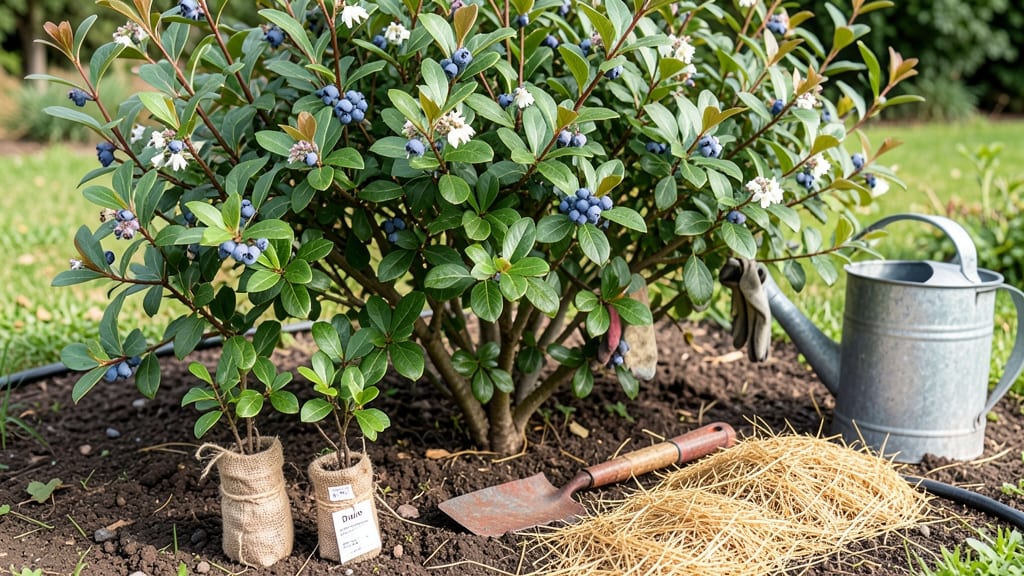
Planting blueberries in Arkansas isn't just about grabbing a shrub and sticking it in the ground—it's about matching your variety to the state's unique chill hours and heat zones to guarantee a bountiful harvest instead of bitter disappointment.
If you've ever wondered why some gardeners in Arkansas get juicy, sweet 🫐 berries while others end up with sparse, underwhelming crops, the answer lies in timing. Arkansas' 7a-8b climate and varying chill hour requirements mean that planting too early or too late can spell failure for your blueberry bushes.
In this guide, I'll walk you through the exact planting windows for Arkansas—from the cooler Ozark Mountains to the warmer Arkansas River Valley—so you can choose the perfect time to plant your shrubs for maximum success.
Whether you're a seasoned gardener or a first-timer, you'll discover the best varieties for your region, soil prep secrets, and post-planting care tips that will set your blueberries up for a thriving first season and beyond.
Arkansas chill hours by region: best blueberry planting months for southern varieties
Arkansas' diverse climate—from the humid subtropical Arkansas River Valley to the cooler Ozark Mountains—creates distinct chill hour zones that dictate which blueberry varieties thrive. These chill hours (below 45°F) trigger dormancy and bud break, so planting at the wrong time can lead to poor fruit set or stunted growth.
For example, rabbiteye varieties need 300-500 chill hours, while southern highbush varieties tolerate 400-600 hours, making regional selection critical.
Understanding your USDA zone (7a-8b) is just the starting point. Microclimates—like the Arkansas River Valley's heat pockets or the Ozarks' extended winters—can shift your effective chill hours by 100-200 hours.
For instance, Little Rock (Zone 7b) averages 600-800 chill hours, while Eureka Springs (Zone 6b) sees 900-1,100 hours. This means a southern highbush planted in Little Rock might struggle, while a half-high variety would excel in the Ozarks.
Chill hours aren’t just about winter cold—they’re about consistent temperature patterns. Arkansas’ humid subtropical climate adds another layer: high summer heat can reduce effective chill hours if winters are mild. This is why fall planting (October-November) is often better than spring—it lets roots establish before the heat stress of summer arrives. For example, planting ‘Tifblue’ rabbiteye in Zone 7b in late October gives it time to root before the 90°F+ summers.
Here’s how Arkansas’ regions break down for blueberry planting:
If you’re in a transition zone (e.g., Zone 7b/8a near the River Valley), opt for low-chill varieties like ‘Climax’ (400-500 hours) or ‘Aurelle’ (500-600 hours). These thrive even if your winter is 10% milder than average.
For the Ozarks, where chill hours exceed 900, push into spring planting (March-April) to avoid late frosts damaging new growth. Just be ready to protect young plants with frost cloth if temperatures dip below 28°F.
Timing isn’t just about the calendar—it’s about soil temperature. Blueberry roots need 40-50°F soil to establish before dormancy. In Zone 7b, this means waiting until mid-October for fall planting, even if the air is cool. Use a soil thermometer to check: if it’s below 40°
Step-by-step planting timeline for Arkansas blueberries: from bare-root to harvest
Timing is everything when planting blueberries in Arkansas, especially in our humid subtropical climate. The key is planting during dormancy—either in late fall or early spring—when roots can establish before the heat sets in.
For Arkansas gardeners, this means October through March is your prime window, with November and February being the absolute sweet spots for most regions.
Whether you're planting in-ground or in containers, the process starts with soil preparation. Blueberries are acid-loving plants that thrive in soil with a pH between 4.5 and 5.5.
If your soil tests higher, amend it with peat moss, pine fines, or sulfur at least 4-6 weeks before planting. This gives the soil time to adjust and prevents root burn.
📋 Step-by-Step Planting Timeline
- October-November (Fall Planting): Plant bare-root blueberries while they're dormant. Choose a cool, cloudy day to reduce transplant shock. Dig a hole twice as wide as the root ball but only as deep. Amend the soil with acidic compost and place the plant so the root crown sits just above soil level.
- February-March (Spring Planting): If you missed fall, plant in early spring before buds swell. Water thoroughly after planting and mulch with pine straw to retain moisture and acidity. Avoid spring planting in USDA Zone 8b (southern Arkansas) after mid-March to prevent heat stress.
- Soil Prep (4-6 Weeks Before Planting): Test soil pH and amend with sulfur or peat moss if needed. Work in 3-4 inches of organic matter like composted leaves or pine needles. For containers, use a pre-mixed acidic potting soil.
- First 4 Weeks After Planting: Water deeply 2-3 times per week to encourage root growth. Avoid wetting the leaves to prevent fungal diseases. Apply a slow-release acidic fertilizer (10-10-10) lightly around the base.
- First Year Care: Prune in late winter to remove dead wood. Mulch annually with pine straw or wood chips to maintain soil acidity. Expect minimal fruit in year one—focus on root and bush establishment.
- Harvest Readiness (Year 2-3): With proper care, your blueberries will be ready to harvest in late May to July. Look for deep blue berries that easily detach from the bush—no white bloom remaining!
For container planting, Arkansas gardeners can extend their growing season by using large pots (15+ gallons) with drainage holes. Containers warm up faster in spring, so plant 2-3 weeks later than in-ground plants to avoid heat stress.
Use a lightweight acidic potting mix and move containers to a shaded area during Arkansas' brutal summer afternoons to prevent wilting.
One common mistake in Arkansas is planting too late in spring. If you miss the February-March window, wait until fall—never plant when the soil is warm or the plant is actively growing.
Overwatering is another pitfall; blueberries hate soggy roots. Stick your finger 2 inches into the soil—if it's dry, water deeply. If it's still damp, wait another day.
After planting, monitor for blueberry maggots and mummy berry disease, which are common in Arkansas's humid climate. Apply organic neem oil preventatively in spring and remove any mummified berries from last year's harvest.
With these steps, your Arkansas blueberries will thrive and reward you with juicy, homegrown 🫐 berries for years to come!