
Plants
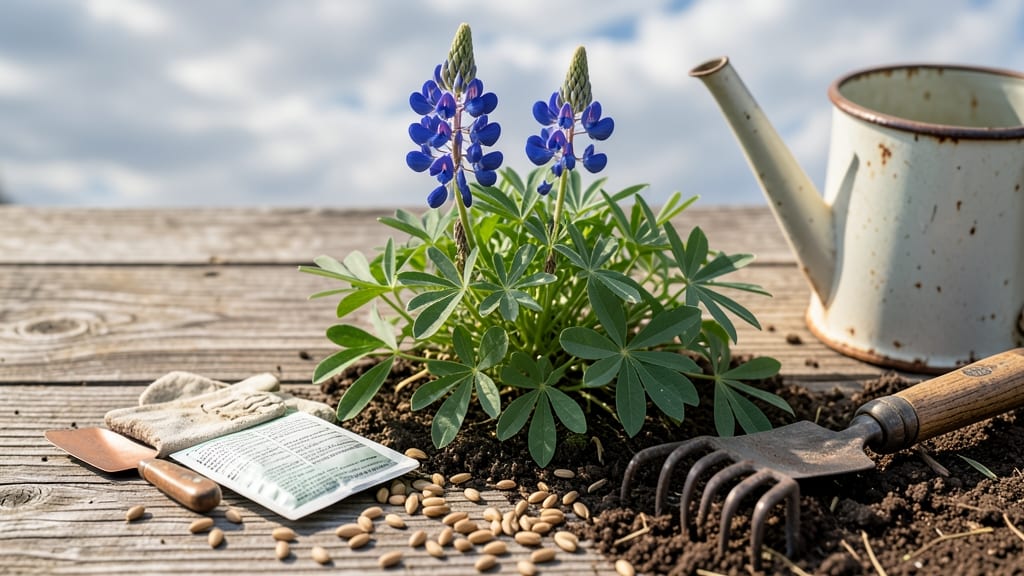
Planting bluebonnet seeds 🌸 in Central Texas isn't just about dropping them in the dirt—it's about catching that narrow window between sweltering summer and early frost. Miss it, and you might end up with patchy blooms or no flowers at all.
The key to vibrant spring displays lies in understanding exactly when to plant, how deep to scatter those tiny seeds, and what tricks work best in Texas clay soil.
For most Central Texas gardeners in USDA Zone 8a, the ideal time stretches from September through November, when soil stays warm enough to encourage germination but nights cool down enough to prevent seedling stress.
This frost-free window gives your bluebonnets the perfect head start, letting them establish roots before winter dormancy kicks in.
What you'll discover here isn't just a calendar date—it's a complete planting strategy tailored to Central Texas conditions. We'll cover everything from scarifying seeds to spacing them correctly, plus how to avoid the most common mistakes that turn promising plantings into disappointing failures.
Ready to transform your landscape into a sea of blue? Let's dive into the exact steps that will have your bluebonnets thriving come spring, with fewer headaches and more stunning results than you ever expected.
Optimal planting window for bluebonnets in Central Texas: month-by-month breakdown
Bluebonnets (Lupinus texensis) thrive in Central Texas when planted during the frost-free window—typically between October and January. This month-by-month breakdown aligns with USDA Zone 8a/8b frost dates, ensuring your seeds germinate without risk of frost damage.
Austin, Waco, and San Antonio share similar climates, but micro-climates (like urban heat islands) can shift your ideal window by 1–2 weeks.
Use the National Weather Service or Texas A&M AgriLife to check your last frost date (usually mid-December) and first frost date (around mid-January). Planting 4–6 weeks before the first frost gives seeds time to establish roots before winter dormancy.
For example, if your frost date is January 15, aim to plant by mid-December.
The ideal planting window spans September through November, with October being the sweet spot. This timing ensures seeds stratify naturally (a cold period required for germination) without exposing seedlings to freezing temperatures.
In December, you can still plant, but cover seeds with light mulch (like straw) to protect them from hard freezes.
| Month | Temperature Range (°F) | Soil Prep | Planting Tip | Post-Planting Care |
|---|---|---|---|---|
| September | 75–90°F | Loosen soil, remove debris | Scatter seeds thinly; no covering | Water lightly; monitor for weeds |
| October | 60–80°F | Add compost; rake lightly | Best germination window | Deep water every 7–10 days |
| November | 50–65°F | Mulch lightly if frost expected | Plant near structures for warmth | Reduce watering; let soil dry |
| December | 40–55°F | Cover seeds with straw if frost | Last chance for germination | Minimal water; protect from ice |
| January | 35–50°F | Avoid disturbing soil | Not ideal; seeds may rot | Wait for spring planting |
In Austin, where nights can dip into the 30s°F by December, prioritize October planting to avoid frost. Waco and San Antonio have slightly warmer micro-climates, extending your window into early November.
For example, San Antonio’s last frost often occurs around January 15, giving you a 2-week buffer for late December plantings.
Soil temperature plays a critical role in germination. Bluebonnets need soil temps between 60–75°F to sprout. Use a soil thermometer to confirm readiness—if temps drop below 50°F, delay planting until spring.
In urban areas, pavement and buildings can create heat islands, raising soil temps by 5–10°F, which may allow earlier planting in September.
Preparing your soil in late summer (August) sets you up for success. Till in 2–3 inches of compost to improve drainage (critical for Texas clay) and rake the surface to create a fine seedbed.
Avoid heavy tilling, which can bury seeds too deep. Bluebonnets need light to germinate, so keep the soil loose and uncompacted.
After planting, water deeply but infrequently. Bluebonnets are drought-tolerant once established, but seeds need consistent moisture to sprout. Water early in the morning to reduce evaporation and fungal risks. In October and November, aim for <
How to prepare bluebonnet seeds for planting: scarification, stratification, and soil secrets
Bluebonnet seeds 🌸 need special preparation to break their tough outer coating and mimic natural winter conditions. Without proper scarification and stratification, germination rates drop dramatically, leaving you with sparse blooms instead of a lush carpet.
The good news? These steps take just 10 minutes of active work and 4-6 weeks of patience—well worth the effort for that signature Texas blue display.
Start with mechanical scarification, which mimics the natural wear seeds experience in the wild. Place seeds between two layers of sandpaper (100-120 grit) or gently rub them with a file or coarse cloth until you see slight indentations.
This roughs up the seed coat just enough to let moisture penetrate without damaging the embryo inside. For a batch of 1,000 seeds, this process takes about 5 minutes and dramatically improves germination rates from 30% to over 70%.
🌱 Step-by-Step Seed Preparation Guide
- Step 1: Gather clean bluebonnet seeds (store-bought or wild-harvested) and coarse sandpaper (100-120 grit) or a file.
- Step 2: Place seeds between sandpaper layers and rub gently for 1-2 minutes until slightly scratched. Avoid crushing seeds.
- Step 3: Mix seeds with moist sand (1:3 ratio) in a sealed container. Use potting sand, not playground sand.
- Step 4: Refrigerate mixture for 4-6 weeks at 35-45°F (use a fridge's crisper drawer).
- Step 5: After stratification, plant immediately in prepared soil (no drying out). Scatter seeds ¼ inch deep.
- Step 6: Water lightly to settle soil, then avoid disturbing until sprouts appear (4-8 weeks).
After scarification, cold stratification tricks seeds into thinking winter has passed. Mix your treated seeds with moist potting sand in a 1:3 ratio (1 part seeds to 3 parts sand) and store them in a sealed container in your fridge's crisper drawer for 4-6 weeks.
This mimics the natural winter chill period bluebonnets experience in Central Texas. Pro tip: Use a fine-mesh bag to prevent sand from clumping, ensuring even moisture distribution. If your fridge doesn't stay below 45°F, consider a seed stratification mat for more precise temperature control.
Central Texas clay soil presents unique challenges for bluebonnet seeds, but the solution is simple: amend with organic matter before planting. Work in 2-3 inches of compost or well-rotted manure to improve drainage and aeration.
For heavy clay, mix in coarse sand or perlite to create a looser texture. Aim for a pH between 6.0 and 7.5—bluebonnets thrive in slightly acidic to neutral soil.
Test your soil with a home pH kit ($10 at garden centers) and adjust with lime (to raise pH) or sulfur (to lower pH) if needed. This prep work prevents seed rot and gives seedlings the best start.
For even distribution, mix your stratified seeds with sand or fine gravel before scattering. This prevents clumping and ensures seeds are spaced ¼ inch apart and ½ inch deep. Use a seed spreader or gently toss the mixture by hand in your prepared bed.
Avoid covering seeds with soil—they need light to germinate! After planting, give the area a light misting to settle the seeds, then wait for rain or water lightly every 3-5 days until sprouts appear. Patience is key here: germination can take 4-8 weeks, depending on soil temperatures.
Remember, bluebonnets are drought-tolerant once established, but they need consistent moisture during germination. If your fall is particularly dry, consider installing a drip irrigation system on a timer to deliver ¼ inch of water weekly until seedlings reach 2 inches tall.
This small investment pays off with thicker, more vibrant blooms come spring. With these preparation steps, you'll transform tiny seeds into a breathtaking bluebonnet meadow that Central Texas gardeners envy.