
Plants
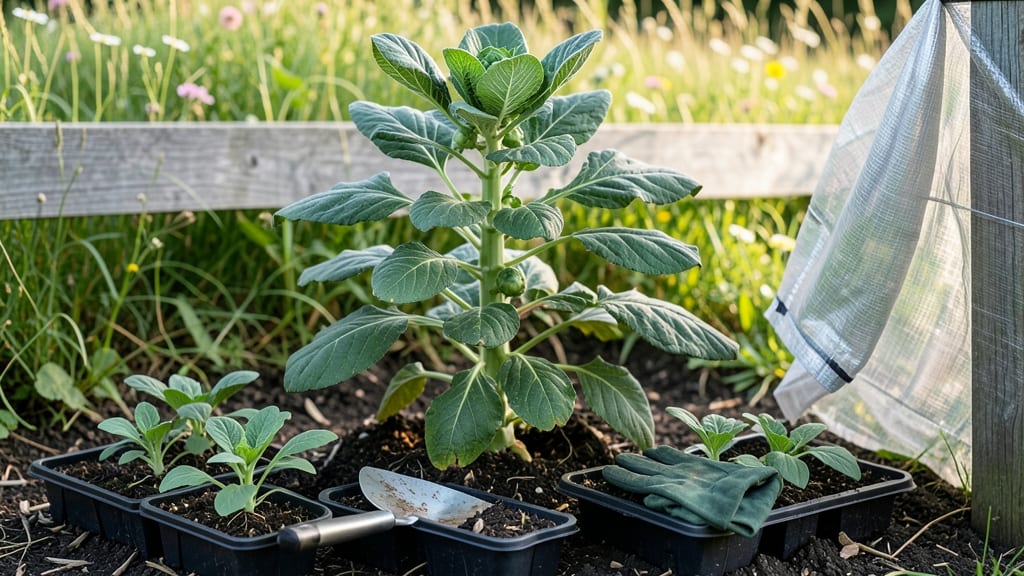
Timing your Brussel sprouts 🥦 planting in Colorado isn’t just about following a calendar—it’s about outsmarting the high-altitude growing season. With USDA zones 5-7 and unpredictable frost dates, planting too early or late can mean the difference between a bountiful harvest and wasted effort.
Most gardeners here swear by two key windows: mid-March to mid-July for spring plantings and mid-July to early September for fall crops. But here’s the catch—Colorado’s short frost-free window (just 120-180 days) means you’ve got to move fast.
Start seeds indoors 4-6 weeks before your last expected frost (usually mid-May) to give them a head start.
Why does this matter? Because Brussel sprouts 🥦 thrive in cool weather—they actually sweeten up when exposed to light frosts. But if you plant too late, you’ll miss that flavor boost and risk bolting (going to seed) before harvest.
The secret? Balance speed with patience, and you’ll have homegrown sprouts from October through December.
Let’s break down the exact steps—from transplanting seedlings to protecting them from late-season chills—so you can grow Brussel sprouts 🥦 like a Colorado pro. Ready to get started?
Best planting windows for Brussel sprouts in Colorado’s climate zones
Colorado’s climate—with its high elevations and variable frost dates—demands precise timing for growing brussel sprouts. These cool-season crops thrive when planted at the right moment, whether in USDA Zone 4 (mountain regions) or Zone 7 (Front Range).
The key is balancing early starts with frost protection and late-season harvests before hard freezes.
Brussel sprouts are frost-tolerant, but they need a long growing season (90–120 days). In Colorado, this means planting early enough to mature before the first hard frost, typically mid-October in most zones. For best results, aim for two planting windows: early spring (March–April) and late summer (July–August).
Elevation plays a critical role. At 5,000+ feet, like in Denver or Boulder, the growing season shrinks by 10–15 days compared to lower elevations. Adjust your planting dates accordingly—start 2–3 weeks earlier in higher zones (4–5) to compensate.
For example, Zone 4 gardeners should plant by mid-March, while Zone 7 can extend to early April.
Direct sowing is ideal for brussel sprouts, but you can also use transplants if starting indoors. Begin seeds 4–6 weeks before the last frost (typically mid-March for most of Colorado). For late summer plantings, sow seeds by mid-July to ensure harvests before winter sets in.
| USDA Zone | Elevation Range | Spring Planting Window | Fall Planting Window | Key Notes |
|---|---|---|---|---|
| Zone 4 | 5,000–7,500 ft | Mid-March to early April | Mid-July to late July | Use row covers; shorter season |
| Zone 5 | 4,000–6,000 ft | Late March to mid-April | Late July to early August | Extend season with mulch |
| Zone 6 | 3,500–5,000 ft | Early April to late April | Early August to mid-August | Longer season; two harvests possible |
| Zone 7 | Below 3,500 ft | Late April to early May | Mid-August to late August | Best for late-season harvests |
For Zone 4 gardeners, focus on early spring plantings and use row covers to extend the season. In these high-altitude areas, brussel sprouts may not fully mature in a single season, so prioritize smaller varieties like 'Long Island Improved' or 'Ruby Ball'.
These tolerate cooler temps and produce sweet, compact sprouts even in shorter seasons.
In Zone 7, you can experiment with succession planting. Start a second batch in late July for a fall harvest before the first frost. This works well in lower-elevation areas like Pueblo or Colorado Springs, where the growing season lasts until mid-October.
Choose frost-tolerant varieties like 'Tasty Purple' or 'Coronation' for these late plantings.
Soil temperature matters just as much as air temperature. Brussel sprouts won’t germinate well in cold soil (below 40°F). Use a soil thermometer to confirm readiness—wait until soil reaches 45–50°F before planting.
In early spring, this might delay sowing until late April in higher zones, but the wait ensures strong, healthy starts.
Don’t overlook late summer plantings—they’re your ticket to winter harvests. Plant seeds by mid-August in Zone 6 or earlier in Zone 7. These sprouts will sweeten with frost exposure, delivering richer flavors than summer-grown varieties.
Just be sure to mulch heavily to insulate roots and protect against early freezes.
Pro tip: Interplant brussel sprouts with fast-growing crops like radishes or lettuce. This maximizes space in your garden while the sprouts mature slowly. By the time the sprouts are ready, the shorter-lived plants will have already been harvested, leaving room for your main crop to shine.
Finally, remember that
How Colorado’s microclimates affect Brussel sprout growth timing
Colorado’s dramatic elevation shifts—from the plains at 3,000 feet to mountain valleys at 10,000 feet—create wildly different growing conditions for your Brussel sprouts 🥦.
What works in Denver’s Zone 5 may fail in Aspen’s Zone 4, and urban heat islands can push your planting window 2-3 weeks earlier than rural areas. These microclimates don’t just tweak timing; they can mean the difference between a 90-day harvest and a 60-day struggle.
Take wind exposure as an example: A 15 mph wind in the San Luis Valley can dry out seedlings in hours, while protected mountain slopes might retain moisture longer.
Even soil temperature varies by 10°F between sunlit slopes and shaded canyons—critical when Brussel sprouts 🥦 need soil at 45°F+ to germinate. Without adjustments, you might plant at the wrong time and watch your crop bolt or rot.
Here’s the hard truth: One-size-f’timing doesn’t fit all. Your neighbor’s July planting might yield nothing in your high-altitude garden, while their September transplant could thrive in your urban heat pocket.
The key is understanding how to shift your schedule based on where you live in Colorado—and we’ll break it down by microclimate.
Microclimate Mistakes to Avoid When Planting Brussel Sprouts
Planting Brussel sprouts 🥦 in Colorado without accounting for your local microclimate is like betting on a snowstorm in July—it’s gonna end poorly. Here are the top 3 timing traps:
- Ignoring elevation: Planting Denver timing in Leadville (Zone 4) means your sprouts will bolt before harvest.
- Urban heat islands: City gardens can be 5-10°F warmer than rural areas—delay planting by 2 weeks to avoid heat stress.
- Wind exposure: Open plains gardens need row covers or windbreaks; mountain gardens may need earlier starts for protection.
Pro Tip:
Use a soil thermometer—Brussel sprouts 🥦 need soil at 45°F+ to germinate. If your mountain garden hits that in May, but your plains garden does in April, adjust your planting window accordingly.
Let’s start with elevation adjustments. In Colorado Springs (Zone 6), you can direct-sow Brussel sprouts 🥦 as early as mid-March for a fall harvest. But in Grand Junction (Zone 7), the same seeds might need to wait until late March—or risk frost damage.
The rule of thumb? Add 1 week of delay per 1,000 feet in elevation. So if your mountain garden sits at 8,000 feet, push your planting date back 5 weeks compared to Denver’s 5,280 feet.
Next, consider urban vs. rural heat islands. A Denver backyard might bake at 90°F while a rural farm 20 miles away stays at 80°F. This 10°F difference can shift your planting window by 2-3 weeks.
For urban gardeners, start Brussel sprouts 🥦 indoors 6-8 weeks early and transplant after June 15 to avoid heat stress. Rural gardeners can often direct-sow until July 1 without issues.
Don’t overlook wind exposure, either. The Eastern Plains see consistent winds that dry out seedlings, while protected mountain valleys retain moisture longer. If your garden is wind-prone, use row covers or plant near windbreaks like corn stalks or shrubs.
For late harvests, extend your season with cold frames—they can add 4-6 weeks to your growing window in Zone 5.
Here’s how to adapt for early or late harvests: Want Christmas-time sprouts? Start seeds indoors by March 1 in Zone 5 and transplant by April 15. For a summer harvest, try succession planting every 2 weeks from June 15 to July 15.
The key is matching your variety to your microclimate—‘Long Island Improved’ thrives in cool mountains, while ‘Ruby Ball’ handles urban heat better.