
Plants
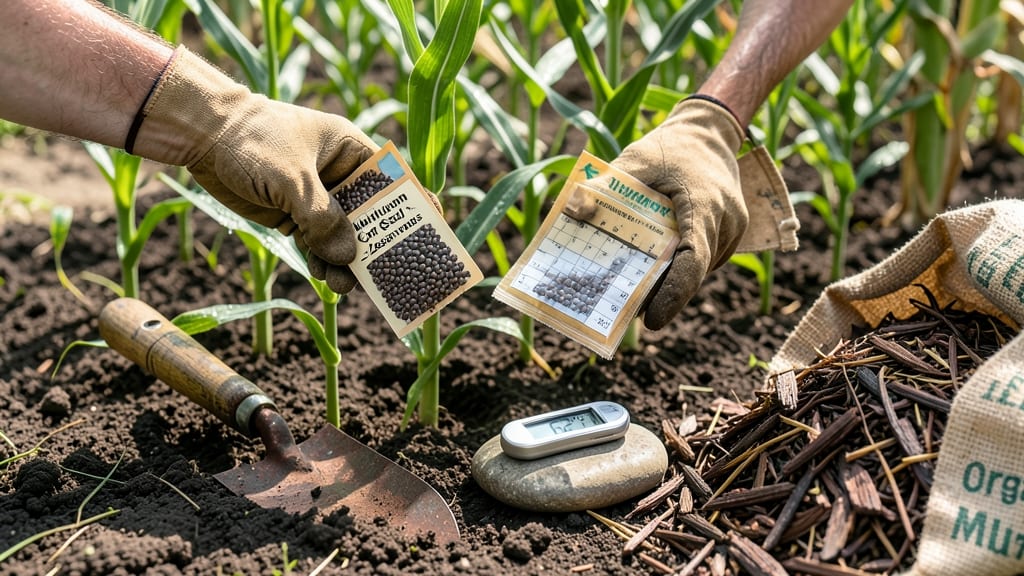
Planting corn in Iowa at the wrong time can mean the difference between a bumper crop and wasted seeds—especially when unpredictable spring weather throws off your plans.
The key isn’t just following a calendar date but waiting for that critical soil temperature of 50°F or higher, which signals the perfect moment for fast germination and strong starts.
For most of Iowa’s 5a-6b zones, that window typically falls between mid-April and mid-May, right after the last frost. But here’s the catch: cold soils can delay germination by weeks, leaving your 🌽 vulnerable to pests and poor growth.
I’ll show you how to check soil temps and adjust your planting schedule to avoid common mistakes that cost Iowa farmers thousands every year.
Whether you’re a backyard gardener or a large-scale farmer, getting this timing right is non-negotiable. We’ll break down the best corn varieties for Iowa’s short season, how to test soil conditions, and even how to plan for succession planting if your first batch gets a late frost.
Let’s make sure your corn gets off to the fastest, strongest start possible.
By the end, you’ll know exactly when to plant—not just by the month, but by the science of soil and weather. That’s how you turn Iowa’s variable spring into an advantage, not a risk. Ready to plant with confidence?
Iowa corn planting dates based on soil temperature (not just calendar months)
Planting corn in Iowa isn't just about checking the calendar—it's all about soil temperature. Corn seeds need consistent warmth to germinate properly, and planting too early in cold soil can lead to uneven sprouting or even rot.
The magic number? 50°F or warmer at a depth of 2-4 inches. This threshold ensures your corn gets off to a strong start and avoids the dreaded "cold soil syndrome," where seeds linger without sprouting.
While many gardeners focus on frost dates, Iowa's variable spring weather makes soil temperature the real game-changer. In northern Iowa, where springs are cooler, you might not hit that 50°F mark until early May.
Meanwhile, southern Iowa farmers can often plant by mid-April. Ignoring this rule can mean delayed germination, weaker seedlings, and reduced yields—something no Iowa farmer wants to risk.
Historically, Iowa's planting window spans April 15 to May 15, but these dates are more of a guideline than a rule. The key is waiting for that consistent warmth in the soil, not just the air.
Cold soil can delay germination by days or even weeks, giving weeds a head start and putting your corn at a competitive disadvantage from day one.
Here's why soil temperature matters so much: corn seeds need warmth to activate enzymes that break down stored energy. Below 50°F, this process slows dramatically. At 40°F, germination can take three times longer than at 60°F. That's why even experienced Iowa farmers use soil thermometers to make their planting decisions.
| Iowa Region | Typical Planting Window | Soil Temp Threshold | Key Consideration |
|---|---|---|---|
| Northern Iowa (Zone 5a) | Late April - Early May | 55°F+ (warmer needed) | Later frosts common |
| Central Iowa (Zone 5b) | Mid-April - Mid-May | 50°F+ (standard) | Most reliable planting |
| Southern Iowa (Zone 6a) | Early April - Late April | 48°F+ (earlier possible) | Warmer microclimates |
| All Regions: Plant when soil stays above 50°F for 3+ days | |||
Looking at Iowa's regional differences, you can see why a one-size-fits-all approach doesn't work. Northern Iowa farmers often need to wait until early May to avoid planting in soil that's still too cool.
Meanwhile, their southern counterparts can sometimes start planting by early April. The 50°F threshold is your baseline, but local conditions dictate the fine-tuning.
One common mistake I see is planting based on air temperature alone. Just because the thermometer says 60°F outside doesn't mean the soil is warm enough. Soil retains cold longer, especially in Iowa's clay-heavy soils.
That's why checking the soil temperature at planting depth is non-negotiable for serious corn growers. A simple soil thermometer (about $20) can save you from costly planting mistakes.
When you plant corn in cold soil, several problems can arise. First, seeds may germinate unevenly, creating a patchwork of weak and strong plants. Second, the seedlings that do emerge are often pale and leggy, struggling to reach sunlight.
Third, cold soil promotes fungal diseases that can rot seeds before they even sprout. All of these issues translate to lower yields and more work for you later in the season.
For maximum success, aim to plant corn when the soil temperature has been consistently above 50°F for at least three consecutive days. This gives your seeds the stable warmth they need to germinate uniformly.
In Iowa, this typically means waiting until after the average last frost date, but always verify with your local soil temperature readings. Remember, corn is a warm-season crop—it won't tolerate cold soil any more than you'd want to run a marathon in winter boots.
Pro tip: If you're planting early varieties, you might push the envelope slightly with soil temperatures in the low 50s. But for standard corn varieties, stick to that 50°F minimum. The few extra days you wait could mean the difference between a mediocre crop and a bumper harvest.
And in Iowa, where weather can change on a dime, that's a risk no farmer should take lightly.
Finally, consider using black plastic mulch if you're planting early in cooler regions. This can warm the soil by several degrees, helping you meet that critical temperature threshold sooner.
Just be prepared to remove it once the plants emerge to avoid overheating. Every little bit helps when you're working with Iowa's unpredictable spring weather.
How to test soil temperature and adjust planting for Iowa’s unpredictable spring
Iowa’s spring weather can swing from freezing nights to 80°F days in a week, making it tricky to pinpoint the perfect corn planting window. While calendar dates offer a starting point, soil temperature is the true indicator of when your seeds will germinate reliably.
For corn, the magic number is 50°F at 2–4 inches deep—but achieving consistent germination often requires waiting for 55–60°F in most of Iowa.
Skipping this step can lead to uneven emergence, weak seedlings, and even pest susceptibility. In my experience, planting too early in cold soil wastes seed and fertilizer while delaying your crop’s growth cycle.
The key is balancing historical frost dates with real-time soil conditions—something I’ve learned the hard way after a few late-March planting disasters.
⚠️ Warning: Late Frost Risk in Iowa
Even if your soil hits 50°F+, late frosts (common through mid-April) can devastate young corn. Wait until 2–3 weeks after your average last frost date—check Iowa State Extension’s frost maps for your county. For northern Iowa, this often means delaying until late April or early May.
Pro Tip: Use a 3-day forecast to time your planting—if temps are predicted to drop below 40°F within a week, hold off.
To test soil temperature accurately, use a soil thermometer (digital or dial) inserted 2–4 inches deep—this matches where most corn seeds germinate. Take readings in the morning (8–10 AM) when temps are most stable.
In my northwest Iowa fields, I’ve seen soil temps lag 10–15°F behind air temps, especially after overnight frosts.
Adjust your planting schedule by tracking daily soil temps for 3–5 days. If temps dip below 50°F at night, delay planting. For example, if your soil hits 55°F by day but drops to 45°F at night, germination will be slow and inconsistent.
I once planted Pioneer P1190AM at 52°F soil—only 60% of seeds emerged, and the weak seedlings took 2 weeks longer to reach knee height.
For rapid temperature swings, consider planting in blocks rather than all at once. Stagger your planting by 5–7 days to account for unpredictable weather.
This strategy worked well last year when a late-May cold snap hit my southern Iowa fields—some plants were already 6 inches tall while others hadn’t even sprouted.
Finally, use black plastic mulch or row covers to warm soil faster in cooler microclimates (like low-lying areas). These tools can add 2–5°F to soil temps, helping you plant 1–2 weeks earlier in safe conditions. Just remember: no shortcuts—always verify soil temp before planting, even with mulch.