
Flowers
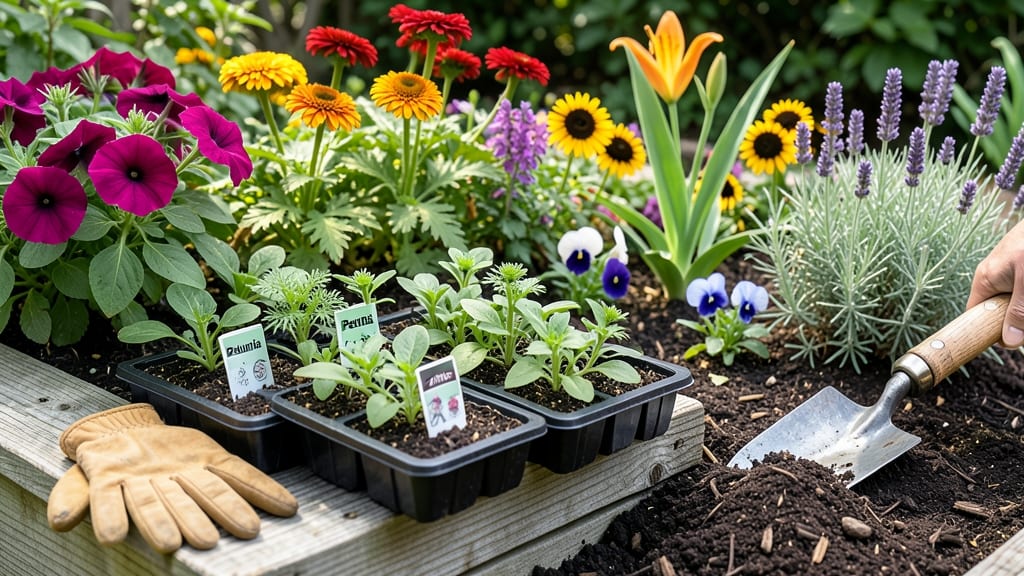
Planting flowers in Zone 7 at the wrong time can turn your dream garden into a sad, frost-killed mess—but timing it right unlocks nonstop color from spring through fall.
The key is knowing exactly when to start seeds, transplant seedlings, and tuck in bulbs so they thrive under Zone 7’s mild winters and hot summers.
With an average last frost around mid-April and first frost creeping in by mid-November, you’ve got a 7-month window to work with.
But not all flowers play by the same rules—annuals like marigolds beg for early spring starts, while perennials such as coneflowers need fall planting to establish roots before winter.
I’ve tested these strategies in my own Zone 7 garden, and the results speak for themselves: blooms that last, fewer wilting surprises, and a garden that feels like it’s always in season.
Let me show you the exact schedule—down to the month—that’ll have your flowers popping up when they’re supposed to.
Whether you’re a first-time gardener or a seasoned pro, these tips will help you avoid common mistakes like planting too early (hello, frost!) or missing the perfect fall window for cold-hardy varieties. Ready to turn your garden into a year-round showstopper?

Zone 7 planting calendar: exact months for annuals, perennials, and bulbs
Getting your Zone 7 flower planting timed perfectly means avoiding late spring frosts and maximizing summer blooms. Unlike colder zones, Zone 7’s mild winters and hot summers create unique windows—especially for annuals vs. perennials.
I’ll break down the exact months for each, including subregion differences (7a vs. 7b) and frost-free date benchmarks.
Zone 7 spans from Richmond, VA to San Francisco, CA, so your last frost date could be as early as March 15 (7b) or as late as April 15 (7a).
For annual flowers, this means starting seeds indoors 6–8 weeks before your local last frost—or planting directly after April 30 for most areas. Perennials and bulbs have their own rules, which I’ll cover next.
📅 PRO TIP: Use your local frost dates (check Almanac’s calculator) to fine-tune these timelines. For example, Zone 7a (e.g., Atlanta) has a longer frost window than Zone 7b (e.g., Los Angeles), where fall planting can stretch into November.
| Plant Type | Zone 7a (Last Frost: April 15) | Zone 7b (Last Frost: March 15) | Key Notes |
|---|---|---|---|
| Annuals (Spring) | Start seeds: March 1–15 Transplant: April 30–May 15 |
Start seeds: February 15–March 1 Transplant: March 20–April 15 |
Heat-lovers like marigolds and zinnias can wait until May 1. |
| Annuals (Fall) | Transplant: August 15–September 15 | Transplant: September 1–October 15 | Choose cool-season varieties like pansies or snapdragons. |
| Perennials (Cold-Hardy) | Plant: March 15–April 15 | Plant: February 20–March 30 | Examples: coneflowers, black-eyed Susans, lavender. |
| Perennials (Tender) | Wait until May 15 after soil warms. | Plant April 15–May 1. | Examples: salvias, canna lilies. |
| Bulbs (Spring-Blooming) | Plant: October 15–November 15 | Plant: November 1–December 15 | Examples: tulips, daffodils, hyacinths. |
| Bulbs (Fall-Blooming) | Plant: August 1–September 15 | Plant: September 1–October 15 | Examples: crocuses, fall daffodils. |