
Trees
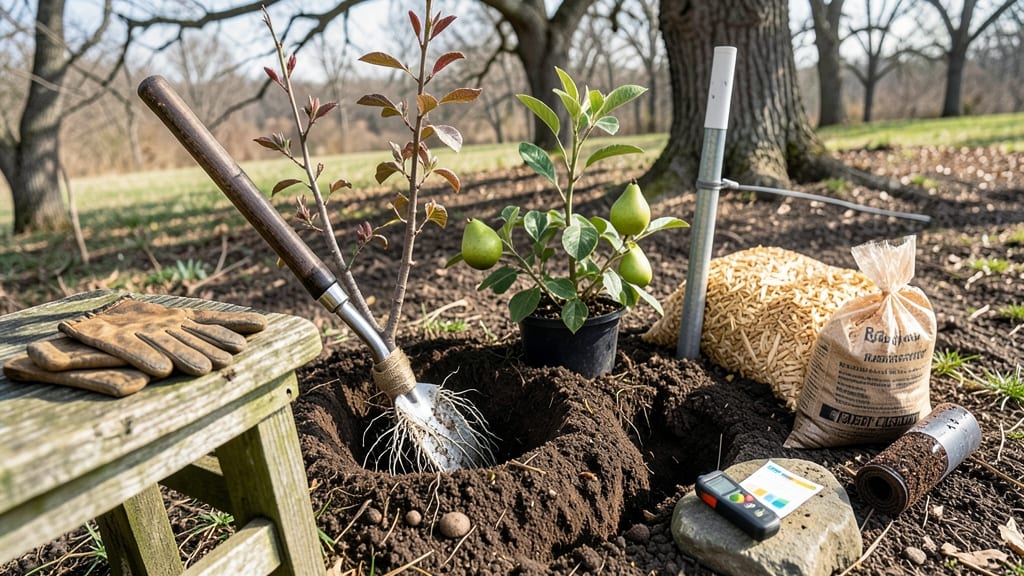
Planting your 🍎 fruit tree in Virginia at the wrong time could mean waiting years for fruit—or losing the tree entirely. The difference between success and failure often comes down to understanding chill hours and frost-free timing, which vary dramatically across Virginia’s 6a-8a zones.
If you’ve ever wondered why some fruit trees thrive while others struggle, the answer likely lies in when they were planted. Whether you’re working with bare-root saplings or container-grown varieties, getting the timing right ensures strong root establishment before the heat of summer or the chill of winter sets in.
In this guide, I’ll break down the best months to plant based on your specific Virginia region—whether you’re in the Tidewater, Piedmont, or Mountains. You’ll learn how to align your planting with frost dates, soil temperatures, and even deer activity to give your fruit trees the best possible start.
Ready to avoid common mistakes and set your orchard up for success? Let’s dive into the exact timing and pro tips that will have your fruit trees bearing harvests in no time.
Virginia’s chill hours zones: how they determine fruit tree planting success
Virginia’s diverse climate creates unique chill hour requirements for fruit trees, ranging from 300 hours in the coastal plain to 900+ hours in the mountains. These chill hours (temperatures between 32°F and 45°F) are critical for trees like apples and peaches to bloom properly and produce fruit.
Planting the wrong variety in your zone can lead to poor pollination or no harvest at all.
Understanding your specific chill hour zone helps you select fruit trees that thrive in your region. For example, peach trees need 400-600 chill hours, while apples often require 600-900 hours.
Virginia’s zones—from the mild Tidewater to the colder Blue Ridge Mountains—dictate which varieties will succeed in your backyard orchard.
Below is a breakdown of Virginia’s chill hour zones and the best fruit tree varieties for each, along with optimal planting windows to maximize success. Whether you’re in Zone 7a or Zone 8a, this guide ensures you choose the right trees for your climate.
⚠️ NON-NEGOTIABLE: Always check your exact chill hours using local weather data or a chill hour calculator before purchasing trees. Even within Virginia, microclimates can shift chill hour totals by 100+ hours.
| Chill Hour Zone | Best Fruit Trees | Planting Window | Key Notes |
|---|---|---|---|
| 300-400 hrs (Zone 8a) | Peaches, Figs, Pomegranates, Low-Chill Apples (e.g., 'Anna', 'Dorsett Golden') | Late Feb - Early March (bare-root) or Fall (Oct-Nov) | Avoid high-chill varieties; mulch heavily to retain warmth. |
| 400-500 hrs (Zone 7b) | Peaches, Nectarines, Plums, Semi-Dwarf Apples (e.g., 'Gala', 'Fuji') | Mid-Feb - Mid-April (bare-root) or Oct | Monitor late frosts; use frost cloth for blossoms. |
| 500-600 hrs (Zone 7a) | Apples, Pears, Sweet Cherries, Plums | Late Feb - Early April (bare-root) or Oct-Nov | Ideal for standard and semi-dwarf varieties; well-drained soil critical. |
| 600-700 hrs (Zone 6b) | Apples, Pears, Tart Cherries, Asian Pears | Early March - Mid-April (bare-root) or Oct | Plant in sheltered locations to extend growing season. |
| 700-900+ hrs (Zone 6a/5b) | Apples, Pears, Tart Cherries, Dwarf Varieties | Late March - Early April (bare-root) or Oct | Best for mountain regions; use windbreaks for young trees. |
In Zone 8a (300-400 chill hours), coastal Virginia gardeners should focus on low-chill varieties like 'Anna' apples or 'Redhaven' peaches. These trees thrive with minimal winter chill, making them perfect for Tidewater and Hampton Roads.
Plant them in late February to avoid early spring frosts that can damage blossoms.
For Zone 7a (500-600 chill hours), common in the Piedmont region, classic varieties like 'Granny Smith' apples or 'Elberta' peaches excel. These zones benefit from fall planting (October-November), allowing roots to establish before winter. Semi-dwarf trees are ideal for home gardens due to their manageable size.
Higher elevations in Zone 6a (700+ chill hours), such as the Blue Ridge Mountains, support hardier varieties like 'Honeycrisp' apples or 'Montmorency' tart cherries. Plant these in early spring (March-April) to ensure they receive adequate chill hours. Dwarf varieties are often the best choice for small spaces.
Remember, ch
Best planting months by Virginia region: frost-free timing for bare-root vs. container trees
Virginia’s three distinct regions—Tidewater, Piedmont, and Mountains—each have unique frost patterns that dictate the best planting windows for fruit trees. The Tidewater coastal plain (USDA zones 7b-8a) enjoys milder winters, while the Mountains (zones 6a-7a) face earlier frosts.
Understanding these differences ensures your bare-root or container-grown trees establish roots before winter stress sets in.
For bare-root trees, dormancy makes them ideal for late winter planting when soil is workable but buds haven’t yet swollen. Container-grown trees, however, offer more flexibility since their roots aren’t exposed.
Both types thrive when planted before the last average frost date, which ranges from March 1 in the Mountains to April 1 in Tidewater.
Soil temperature is another critical factor—roots need 40-50°F soil to regenerate. In Virginia, this typically occurs by mid-February in Tidewater but may wait until late March in the Mountains. Container trees can adapt slightly later, but avoid planting when frost is forecasted within 2 weeks.
| Region | Bare-Root Planting Window | Container Tree Planting Window | Last Frost Date | Soil Temp for Planting |
|---|---|---|---|---|
| Tidewater | Late Feb - Early April | Feb - May (avoid frost) | March 15 - April 1 | 40-50°F (mid-Feb) |
| Piedmont | Mid-Feb - Mid-April | Feb - Early May | March 1 - March 15 | 40-50°F (late Feb) |
| Mountains | Late March - Early May | April - June | March 1 - April 1 | 40-50°F (late March) |
In Tidewater, where winters are mild, you can plant bare-root trees as early as late February and container trees through May. The Piedmont region offers a slightly narrower window—aim for mid-February to mid-April for bare-root, with container trees adaptable until early May.
For Mountain gardeners, patience is key; wait until late March for bare-root trees to avoid frost damage.
Fall planting is also viable in Virginia, especially for container-grown trees. The ideal window is October through November, allowing roots to establish before winter dormancy.
However, avoid planting when soil temps drop below 40°F, which typically occurs by mid-November in Tidewater and early November in the Mountains.
Pro tip: Check the Virginia Cooperative Extension’s frost maps annually, as microclimates can shift planting windows by 1-2 weeks. For example, elevated Mountain areas may experience frost 2 weeks earlier than valley locations just 5 miles away.
Always prioritize planting when roots can regenerate—not when buds begin to swell.
By aligning your planting schedule with Virginia’s regional frost patterns and soil temperature thresholds, you’ll give your fruit trees the best chance to thrive—whether you’re growing peaches in Tidewater or apples in the Mountains. 🌳