
Trees
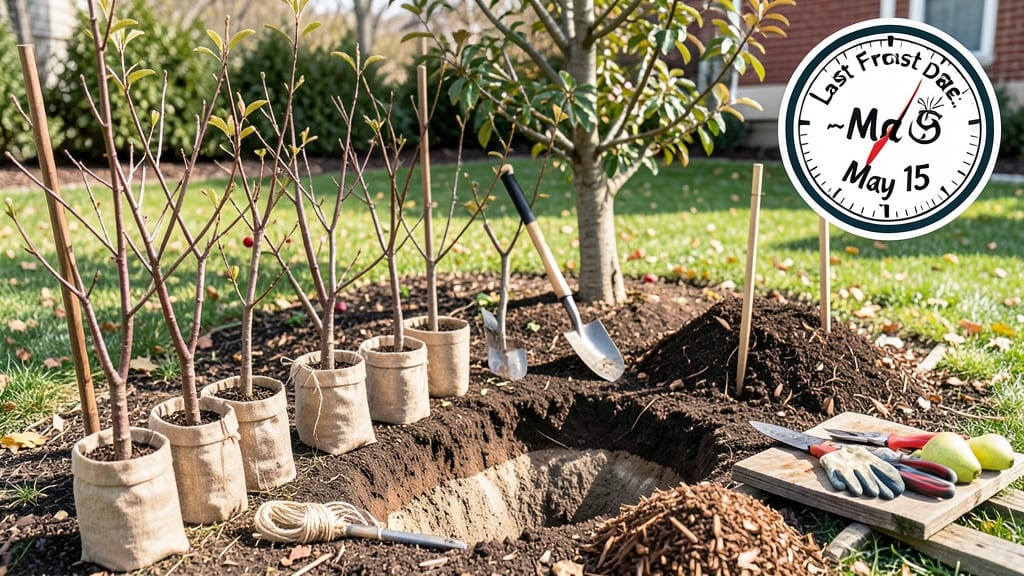
Planting fruit trees in Wisconsin at the wrong time can mean wasted effort—or worse, dead saplings before they even bear fruit. But timing it right unlocks bountiful harvests for decades, thanks to the state’s unique chill hours and frost patterns.
With Wisconsin’s 4a-6b zones, you’ve got two prime windows: early spring when the ground thaws or early fall before the first frost. The key is understanding your specific variety’s chill hour needs—some apples need 800+ hours of cold, while peaches thrive with just 300-500.
I’ll walk you through the exact months to plant based on your region, plus how to prepare your soil and choose the right rootstock for Wisconsin’s climate.
Whether you’re planting bare-root saplings in April or container-grown trees in September, these steps ensure your 🍎 fruit trees take root strong and grow healthy.
Ready to avoid common mistakes and set your trees up for success? Let’s get started with the perfect planting timeline for your Wisconsin orchard.
Wisconsin fruit tree planting calendar by chill hours & hardiness zones
Wisconsin’s USDA zones 5a-6b create a unique challenge for fruit tree growers. Unlike warmer climates, our chill hours (the number of hours below 45°F needed for dormancy) range from 300 to 1,000+, meaning some varieties thrive in northern WI while others struggle in southern regions.
Getting the timing wrong can mean frost damage or poor fruit set—so let’s break it down by variety and zone.
Most fruit trees need 400-800 chill hours to produce fruit, but apples and cherries often demand 800-1,000+ hours in northern WI (zones 5a-5b). Peaches and nectarines, however, prefer 300-500 chill hours, making them better suited for southern WI (zones 6a-6b).
Planting at the wrong time—like too early in zone 5a—can expose roots to frost heave or late spring frosts.
Your frost-free date is the golden rule: Northern WI (e.g., Duluth, Green Bay) averages May 10-20, while southern WI (e.g., Madison, Milwaukee) sees frost-free dates by April 15-30.
Bare-root trees should go in early spring (April) before buds swell, while container-grown trees can handle early fall (September) planting—just ensure roots establish before winter.
For zone 5a (northern WI), prioritize late April planting after the soil thaws but before buds break. In zone 6b (southern WI), you can push container-grown trees into early September, giving roots time to establish before winter.
Always check the Wisconsin State Climatology Office for your local last frost date—it varies by 5-10 days even within the same county.
Pro tip: Bare-root trees planted in spring need consistent moisture for the first 2 months, while fall-planted container trees benefit from a 4-inch layer of mulch to insulate roots. In zone 5a, add extra mulch in December to prevent frost heave—a common killer of young trees.
Always water deeply before the first hard freeze to build root reserves.
If you’re in
Best fruit tree varieties for Wisconsin’s short vs. long growing seasons
Wisconsin’s climate creates a unique challenge: northern regions have short growing seasons with harsh winters, while southern areas enjoy longer summers but still need cold-hardy varieties.
Choosing the right fruit tree means matching your zone to varieties that thrive in 300-1,000 chill hours—apples and cherries need more, while peaches and pears tolerate less.
For northern Wisconsin (Zones 4a-5a), prioritize varieties like Honeycrisp apples or Montmorency tart cherries, which handle 800+ chill hours and -30°F temperatures. Southern Wisconsin (Zones 5b-6b) can grow Elberta peaches or Bartlett pears, which need fewer chill hours but still benefit from Wisconsin’s cool summers.
Rootstock matters too! Dwarf varieties (like B.9 rootstock) are perfect for small yards, while standard rootstocks (e.g., Malling 9) suit large properties. Dwarf trees bear fruit faster but require staking and pruning—ideal for urban gardens or container growing.
| Variety | Chill Hours | Best Zone | Rootstock | Mature Size |
|---|---|---|---|---|
| Honeycrisp Apple | 800+ | 4a-6b | M.9 (dwarf) or MM.111 (standard) | 12-16 ft (dwarf) / 20-30 ft (standard) |
| Montmorency Tart Cherry | 900+ | 4a-5a | Mahaleb or Colt | 15-25 ft |
| Elberta Peach | 300-500 | 5b-6b | Lovell or Halford | 12-20 ft |
| Bartlett Pear | 400-600 | 5a-6b | Quince A or OHxF 87 | 15-25 ft |
| Haralson Plum | 500-700 | 4a-6a | St. Julien A | 10-15 ft |
If you’re in Zone 4a-5a, stick to apples and cherries—they handle Wisconsin’s long winters and late springs. Southern growers (Zones 5b-6b) can expand to peaches and pears, which ripen earlier and suit shorter winters.
Always check your last frost date—planting too early risks frost damage.
For small spaces, dwarf varieties like columnar apples or patio peaches save space while delivering high yields. Just ensure they get full sun (6+ hours) and well-draining soil. Mulch heavily in winter to protect roots from temperature swings.
Pro tip: Pair varieties for cross-pollination—e.g., plant Honeycrisp with Gala apples for better fruit set. And if you’re unsure about chill hours, ask your local UW Extension office for zone-specific advice!