
Plants
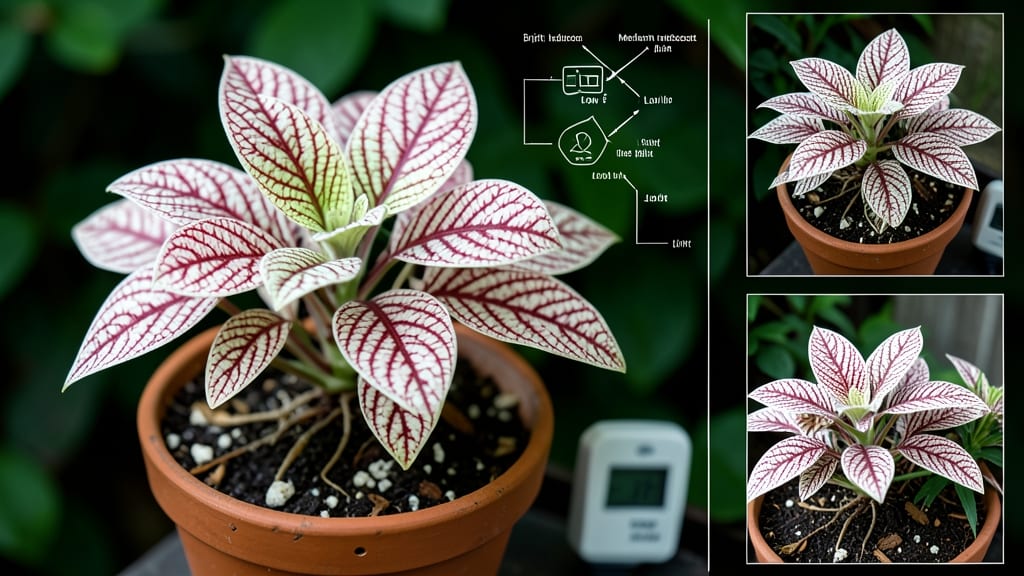
If your nerve plant 🌿 is losing its signature vibrant veins or stretching toward the light, you might be guessing wrong about its lighting needs. This delicate beauty thrives in bright, indirect sunlight—but too much direct sun or dim corners can turn its leaves pale or crispy.
Most gardeners assume houseplants just need "lots of light," but nerve plants are picky. Too little light fades their stunning patterns, while too much causes leaf burn. The key is finding that sweet spot where they get enough brightness without harsh rays.
In this guide, I’ll break down exactly how much light your nerve plant needs—whether you’re placing it near an east-facing window or supplementing with grow lights. You’ll learn to spot the warning signs and adjust care for year-round vibrancy.
Let’s get your nerve plant 🌿 glowing again with the perfect lighting setup—no more guesswork, just thriving foliage.
 Best Window Placement
Ideal light requirements for nerve plant growth and vibrancy
The nerve plant (Fittonia) thrives under bright indirect light, which brings out its stunning veined foliage patterns. Unlike sun-loving plants, it can't handle harsh afternoon rays, which cause leaf burn and dull coloring. Finding the perfect balance ensures your plant stays compact, vibrant, and healthy year-round.
I’ve found that placing my Fittonia near an east-facing window gives it the ideal 4-6 hours of morning sun while shielding it from intense afternoon heat. This mimics its natural understory habitat in tropical forests, where dappled sunlight filters through the canopy.
For visual clarity, here’s a quick reference for your nerve plant’s light needs:
If your home lacks natural bright indirect light, I recommend using LED grow lights with a 5000K-6500K color spectrum (cool white). Place them 6-12 inches above the plant for 12-14 hours daily to compensate for low-light conditions. Rotate the plant weekly to prevent lopsided growth.
For seasonal changes, watch for longer daylight hours in summer. Move your nerve plant 1-2 feet farther from windows or use a sheer curtain to diffuse intensity. In winter, supplement with grow lights if natural light drops below 4 hours daily.
Pro tip: The veins on Fittonia leaves darken in optimal light. If they fade, it’s a sign your plant needs more brightness. Conversely, crispy leaf edges mean it’s getting too much direct sun. Adjust placement until you find the sweet spot!
I’ve noticed my nerve plant’s growth rate slows dramatically in low-light conditions, with stems stretching toward the light—a condition called etiolation. To fix this, rotate the pot quarter-turns weekly and ensure even light exposure from all sides.
For urban apartments with limited natural light, consider placing your nerve plant on a sunny bookshelf or near a skylight. Avoid basements or rooms with only artificial overhead lighting, as these lack the spectrum balance needed for vibrant foliage.
Remember, consistency is key—nerve plants adapt poorly to sudden light changes. If you’re relocating yours, do it gradually over 7-10 days to avoid shocking the plant. With the right light, your Fittonia will reward you with lush, patterned leaves for years!
Signs your nerve plant needs more or less light (and how to fix it)
Your nerve plant (Fittonia) communicates its light needs through subtle visual cues. When placed in low light, its leaves lose vibrancy, fading from striking pink or white veins to dull green.
The plant may also stretch upward, creating long, leggy stems as it reaches for more light. These are clear signals your plant needs brighter conditions to maintain its signature patterns and compact growth.
On the opposite end, too much direct sunlight causes stress symptoms like crispy leaf edges or sunburned patches that appear as brown or yellow spots. The leaves may also curl or develop a bleached appearance, losing their natural coloration.
If you notice these signs, your nerve plant is getting more light than it can handle, especially during peak afternoon hours.
⚠️ callout-warning ⚠️
Nerve plants thrive in bright indirect light (4-6 hours daily). Aim for east-facing windows or 2-3 feet from north/south windows. Avoid south-facing windows in summer—use sheer curtains to diffuse harsh rays. Artificial grow lights (6,500K) work well for 12-14 hours/day if natural light is insufficient.
🌱 Seasonal Tip: In winter, supplement with grow lights if daylight drops below 4 hours.
To fix underlit conditions, move your nerve plant to a sunnier spot like an east-facing window or under a grow light. If natural light is limited, consider placing it on a plant stand near a window to maximize exposure.
Rotate the pot quarter-turns weekly to ensure even growth and prevent leaning. For plants in low-light offices, a simple LED grow light placed 6-12 inches above can provide the needed spectrum without overheating.
When dealing with over-exposure, the first step is to reduce direct sunlight. Move the plant to a shadier location, such as a west-facing window with sheer curtains or a spot 3-4 feet from an east window.
If the damage is severe, trim affected leaves with sterilized scissors to encourage new growth. Avoid fertilizing until the plant shows signs of recovery, as excess nutrients can stress already compromised foliage.
Seasonal changes can also impact your nerve plant’s light needs. In summer months, when sunlight is intense, provide afternoon shade to prevent leaf scorch. Conversely, during winter’s shorter days, supplement with a grow light to maintain the 4-6 hour light requirement.
Pay attention to how your plant responds—adjustments may be needed every 2-3 months as daylight shifts with the seasons.
Pro tip: Use a light meter app to measure foot-candles in your plant’s current spot. Aim for 500-1,000 foot-candles of indirect light to keep your nerve plant thriving. With the right light balance, your plant will reward you with bold veining and compact, bushy growth all year round. 🌿