
Companion Plants
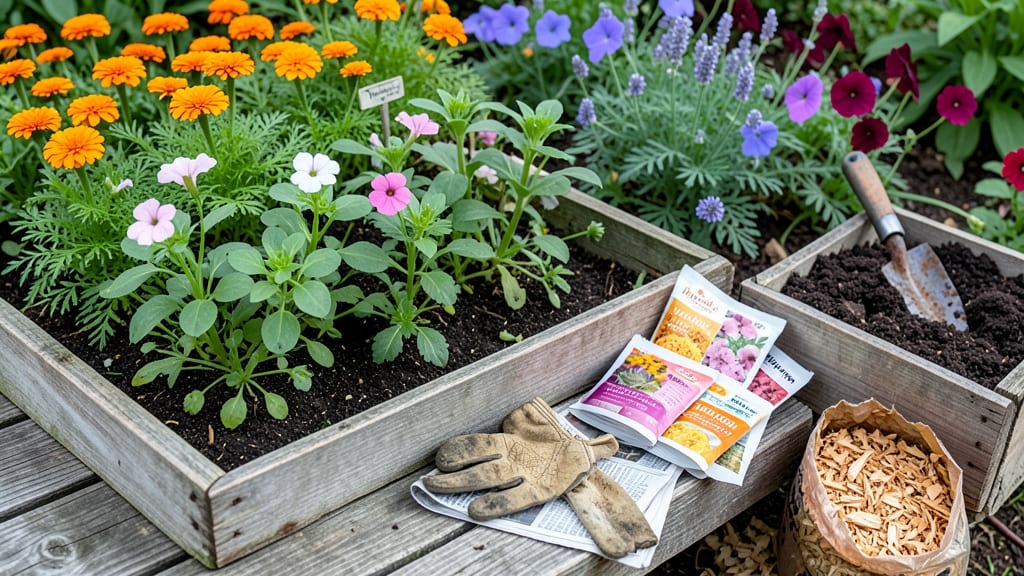
If you've ever watched your 🌸 annuals wilt overnight after planting too soon, you know timing is everything in Zone 5. The difference between a thriving garden and a frost-killed disaster often comes down to knowing exactly when to plant—whether you're sowing marigolds in spring or snapdragons in fall.
Zone 5's short growing season means you can't afford to wait too long after the last frost (usually around mid-May), but planting too early risks losing everything to surprise cold snaps.
The key is balancing warmth and safety, and I'll show you how to pinpoint your perfect window—whether you're a beginner or a seasoned gardener.
You’ll discover which annuals handle Zone 5’s cool nights best, how to adjust for microclimates, and even when to start a second planting in late summer for fall blooms. No more guessing—just science-backed dates and tricks to stretch your season.
Let’s get your annuals in the ground at the perfect moment so you can enjoy months of color, flavor, and harvest instead of empty garden beds. Ready to plant with confidence?

Zone 5 last frost dates: exact timing for annual planting by region
Nailing down your last frost date in Zone 5 is the difference between a thriving garden and a frost-killed disaster. While the USDA Plant Hardiness Zone Map tells you where you garden, your exact planting window depends on when frost actually retreats.
In Zone 5, this varies by 5a vs. 5b and even your microclimate—like a south-facing slope vs. a frost pocket.
For most of Zone 5, the average last frost date falls between April 25 and May 15, but your garden might be 1-2 weeks earlier or later depending on elevation, proximity to water, and local weather patterns. Cold-hardy annuals like pansies and snapdragons can handle light frosts, while tender varieties like tomatoes need consistent warmth—so timing matters.
Using historical data from the National Oceanic and Atmospheric Administration (NOAA), I’ve broken down the last frost dates by subregion to help you plan with confidence.
But remember: microclimates rule. A low-lying area might frost 10 days later than a hilltop, even if they’re just half a mile apart.
Here’s how to use this data: Start with the average dates below, then adjust based on your 3-5 year frost history.
For example, if your neighborhood had frost on May 10 three out of the last five years, wait until May 20 to plant heat-loving annuals like marigolds or basil.
Pro tip: Use frost cloth or row covers to extend your planting window by 2-3 weeks for tender annuals. This is especially useful in Zone 5a, where frosts linger longer.
| Zone 5 Subregion | Average Last Frost Date | Safe Planting Window (Cold-Hardy Annuals) | Safe Planting Window (Tender Annuals) | Microclimate Adjustments |
|---|---|---|---|---|
| Zone 5a (Northern Zone 5) | May 10–15 | April 25–May 1 (with frost cloth) | May 20–25 | Add 5–7 days if in a frost pocket; subtract 3–5 days for south-facing slopes. |
| Zone 5b (Southern Zone 5) | April 25–May 5 | April 15–20 (with frost cloth) | May 5–10 | Subtract 3–5 days for urban heat islands; add 3–5 days for high-elevation areas. |
| Great Lakes Region (Zone 5) | May 5–10 (warmer microclimates) | April 20–25 (with frost cloth) | May 10–15 | Lake-effect warming can shift dates 5–10 days earlier near shores. |
| Rocky Mountain Foothills (Zone 5) | May 15–20 (cooler nights) | May 1–5 (with frost cloth) | May 25–June 1 | High elevation adds 3–7 days to frost risk; valleys may be warmer. |
| Northeast Corridor (Zone 5b) | April 20–25 (urban areas) | April 10–15 (with frost cloth) | May 1–5 | Urban heat islands can delay frost 3–5 days; rural areas may frost earlier. |
To find your personalized last frost date, check the USDA Plant Hardiness Zone Map and cross-reference it with your local Almanac’s frost records.
For example, if you’re in Zone 5b near Chicago, the average last frost is April 25, but your garden’s microclimate might push it to May 5. Plant cold-hardy annuals like pansies or sweet alyssum 2–3 weeks before your average last frost for early color.
For tender annuals like tomatoes, peppers, and basil, wait until the soil temperature consistently stays above 60°F. Use a soil thermometer to monitor—cold soil can stunt growth even if air temps are warm.
In Zone 5a, this might not happen until late May or early June, while Zone 5b areas can start as early as mid-May.
Don’t forget about fall planting! Zone
How to calculate your personal planting window beyond average dates
Average last frost dates are a great starting point, but your actual planting window depends on local microclimates, recent weather patterns, and the heat zone needs of your plants.
In Zone 5, where frost can linger until mid-May or strike as early as late September, relying on averages risks losing your entire crop. Instead, use these science-backed steps to pinpoint your personal frost-free window.
Start by checking your local historical frost data—not just the USDA Zone 5 average. Websites like the National Oceanic and Atmospheric Administration (NOAA) or tools like Almanac’s Frost Calculator provide 10-year averages for your exact location.
For example, if you’re in Zone 5a, your last frost might be 2 weeks later than the Zone 5b average. This small shift can mean the difference between successful pansies and wilted tomatoes.
Use NOAA’s Frost/Freeze Data or your local agricultural extension office to find your 30-year average last frost date and first frost date. Adjust for recent trends—warmer winters may shift these dates by 1-2 weeks.
Your yard isn’t uniform! South-facing slopes warm up 1-2 weeks earlier than low-lying areas. Use a minimum thermometer for 3 nights to track your coldest microclimate—this is where frost lingers longest.
Match your frost-free window to plant heat zones. Cold-hardy annuals like pansies (Zone 3) or snapdragons (Zone 7) can handle 32°F, while tomatoes (Zone 10) need 50°F soil temps and 60+ days frost-free.
For heat-loving annuals like peppers or basil, wait until the average of the last 10 days of your frost-free window has consistently warm nights (above 50°F). Check your local weather app for nighttime lows.
Soil needs to reach 60°F+ for most annuals. Use a soil thermometer to test 6 inches deep—this is where roots grow. If it’s below 55°F, wait 5-7 more days or use black plastic mulch to warm the soil faster.
For fall annuals, plant 6-8 weeks before your first frost (usually late August in Zone 5). Use cold-hardy varieties like kale or calendula, which thrive in cool weather and can survive light frosts.
Pro tip: If you’re unsure, start with cold-hardy annuals like pansies or sweet alyssum in early May. These Zone 3-7 plants can handle brief frosts and buy you time to assess your microclimate.
For tender varieties, wait until late May or use row covers to extend your window by 2-3 weeks.
Remember, your personal planting window isn’t set in stone—it evolves with climate shifts. Recalculate every 3-5 years or after extreme weather events. With this method, you’ll maximize blooms, avoid frost damage, and grow a thriving Zone 5 garden year after year. 🌱