
Container Gardens
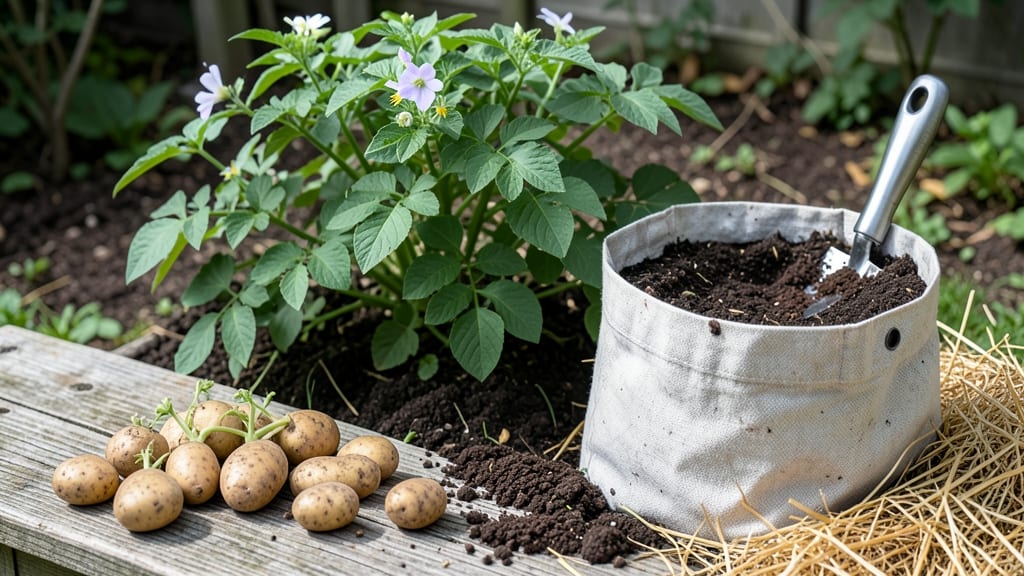
Planting potatoes in containers 🥔 is easier than you think—but timing is everything. If you wait too late, your harvest shrinks; if you start too early, frost can ruin your sprouts.
The 2-4 week window before last frost is your sweet spot, and I’ll show you how to nail it, no matter where you live.
Containers let you grow potatoes almost anywhere, but they also mean your plants can’t regulate temperature like in-ground beds. That’s why knowing your local frost dates—and adjusting for your container type—is the game-changer for a successful crop.
Whether you’re using fabric grow bags or repurposed buckets, the right timing ensures your spuds mature before summer heat sets in.
You’ll learn how to calculate your exact planting date based on your USDA zone, plus how to stretch your harvest season with simple tricks. No more guessing—just a foolproof plan to get those crisp, homegrown potatoes from soil to table in 60-120 days. Let’s get started.
From soil prep to spacing, I’ll cover everything you need to avoid common mistakes and maximize your yield. Whether you’re a first-time gardener or a seasoned container grower, these tips will help you grow more potatoes in less space—without the stress.
Best planting time for container potatoes by US hardiness zones
Growing potatoes in containers offers flexibility, but getting the planting timing right depends heavily on your USDA hardiness zone and local microclimate. Unlike in-ground potatoes, container-grown spuds can't escape cold snaps, so timing is critical.
Aim to plant 2-4 weeks before your last expected frost date, but adjust for early vs. late varieties and coastal vs. inland conditions.
In cooler zones (3-6), start with early-maturing varieties like 'Yukon Gold' or 'Red Norland' to avoid summer heat stress. In warmer zones (7-11), opt for heat-tolerant types such as 'Sweet Potato' or 'Caribbean Red' to prevent premature flowering.
Coastal areas often have milder winters, allowing earlier starts, while inland regions may need to wait longer for stable soil temperatures.
Here’s your zone-by-zone planting guide to calculate the perfect window, including adjustments for regional variations:
For coastal climates, where winters are milder, you can push planting dates 1-2 weeks earlier than inland areas. Inland zones often experience frost pockets, so wait until soil temperatures are consistently above 45°F before planting. Use a soil thermometer to confirm readiness—cold soil slows sprouting and invites rot.
If you’re unsure about your last frost date, check local weather records or use the USDA Plant Hardiness Zone Map. For container gardening, also account for your setup: fabric grow bags warm up faster than plastic buckets, so you might plant slightly earlier.
Conversely, black containers absorb heat and can be planted 1 week later in hot zones.
For extended harvests, consider staggering plantings. Start with early varieties in your first window, then follow with mid-season types 2-3 weeks later. This ensures a continuous supply of fresh potatoes throughout the growing season.
Just remember: late varieties need more time to mature, so avoid planting them too close to your first frost date.
Pro tip: Use row covers or a mini greenhouse to protect early plantings from unexpected cold snaps. This buys you an extra 2-3 weeks of growing time, especially in zones 4-6.
In warmer zones (7-11), focus on shade cloth during peak summer to prevent tubers from turning green and toxic.
Always monitor your plants for early signs of stress, like yellowing leaves or stunted growth. These can signal planting too early (cold damage) or too late (heat stress). Adjust future plantings based on what you observe—your local microclimate is the final authority on timing!
How to adjust planting timing for extended harvest seasons
Want to enjoy fresh potatoes for months instead of just a few weeks? The secret lies in staggered planting—a simple technique that turns one harvest into three or more.
By adjusting your planting schedule, you can extend your potato season from spring to early summer, or even into fall in cooler climates. This method works especially well in containers, where you have more control over spacing and timing.
Containers give you flexibility to plant early, mid, and late-season varieties without competing for ground space. For example, in Zone 5, you might start with early varieties like 'Yukon Gold' in early April, follow with 'Red Pontiac' in mid-May, and finish with late varieties like 'Kennebec' in early June.
Each batch will mature at different times, giving you a steady supply of spuds.
Here’s how to make it work for your climate and containers:
- 1 Succession Planting: Space your plantings 2-3 weeks apart for a continuous harvest. In a 5-gallon container, you can fit 2-3 potato plants at a time, rotating them as each batch matures.
- 2 Cold-Frame Protection: Start early varieties 4-6 weeks before your last frost by placing containers in a cold frame or under row covers. This extends your growing season by 2-3 weeks, letting you harvest sooner.
- 3 Heat-Tolerant Varieties: In southern climates (Zones 8-11), opt for varieties like 'Sweetheart' or 'Red LaSoda', which thrive in warmer temperatures. Plant these in late spring (May-June) to avoid bolting (premature flowering).
- 4 Container Rotation: Use fabric grow bags or deep buckets to rotate crops. After harvesting one batch, remove the spent plants, add fresh compost, and replant with a new variety. This keeps your containers productive all season.
- 5 Adjust for Microclimates: Urban areas with concrete heat may need to plant later, while rural spots with cooler nights can start earlier. Monitor your local frost dates and adjust your schedule accordingly.
Pro tip: Keep a planting calendar to track your batches. Label each container with the variety and planting date so you know when to expect harvests.
For example, if you plant 'Yukon Gold' on April 15, you can expect tubers ready by June 15, leaving room for a second planting in May.
By mastering these strategies, you’ll turn your container garden into a potato powerhouse, ensuring a steady supply of homegrown spuds all season long. Just remember: timing is everything, and containers give you the flexibility to fine-tune it perfectly. 🌱