
Plants
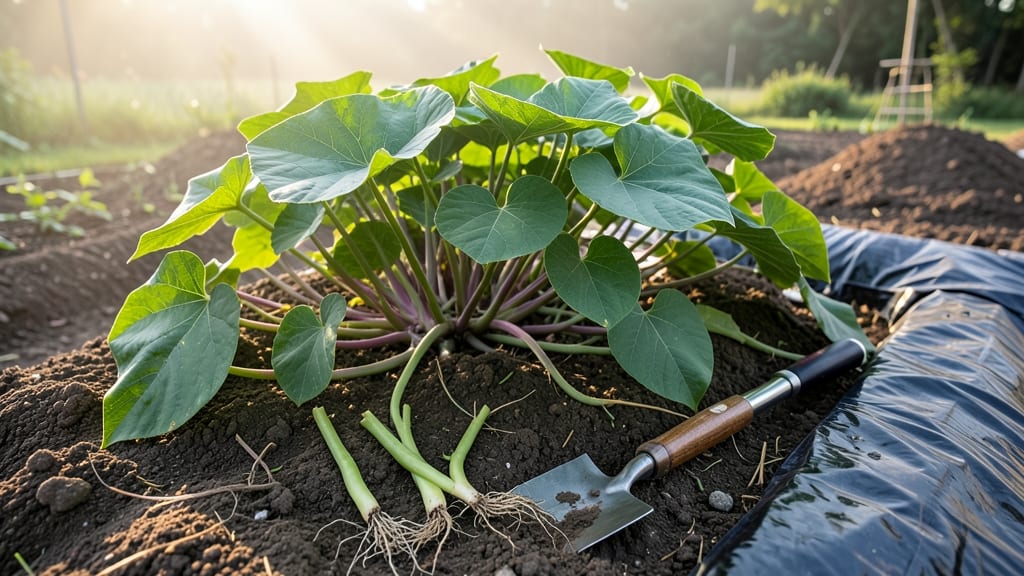
Planting sweet potatoes in North Carolina isn’t just about grabbing slips and sticking them in the dirt—it’s about timing your move to match your microclimate zone, soil warmth, and last frost date.
Get it wrong, and you’ll either wait forever for harvest or watch your plants wilt before they even take root. The ideal window is late April to early June, but Piedmont gardeners and Coastal Plain growers need different strategies to beat heat waves and humidity.
Why does this matter? Because sweet potatoes 🍠 hate cold soil—they need temperatures above 65°F to thrive. In Zone 7a (like the mountains), you might wait until early May, while Coastal Plain gardeners can start as early as late April if the ground warms up fast.
The key? Checking soil temps with a probe, not just air temps on the weather app.
I’ll break down the exact months for your region, plus how to tell when your slips are ready to go in and what to do if a late frost sneaks up. No more guessing—just data-driven planting for that bountiful harvest you’re dreaming of.
Ready to stop second-guessing and start growing? Let’s get into the perfect schedule for your North Carolina garden, so you can enjoy homegrown sweet potatoes from late September right through November.
North Carolina sweet potato planting calendar by USDA hardiness Zone (exact months)
North Carolina’s USDA Zones 7a-8b offer perfect conditions for growing sweet potatoes, but timing varies dramatically between the Piedmont’s rolling hills, the Coastal Plain’s humid heat, and the Mountain region’s cooler nights.
Unlike many crops, sweet potatoes thrive when planted after the last frost but before summer’s peak heat. In my Zone 7b garden, I’ve learned that planting too early risks frost damage, while waiting too long can shorten the harvest window.
For slips (young plants), the ideal window is late April to early June across most of NC, but soil temperature—not air temperature—is the true decider. Sweet potatoes need soil that’s at least 65°F (18°C) for 4+ inches deep.
In the Coastal Plain (Zone 8a), this often means waiting until mid-May, while Mountain gardeners (Zone 7a) can start as early as late April if they use black plastic mulch to warm the soil faster.
Direct-seeding (planting seeds) is less common but works well for early varieties like ‘Georgia Jet’. If you choose this method, start seeds indoors 8-10 weeks before your last frost (typically February-March) and transplant after soil warms. However, slips—available at nurseries in April-May—are the most reliable option for NC gardeners due to their faster maturity.
Here’s how your microclimate zone affects planting dates, including soil temperature thresholds and frost risk windows:
In the Mountains (Zone 7a), I’ve found that planting Beauregard slips by late April gives them enough time to mature before the first frost in mid-November. The key is to mulch heavily with straw to retain moisture and regulate soil temperature.
Meanwhile, in the Coastal Plain (Zone 8b), where summers are longer, you can push planting into early June for a fall harvest—just be prepared for hurricane risks that can damage vines.
For direct-seeded varieties like ‘Centennial’, start seeds indoors in February-March and transplant when soil hits 65°F. However, slips are still my top recommendation because they mature 2-3 weeks faster than seeds.
Pro tip: If you’re in Zone 8a/b, you can even try a second planting in July for a winter harvest—just use shade cloth to protect young plants from scorching.
One mistake I see often is planting based on air temperature instead of soil temperature. A soil thermometer is worth its weight in gold here. For example, in Raleigh (Zone 7b), air might hit 70°F by April, but soil could still be 55°F.
Wait until that 65°F threshold—your slips will thank you with bigger tubers and fewer diseases.
After planting, focus on consistent moisture (1-2 inches per week) and mulching to keep roots cool. In drought-prone Piedmont areas, drip irrigation is a game-changer. And if you’re in the Coastal Plain, watch for sweet potato scab—a fungal disease that thrives in humid conditions.
A 2-inch layer of straw mulch helps prevent it.
Finally, don’t forget that harvest timing depends on your planting date. Slips planted in May will be ready by October-November, while July plantings may harvest as late as December. Cure your sweet potatoes for 10 days at 85°F and 80% humidity to develop their signature sweetness—this is non-negotiable
5 Critical factors that determine your planting timeline (beyond the calendar)
Planting sweet potatoes in North Carolina isn’t just about checking the calendar—it’s about understanding your local microclimate. While the general rule is to plant after the last frost, your exact timeline depends on factors most gardeners overlook.
For example, soil temperature is far more critical than air temperature. Sweet potatoes need soil that’s consistently above 65°F to grow properly, and in the Coastal Plain, this can happen weeks before the Mountains.
Another game-changer? Humidity levels. High humidity in eastern NC can create ideal conditions for fungal diseases, so adjusting your planting schedule to avoid prolonged wet periods is key. Then there’s the lunar planting calendar, which some gardeners swear by for maximizing growth.
And let’s not forget hurricane season risks—if you’re in the Coastal Plain, delaying planting until after June 1st might save your crop from storm damage.
Here’s how to adjust your planting timeline based on these five critical factors to ensure your sweet potatoes thrive:
- 1
Plant only when soil reaches 65°F+. Use a soil thermometer—air temps can be misleading. In Zone 7a (Mountains), wait until early May; in Zone 8b (Coastal Plain), late April works.
- 2
Check your local frost-free date (NC averages mid-March to early April). Add 2-4 weeks as a buffer—sweet potatoes cannot tolerate frost. Use row covers if planting early in high-risk zones.
- 3
High humidity in eastern NC increases fungal diseases. Space plants 12+ inches apart and avoid overhead watering. If humidity is 70%+, delay planting until after June 1st to miss peak fungal activity.
- 4
Plant during the waxing moon (root crops grow better). Check a lunar calendar—NC’s best window is May 10–20 for optimal tuber development. Avoid planting during a full moon or waning moon.
- 5
Coastal Plain gardeners: Delay planting until after June 1st to avoid hurricane season (June–November). Use raised beds or elevated rows to reduce flood damage. Monitor NOAA forecasts and protect young plants with windbreaks.
Let’s say you’re in Raleigh (Zone 7b). You’d aim for late April to early May, but if your soil is still cold, wait until early June. In Asheville (Zone 7a), you might not plant until mid-May due to cooler nights.
Meanwhile, in Wilmington (Zone 8a), late April is ideal—but if humidity is high, push it to June.
Pro tip: Test your soil with a thermometer before planting. If it’s below 65°F, your slips will rot. Also, mulch heavily (straw or black plastic) to warm the soil faster. This is especially helpful in Mountain regions where nights stay chilly longer.
By aligning your planting with these five factors, you’ll avoid the most common mistakes—like planting too early and losing your crop to frost or too late and ending up with small, underdeveloped tubers.
Sweet potatoes are forgiving once established, but timing is everything for that perfect harvest from late September to November.