
Planting
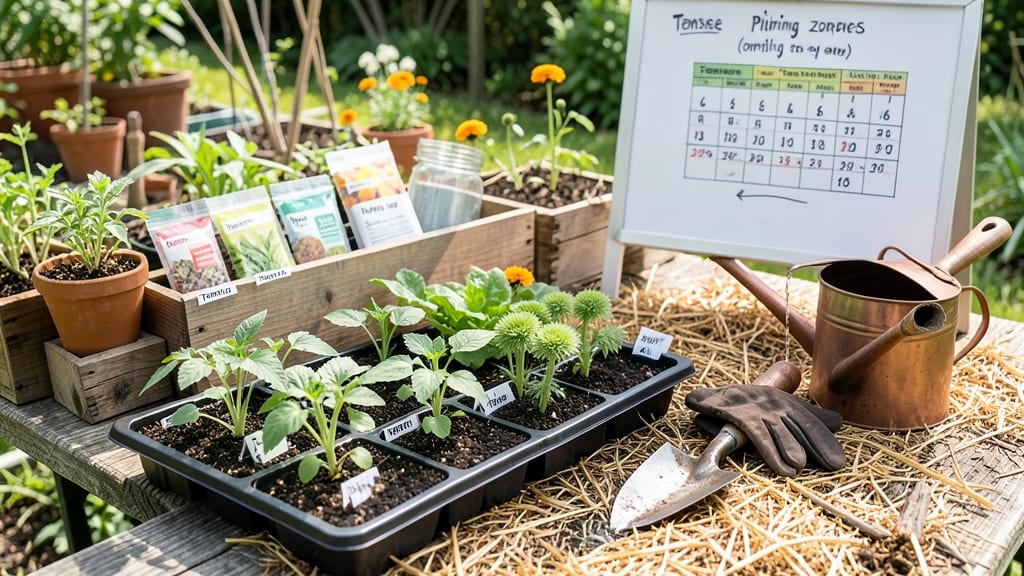
Planting your garden in Tennessee at the wrong time can mean the difference between a thriving harvest and wasted effort.
With the state's varied climate—from the cool mountain air of East Tennessee to the warmer valleys of the West—the perfect planting window depends entirely on where you live and what you're growing.
If you've ever wondered why your 🌱 garden vegetables & flowers struggle to take root or bolt too soon, timing is likely the culprit. Tennessee's last-frost dates can shift by weeks between regions, and missing that window means risking frost damage or stunted growth.
But don't worry—with the right schedule, you can maximize your garden's potential year-round.
In this guide, I'll break down the best times to plant cool-season crops like lettuce and spinach, as well as warm-season favorites like tomatoes and peppers, tailored to your specific corner of Tennessee.
Whether you're in the 6a-7b zones or dealing with microclimates, you'll learn exactly when to start seeds indoors, transplant seedlings, and even adjust for container gardening.
Ready to turn your garden into a productive paradise? Let's dive into the ideal planting calendar for your region, so you can enjoy fresh produce from spring through fall without a hitch.
Tennessee’s last-frost dates by region: when to plant cool-season crops safely
Tennessee’s last-frost dates shift dramatically across its three regions, making timing critical for cool-season crops like lettuce, spinach, and peas. In East Tennessee, where the Great Smoky Mountains create microclimates, frosts linger until mid-April in high-altitude areas.
Meanwhile, West Tennessee often sees its last frost by mid-March, giving gardeners an earlier start. Understanding these variations helps you avoid frost damage while maximizing your harvest window.
For East Tennessee, including cities like Knoxville and Chattanooga, the average last frost falls between March 20–April 10.
High-altitude zones (above 2,000 feet) may experience late frosts until April 20, so plan accordingly. Middle Tennessee, covering Nashville and Memphis, typically sees its last frost between March 15–March 30. West Tennessee, including Jackson and Savannah, warms up fastest, with last frosts usually by March 10–March 20.
Here’s a region-by-region breakdown of when to plant cool-season crops like lettuce, spinach, and peas, along with key microclimate considerations:
To plant cool-season crops safely, aim to sow seeds 4–6 weeks before your region’s last frost date. For example, in East Tennessee, start hardy peas or spinach in late February under row covers to protect them from late frosts.
In West Tennessee, you can begin direct sowing lettuce as early as late January in sheltered spots. Transplants, like cabbage or broccoli, should go in 2–3 weeks before the last frost to establish roots before warmer weather arrives.
Don’t forget fall planting! Cool-season crops thrive again in autumn. In East Tennessee, you can sow kale or radishes as late as mid-September, while West Tennessee gardeners have until early October.
Use frost blankets to extend the season if needed. First-frost dates typically arrive between October 30–November 15, depending on elevation.
For high-altitude gardens in the Smokies, like Gatlinburg or Cherokee, account for 1–2 weeks later frost dates. These areas often see late-spring frosts even after nearby valleys have warmed.
If you’re unsure, check NOAA’s frost maps or use a frost-sensitive plant (like coleus) as an early warning system. Planting in south-facing beds also helps trap heat and protect tender seedlings.
Pro tip: Succession planting works wonders for baby leaf lettuce or bush beans. Sow a new batch every 2 weeks until 2 months before your first frost to ensure a steady harvest.
This strategy is especially useful in Middle Tennessee, where the growing season is shorter than in the western plains. Pair it with mulching to retain soil moisture and regulate temperatures.
If you’re growing frost-tolerant crops like peas or spinach, you can even push the envelope slightly. These plants often survive light frosts (28–32°F), so don’t rush to harvest them just because temps drop. Hardy greens, such as Swiss chard
Best planting calendar for Tennessee gardens: warm-season crops and succession planting
Warm-season crops like tomatoes, peppers, and squash thrive in Tennessee’s heat—but only if planted at the right time. Unlike cool-season crops, these need consistent warmth to germinate and grow.
In East Tennessee, wait until mid-April after the last frost, while West Tennessee gardeners can start as early as late March. The key? Soil temperature must reach at least 60°F for seeds to sprout.
Succession planting is your secret weapon for a continuous harvest. Instead of planting all your bush beans or zucchini at once, stagger them every 2-3 weeks until mid-July. This ensures you’re always picking fresh produce, even as older plants finish their cycle.
For example, I plant tomato seedlings in early May, then repeat with heat-tolerant varieties like ‘Celebrity’ in June.
- 1
- 2
- 3
- 4
- 5
Don’t let Tennessee’s unpredictable weather throw off your schedule. I always check the 30-day frost forecast from NOAA’s Climate Prediction Center to adjust my timeline.
For example, if frost is predicted earlier than usual in Zone 7a, I’ll rush to harvest peppers or move tomato plants to containers for indoor growing. A simple frost cloth can also buy you extra weeks for heat-sensitive varieties like okra.
For container gardening, warm-season crops thrive in 5-gallon pots or larger. Fill containers with well-draining mix and place them in full sun. I’ve grown ‘Patio’ tomatoes in pots on my balcony, harvesting until October in Nashville.
Just remember: container plants dry out faster, so water deeply every morning.
Pro tip: Mulch heavily with straw or grass clippings to retain moisture and regulate soil temperature. This is especially critical during Tennessee’s summer heatwaves, where soil can reach 90°F+ and shock young plants.
A 2-inch layer of mulch keeps roots cool and conserves water—saving me hours of hand-watering each week.
With this calendar, you’ll avoid the heartbreak of frost-nipped seedlings or bolting greens. Start with your hardiest varieties, like ‘Early Girl’ tomatoes or ‘Jalapeño’ peppers, and let the season guide your next moves. Happy planting!