
Plants
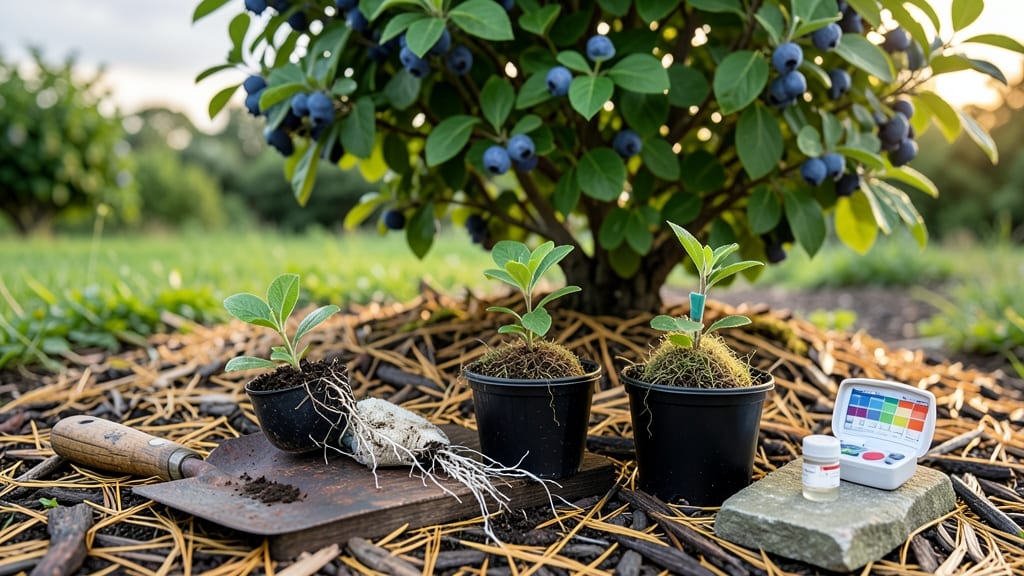
Timing your blueberry 🫐 planting in Colorado isn't just about the calendar—it's about matching your variety to the state's chill-hour zones to guarantee those juicy berries you crave. With elevations ranging from 5,000 to 10,000 feet, Colorado's climate demands precision, especially when late frosts can still linger into May.
Most gardeners in Colorado's USDA Zones 5-7 get their best results by planting between late April and early June, once the soil has warmed and the last frost has passed.
But there's a trick: fall planting (September to early October) works too, giving roots time to establish before winter's chill sets in.
Here's the game-changer: not all blueberry varieties thrive equally in Colorado's climate. Some need 800+ chill hours to produce fruit, while others do fine with just 300-500 hours. I'll show you which varieties match your local microclimate and how to prepare them for Colorado's unique growing conditions.
From soil pH adjustments to choosing between bare-root or potted plants, I've got the essential tips to help your blueberries take root and flourish—so you can enjoy that first harvest in July or August. Let's get those bushes in the ground the right way!
Best planting months in Colorado by region (elevation & chill-hours)
Colorado’s diverse geography—from the Front Range’s urban gardens to the Western Slope’s high deserts—creates wildly different planting windows for blueberries. Unlike most plants, blueberries thrive when you align their chill-hour needs with your local climate.
In Colorado, this means accounting for elevation-based hardiness zones 4–7, where a 6,000-foot difference can shift planting by months.
For example, Denver’s 5,280-foot elevation (Zone 5b) demands 600–800 chill hours, while Durango’s 6,500-foot elevation (Zone 6a) requires 800–1,000+ chill hours. Planting a low-chill variety in the San Juans risks poor fruiting, while high-chill varieties in the Eastern Plains may struggle to break dormancy.
Let’s break down the best months by region to maximize your harvest.
📌 Key Rule: Always plant after last frost (typically mid-April to mid-May in lowlands, late May to June at 7,000+ feet) or in early fall (September) to establish roots before winter. Fall planting works best in Zones 5–6, where soil stays workable longer.
In the Front Range, where Denver’s urban gardens dominate, aim for late April to May planting. This window ensures roots establish before summer heat stress or winter dormancy. For fall planting, early September gives roots time to harden off before first frost (mid-October).
My own Bluecrop bushes in Zone 5b Boulder thrive when planted in late April, yielding fruit by July.
The Western Slope presents unique challenges due to its arid climate and late frosts. Gardeners in Grand Junction (Zone 6a) should wait until May–June to avoid late-spring frosts that can kill new growth.
High-elevation areas like Aspen (7,500 ft) benefit from June planting, aligning with 1,000+ chill hours required by varieties like ‘Patriot’. Always check your
Top 5 Colorado-adapted blueberry varieties & their ideal planting times
Colorado’s chill-hour requirements (300–1,000+ hours) demand careful variety selection to thrive. Whether you’re in Denver’s Front Range or the San Juan Mountains, choosing the right blueberry type ensures sweet fruit and robust growth.
Below are my top 5 cold-hardy varieties ranked for Colorado’s microclimates, complete with their ideal planting windows and care ratings.
For spring planting (late April–early June), prioritize bare-root plants to establish roots before summer heat. Fall planting (September–early October) works best for container-grown bushes, giving roots time to settle before winter dormancy. Both methods require acidic soil (pH 4.5–5.5)—a must for Colorado’s alkaline native soil.
Pat