
Plants
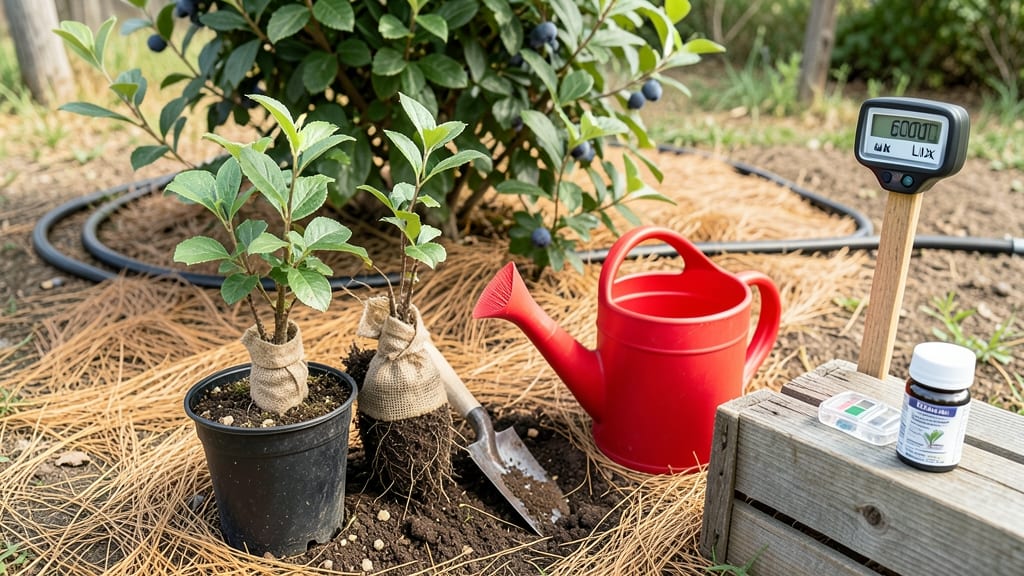
Planting blueberries in Southern California isn’t just about timing—it’s about matching your bushes to the region’s unique chill hours. Skip this step, and you’ll end up with leafy greenery instead of juicy 🫐 harvests, no matter how much you water or fertilize.
Here’s the truth: Southern California’s mild winters mean blueberries need a little help getting their required 300–900 chill hours. The best window to plant—November through March—aligns with cooler temps, giving young bushes the head start they need to thrive in zones 9b–11.
Whether you’re planting bare-root or in containers, the key is soil prep and microclimate awareness. Coastal areas can handle a wider variety of plants, while inland spots need extra care to avoid summer stress. Let’s break down exactly how to set yours up for success.
I’ll show you which varieties work best, how to extend chill hours naturally, and the critical post-planting tips that keep your bushes fruiting year after year—no matter how hot it gets. Ready to grow blueberries that actually bear fruit?
Best planting months for blueberries in Southern California (chill-hour zones explained)
Southern California’s mild winters make blueberry cultivation tricky—but not impossible. The key lies in chill-hours, the number of hours below 45°F (7°C) your bushes need to set fruit.
Most SoCal regions fall into 300–900 chill-hours, meaning traditional northern varieties won’t thrive. Planting at the right time maximizes success, especially in USDA Zones 9b–11.
Your best window is October through December, when cooler temps mimic natural dormancy periods. Coastal areas (like San Diego) can extend this slightly into January, while inland desert zones (like Palm Springs) should plant by November to avoid summer heat stress.
Avoid spring planting—blueberries hate SoCal’s dry heat and will struggle to establish roots.
Here’s how chill-hour zones directly impact your planting timeline and variety choices:
| Chill-Hour Zone | Best Planting Month | Ideal Varieties | SoCal Microclimate |
|---|---|---|---|
| 300–500 | October–November | 'Misty,' 'O’Neal' | Coastal (San Diego, Santa Barbara) |
| 500–700 | November–December | 'Duke,' 'Top Hat' | Inland Valleys (Los Angeles, Riverside) |
| 700–900 | December–Early January | 'Biloxi,' 'Climax' | High Desert (Palm Springs, Joshua Tree) |
If you miss the October–December window, your second-best option is February–March, but success rates drop by 30–40% due to heat stress. Bare-root plants (sold dormant) are easiest to establish in winter, while potted varieties can handle slightly later plantings—just water deeply after transplanting to reduce shock.
Southern California’s microclimates create wild variations. Coastal areas like Malibu or San Clemente stay mild year-round, while inland spots like Victorville or Lancaster can see 100°F+ summers. For desert zones, plant in partial shade (e.g., under a patio cover) to protect young bushes from intense afternoon sun.
Mulch with 4–6 inches of wood chips to retain moisture and mimic forest-floor conditions.
Pro tip: Use a chill-hour calculator (like the one from University of California Agriculture) to pinpoint your exact zone. For example, Santa Barbara averages 450 chill-hours, while Palm Springs hits 600–700. Matching your variety to these numbers ensures fruit set—not just leafy growth.
Container growing extends your options. Pots let you move bushes to shadier spots in summer or even bring them indoors during heatwaves. Just ensure containers are at least 18 inches deep and use acidic potting mix (pH 4.5–5.5).
Water containers daily in summer—they dry out 3x faster than ground soil.
Timing isn’t just about months—it’s about soil temperature. Wait until the ground cools below 60°F (15°C) before planting. Use a soil thermometer to check; if it’s warmer, delay by 2–4 weeks. Cold soil speeds root establishment, while warm soil invites root rot from fungal pathogens like Phytophthora.
Remember: Patience is key. Blueberries take 2–3 years to bear fruit after planting. If you plant in December, you might see your first harvest in spring 2025.
But with the right timing, your bushes will reward you with juicy, homegrown berries year after year—even in SoCal’s challenging climate.
How to choose blueberry varieties that thrive in Southern California’s heat
Southern California’s warm winters and hot summers make growing blueberries a challenge—but selecting the right varieties can turn this into a fruitful endeavor. The key is matching your microclimate’s chill-hours (300–900) with heat-tolerant cultivars.
Coastal areas like San Diego typically see 400–600 chill-hours, while inland regions like Riverside may only reach 200–400. Choose wrong, and your bushes will either struggle to fruit or wilt in summer heat.
For SoCal’s unique climate, focus on low-chill varieties like 'Misty' (300–400 hours) or 'O’Neal' (300–400 hours), which thrive in both coastal and inland zones. These varieties also boast excellent heat tolerance, a must for surviving our 90°F+ summers.
Pair them with acidic soil (pH 4.5–5.5), and you’ll set the stage for a thriving blueberry patch.
Pros & Cons: Top 3 Blueberry Varieties for Southern California
- ✅ Pros: Ultra-low chill (300–400 hrs), disease-resistant, large berries
- ❌ Cons: Needs consistent moisture, slower to fruit (3+ years)
- ✅ Pros: Heat-tolerant, early producer (2 years), disease-resistant
- ❌ Cons: Smaller berries, needs cross-pollination
- ✅ Pros: High-yield, large berries, tolerates partial shade
- ❌ Cons: Requires 400+ chill-hours (best for coastal areas)
Where you source your plants matters just as much as the variety. Local nurseries like The Plant Farm in Santa Barbara or Sunset Western Garden Centers carry region-adapted stock, ensuring your blueberries are prepped for SoCal’s climate. Avoid big-box stores—their plants often lack the localized heat tolerance you need.
For containers, opt for dwarf varieties like 'Top Hat' (300–400 chill-hours), which thrive in pots and can be moved to shaded areas during peak summer heat.
Don’t overlook soil preparation—blueberries are acid-loving and will fail without the right pH. Test your soil and amend with peat moss or sulfur to hit the 4.5–5.5 range. A 3-inch layer of pine bark mulch will also help retain moisture and regulate soil temperature.
Plant in late fall or early winter (November–January) to give roots time to establish before summer’s intensity.
Even with the right variety, summer care is critical. Provide afternoon shade (use shade cloth or plant near a wall) to protect leaves from scorching. Water deeply twice weekly during heatwaves, and avoid wetting foliage to prevent fungal diseases.
With these steps, your blueberry bushes will not only survive but thrive in Southern California’s challenging climate.
Ready to plant? Start with 'Misty' or 'O’Neal' for foolproof success, and always source from local, trusted nurseries. Your first harvest could be just 2–3 years away—if you pick the right variety for your microclimate! 🌱