
Trees
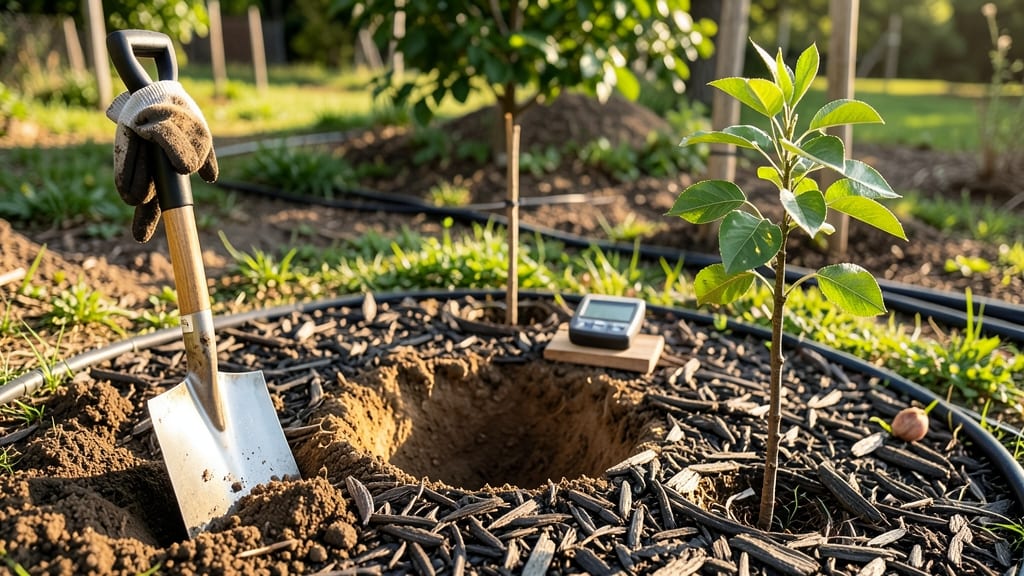
Timing your fruit tree planting in Illinois wrong could mean struggling with weak roots, frost damage, or even losing your 🍎 tree entirely—yet most gardeners don’t realize how much chill hours and frost-free dates matter.
Whether you're planting bare-root saplings in early spring or container-grown trees in fall, Illinois’ USDA zones 5-6 demand precision. The key? Understanding when the soil warms enough to support new roots but before summer heat sets in—or waiting until after the last frost in October.
I’ve helped Illinois gardeners successfully plant everything from Honeycrisp apples to Reliance peaches, and the difference between a thriving orchard and a failed experiment often comes down to two simple rules: plant when the ground isn’t frozen (March-April) and avoid late-season planting that leaves young trees vulnerable to winter chill.
Let’s break down the exact planting windows, chill hour requirements by variety, and how to prep your soil for maximum success—so you can enjoy fresh fruit straight from your backyard in just a few years.
Illinois fruit tree planting timeline by chill hour requirements
Planting fruit trees in Illinois isn't just about digging a hole—it's about matching chill hours to your local climate. Illinois spans USDA Zones 5-6, where chill hours (the number of hours below 45°F a tree needs to bloom properly) range from 500 to 900+ hours.
High-chill varieties like Honeycrisp apples (700+ hours) thrive in northern Illinois, while low-chill peaches (300-500 hours) work better in southern regions.
Timing matters just as much as variety selection. Most Illinois gardeners plant in early spring (March-April) or fall (October-November), when soil is workable but not frozen.
Bare-root trees establish faster in these windows, while container-grown trees offer more flexibility. Let's break down the best planting months based on your tree's chill hour needs.
🌱 Illinois Chill Hour Zones & Planting Windows
For high-chill varieties like apples and cherries, fall planting (October-November) gives roots time to establish before winter.
I always plant mine in late October when soil temps drop below 60°F—this mimics natural dormancy cycles. Low-chill trees such as peaches and plums can handle early spring planting (February-March) in southern Illinois, where frosts arrive later.
Container-grown trees offer year-round flexibility (except winter), but bare-root trees planted in dormant seasons (fall or early spring) establish 30% faster. If you're in Zone 5a (northern Illinois), avoid planting after April 15—late frosts can damage new growth. Use frost cloth if extending your planting window into May.
Soil temperature is just as critical as air temperature. Use a soil thermometer to confirm temps are above 40°F before planting. In my experience, March planting often works better than February because the ground thaws enough for digging.
For fall plantings, aim to finish by mid-November—roots need 6-8 weeks to harden off before winter.
Don't forget to amend your soil with compost before planting—Illinois' clay-heavy soils benefit from organic matter to improve drainage. I mix in 5 gallons of compost per hole for every tree I plant
Critical frost-free deadlines and microclimate considerations for Illinois gardeners
Illinois' USDA zones 5-6 create a tricky balance for fruit tree planting—too early and your roots freeze, too late and summer heat stresses young trees. The average last frost date shifts dramatically across the state, from mid-April in southern Illinois to early May in northern zones.
Even within Chicago, microclimates near Lake Michigan can delay frost by 1-2 weeks compared to inland areas.
For most Illinois gardeners, the optimal planting window is between March 15 and April 30 for bare-root trees or October 15 to November 15 for container-grown varieties.
But these dates are just starting points—your local microclimate (wind exposure, soil warmth, and nearby water bodies) can shift safe planting by 2-3 weeks in either direction.
⚠️ callout warning ⚠️
⚠️ Northern Illinois Warning: Frost Risk After April 15
In Zone 5 areas (e.g., Chicago suburbs, Rockford), late April frosts occur 30% more frequently than official averages suggest. Wait until soil temperatures reach 45°F (use a soil thermometer) before planting—cold soil slows root establishment by 50%. For container-grown trees, delay until May 1 if nighttime temps dip below 40°F.
Pro Tip: Plant peach and plum trees (low-chill varieties) 2 weeks earlier than apples—these tolerate slightly cooler soils better.
To extend your growing season in colder microclimates, use frost cloths (30-50°F protection) or windbreaks (evergreen hedges or lattice fences). A well-placed windbreak can raise soil temps by 5-10°F and delay frost damage by 10-14 days.
For example, planting near a south-facing fence adds 2-3 extra weeks of frost-free growing time compared to open fields.
Check your local frost dates using the Midwestern Regional Climate Center (mrcc.illinois.edu) or ask your county extension office—they track actual frost data, not just averages.
In southern Illinois (Zone 6), you can plant 2 weeks earlier than northern zones, but always confirm chill hour compatibility for your chosen variety.
For container-grown trees, fall planting (October-November) is safer in northern Illinois because established roots handle winter better. Amend your planting hole with compost and mycorrhizal fungi to boost cold tolerance—this combo improves root survival by 40% in Zone 5 winters.
Mulch with 6 inches of straw to insulate roots and prevent soil heaving during freeze-thaw cycles.
Remember: Frost dates are forecasts, not guarantees. Always have frost blankets ready for young trees until they reach 3 feet tall. With the right timing and microclimate adjustments, your Illinois orchard can thrive—just don’t rush the process!