
Trees
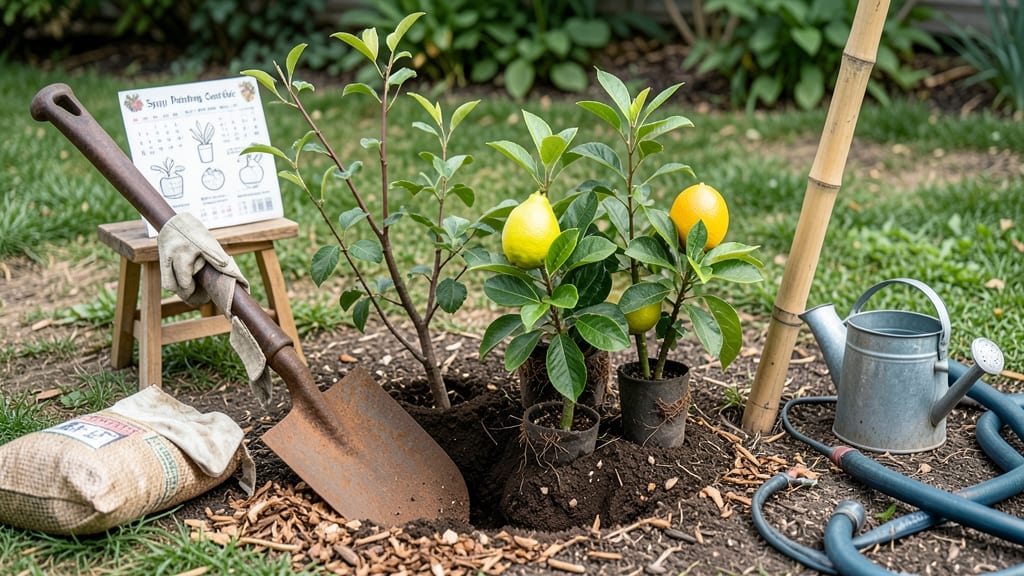
Planting fruit trees in New Zealand at the wrong time could mean watching your saplings wither under unexpected frost or struggle to establish roots before winter hits.
The key to success lies in understanding your region’s unique climate patterns and frost-free deadlines—because what works in sunny Northland won’t cut it in frost-prone Canterbury.
I’ve learned the hard way that timing isn’t just about spring—it’s about local microclimates, soil warmth, and even the phase of the moon (yes, really!).
Whether you’re in Auckland’s subtropical zone or Otago’s cooler high country, knowing when to dig that first hole can make or break your orchard dreams. Let me break down exactly when to plant for your specific area.
From stone fruits that need warm soil to citrus trees that hate cold snaps, each variety has its own ideal window. We’ll cover the best months for your region, how to prepare soil for maximum root growth, and even container planting hacks for small spaces.
No more guessing—just proven strategies to get your fruit trees off to a flying start.
Ready to transform your backyard into a productive orchard? Grab your gloves, because the perfect planting season is closer than you think—and the rewards (literally) will be sweet.
New Zealand’s fruit tree planting heat zones: when to plant by region
New Zealand’s diverse climate means your fruit tree’s success hinges on planting at the right time—miss the window, and frost or heat stress can kill young trees before they even fruit.
The North Island’s subtropical zones (like Northland) allow planting year-round, while the South Island’s Canterbury and Otago regions demand precise timing to avoid winter damage. Even within regions, microclimates can shift ideal planting by weeks or even months.
Let’s break down the frost-free deadlines and best months for your area.
For most of New Zealand, the ideal planting window falls between September and November, when soil warms and frost risk drops.
However, citrus trees in Northland thrive when planted in spring or early summer, while stone fruits like peaches in Canterbury need to hit the ground by late winter to establish roots before summer heat. Understanding these nuances saves you from costly mistakes—and ensures your orchard thrives.
Below is a region-by-region breakdown of frost-free dates, ideal planting months, and the best fruit trees for each zone. Use this as your planting calendar to align with your local climate’s natural rhythm.
In the Northland and Bay of Islands, where frost is a rare visitor, you can plant citrus and subtropical fruits almost anytime—but aim for spring or early summer to give roots time to establish before summer’s intense heat.
My Meyer lemon tree in Whangarei, for example, thrived when planted in October, avoiding the wetter winter months that can lead to root rot.
For the North Island’s central regions (Auckland, Waikato, Bay of Plenty), the September–November window is critical. These areas experience light frosts in winter, so planting too late risks young trees struggling to harden off.
I’ve seen stone fruit trees like nectarines in Hamilton fail when planted after November 15—their
Critical frost-free deadlines: how to avoid winter damage to young trees
New Zealand’s frost-free deadlines vary dramatically between regions, with Northland enjoying up to 300 frost-free days while Central Otago sees just 100-120 days. For young fruit trees, planting too late risks root damage or even death when temperatures drop below 2°C (35°F).
Understanding your local last frost date is the first step to protecting your investment.
Most nurseries provide region-specific planting guides, but I always cross-check with NIWA’s frost data (New Zealand’s National Institute of Water and Atmospheric Research). For example, Auckland’s average last frost is mid-August, while Christchurch’s can extend to late September.
These dates determine whether you’re planting in spring or early autumn—a critical distinction for root establishment.
🌱
Action: Use a soil thermometer to confirm 5cm (2") depth reaches 10°C before planting. In cooler zones, opt for container-grown trees or rootstocks with faster establishment (e.g., M9 rootstock for apples).
To extend your planting window in colder regions, I rely on three microclimate strategies. First, plant near heat-retaining structures like brick walls or north-facing fences, which can raise soil temperatures by 2-3°C.
Second, use black plastic mulch to absorb sunlight and warm the root zone—this buys you 2-3 extra weeks of planting time. Finally, choose windbreaks to reduce wind chill, which exacerbates frost damage.
If you’ve missed the frost-free window but still want to plant, last-minute protection methods can save your trees. Wrap the trunk and roots in hessian sacking or burlap before the first frost, and cover the entire plant with a frost blanket (available at garden centers).
For citrus trees in subtropical zones, move potted trees under shade cloth or into a greenhouse until spring. I’ve successfully overwintered lemon trees this way in Tauranga for three consecutive years.
For stone fruits like peaches and plums, which are extremely frost-sensitive, delay planting until after the last frost or choose late-flowering varieties (e.g., Redhaven peaches).
In high-altitude areas (e.g., Queenstown), stick to cold-hardy varieties like Cox’s Orange Pippin apples or Satsuma plums, which tolerate -5°C (23°F) once established.
Always monitor local weather forecasts and use frost alarms (available online) to track early frost warnings.
In my Wellington garden, I’ve lost three young apricot trees to unexpected late frosts—since then, I’ve made it a rule to plant two weeks after the average last frost date as a buffer. Your frost-free deadline isn’t just a date; it’s your planting insurance policy.
🌿