
Trees
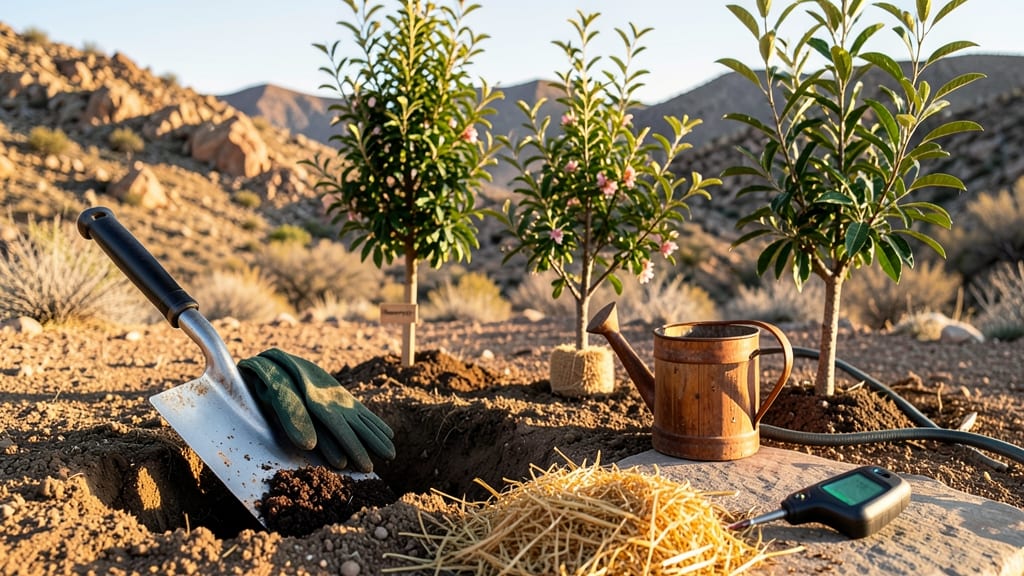
Timing your fruit tree planting in Utah can mean the difference between a thriving orchard and a sad, struggling sapling—especially with the state’s dramatic elevation shifts from desert valleys to mountain slopes.
If you’ve ever wondered why some fruit trees flourish while others wither, the answer often lies in when they hit the soil. Utah’s USDA zones range from 4b in the high country to 8a in the lowlands, creating a tricky balance for planting windows.
Get it right, and you’ll enjoy homegrown apples, peaches, and cherries for years.
I’ve tested the best strategies across Utah’s microclimates, and what works in Salt Lake City won’t always suit Park City or the Wasatch Front. Let me break down the ideal months for your elevation—and how to avoid costly mistakes.
Whether you’re a first-time gardener or a seasoned grower, these insights will help you choose the best time to plant for maximum success. Ready to dig in?
Utah fruit tree planting calendar by elevation: lowland vs. mountain zones
Utah’s dramatic elevation shifts—from the desert lowlands near 4,000 feet to mountain valleys above 9,000 feet—mean your fruit tree’s planting window can vary by months.
In the Wasatch Front, peaches thrive when planted in late winter, while high-altitude apple orchards near Park City need to wait until early summer. Understanding these zones ensures your trees establish strong roots before first frost strikes.
Below 5,000 feet, Utah’s climate resembles the Sonoran Desert, with hot summers and mild winters. Here, peach and nectarine trees benefit from early spring planting (March-April) when soil warms to 55°F.
Above 7,000 feet, however, cherry and apple varieties face shorter growing seasons, demanding late May to June transplants to avoid late spring frosts that can devastate blossoms.
Soil preparation is just as critical as timing. In lowland zones, amend sandy soils with compost and organic matter by February to retain moisture. At higher elevations, focus on drainage improvement—clay-heavy soils can suffocate roots when snowmelt arrives.
Always test your soil’s pH (6.0–7.0) before planting, as Utah’s alkaline soils often need sulfur or peat moss adjustments.
Here’s how to align your fruit tree planting with Utah’s three key elevation zones, including frost-free dates, ideal transplant months, and soil prep timing for apples, peaches, cherries, and pears:
For lowland zones (e.g., St. George or Cedar City), bare-root trees planted in March give roots 6–8 weeks to establish before summer heat arrives. In contrast, mountain zones (e.g., Heber Valley or Ogden) often experience late spring frosts in May, so delay planting until after May 15 to protect blossoms.
Use frost cloth if early blooms appear.
Container growing extends your options in urban lowlands. Dwarf apple varieties like ‘Liberty’ thrive in pots, allowing you to plant as late as May 1 in USDA Zone 7b.
Just ensure containers have drainage holes and use lightweight potting mix to prevent root rot. In high-elevation areas, prioritize cold-hardy rootstocks like ‘Antonovka’ for apples or ‘Montmorency’ for tart cherries.
Mulching is non-negotiable in Utah’s dry climates. Apply 3–4 inches of wood chips or straw around the base of your tree to retain moisture. In lowland zones, reapply mulch in early spring to shield roots from desert winds.
At higher elevations, mulch helps regulate soil temperature during warm days and cold nights, which is critical for fruit set.
Monitor your local microclimate—a north-facing slope in Salt Lake City may stay 5°F cooler than a south-facing yard. Use a weather station to track last frost dates for 3 years to refine your planting schedule. For example, Provo’s average last frost
Best fruit tree varieties for Utah’s climate and when to plant them
Utah’s diverse microclimates demand careful fruit tree variety selection. High-elevation areas like Park City (USDA Zone 5b) thrive with cold-hardy apples like ‘Honeycrisp’, while lowland St. George (Zone 8a) handles heat-loving peaches such as ‘Elberta’. Choosing the right variety ensures your trees survive Utah’s temperature swings and produce reliably.
Timing matters just as much as variety. Most Utah fruit trees should be planted in early spring (March–April) or fall (September–October), but high-elevation trees need earlier spring planting to avoid late frosts. Below, I’ve outlined the best varieties for each zone and their ideal planting windows to maximize your success.
🌱 Key Tip: Always check your local last frost date—Utah’s ranges from April 15 in lowlands to June 1 in the mountains!
For high-elevation gardens, prioritize cold-hardy varieties like ‘Honeycrisp’ apples or ‘Montmorency’ cherries. These trees enter dormancy early and tolerate Utah’s late spring frosts. Plant them in March–April when soil temperatures reach 45°F—this gives roots time to establish before summer heat arrives.
In lowland Utah, heat-tolerant varieties like ‘Elberta’ peaches or ‘Sugar Boy’ apricots thrive when planted in fall (September–October). Fall planting reduces transplant shock and allows roots to establish before summer’s intense heat. Avoid planting in late summer, as young trees struggle with water stress.
Pro tip: If you’re in a transition zone (like Salt Lake City), opt for dwarf varieties of ‘Honeycrisp’ or ‘Bartlett’ pears—they adapt better to temperature fluctuations and produce fruit faster. Always check the rootstock compatibility with your climate zone!
Remember: Soil prep is just as critical as timing. Amend your planting hole with compost and a balanced fertilizer (10-10-10) to give young trees a nutritional boost. Mulch with wood chips to retain moisture and regulate soil temperature.
With the right variety and planting schedule, your Utah fruit trees will reward you with years of harvests—whether you’re growing crisp apples in the mountains or juicy peaches in the desert. Happy planting! 🌳