
Plants
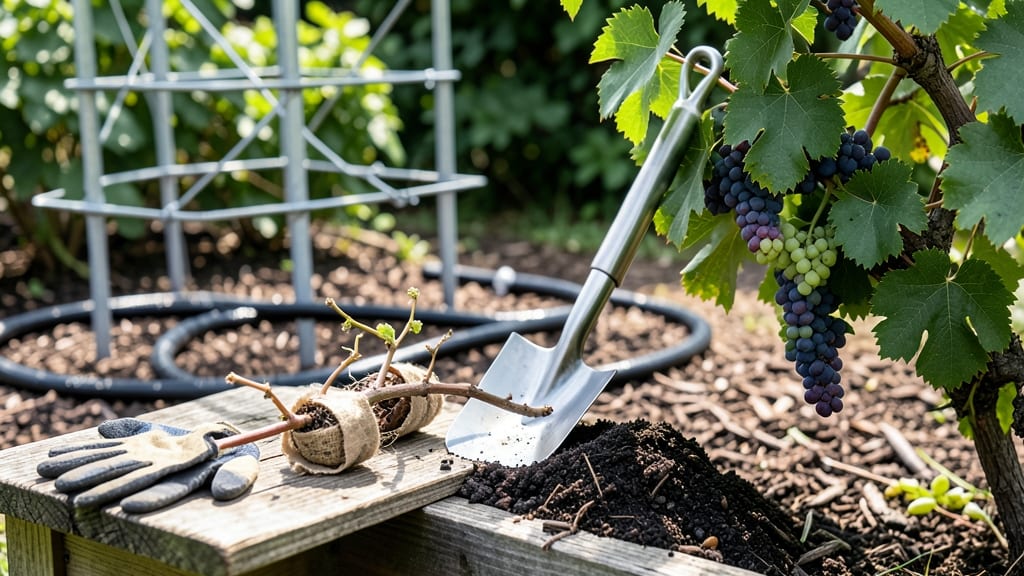
Timing your grapes 🍇 planting in Arizona isn’t just about following a calendar—it’s about beating the heat and setting your vines up for success in the desert’s harshest months. Plant too early, and you risk frost damage; too late, and your young plants will struggle under the relentless sun.
The best window—November through February—lets you establish strong roots before summer’s intensity kicks in.
This isn’t one-size-fits-all advice, though. Arizona’s climate zones vary wildly, from the scorching Low Desert to cooler High Desert areas, each demanding a slightly different approach.
Whether you’re growing Thompson Seedless for juicing or Flame Seedless for fresh eating, the right timing and variety make all the difference in avoiding heat stress and maximizing your harvest.
I’ve spent years perfecting grape cultivation in USDA Zone 9b, and what I’ve learned will help you skip the trial-and-error phase.
From soil prep that drains like a dream to watering strategies that conserve without sacrificing growth, these insights are your shortcut to thriving vines—and that first taste of homegrown fruit.
Ready to turn your backyard into a grape-growing oasis? Let’s dive into the exact months, soil secrets, and variety picks that’ll have your vines flourishing year after year, no matter where you are in Arizona.
Optimal Arizona grape planting months by variety and climate zone
Arizona’s diverse climate zones—Low Desert, Transition, and High Desert—create unique challenges for grape growers. Planting at the wrong time can mean heat stress or frost damage, while timing it right ensures robust vine establishment.
I’ve researched the best months for popular varieties like Thompson Seedless, Flame Seedless, and Muscadine to help you succeed.
In the Low Desert (e.g., Phoenix, Tucson), where temperatures soar year-round, the ideal planting window is November through February. This avoids the brutal summer heat while allowing vines to establish roots before spring growth.
Meanwhile, the High Desert (e.g., Flagstaff, Prescott) has cooler winters, so you can plant as late as March—but only for hardy varieties.
Thompson Seedless, a classic table grape, thrives in Arizona’s heat but needs careful timing. Planting in December or January gives it enough time to root before the growing season. Flame Seedless, with its vibrant red skin, is slightly more frost-tolerant, making it a better fit for the Transition Zone (e.g., Sedona, Payson), where you can plant from November through February.
Muscadine grapes, native to the southeastern U.S., are less common in Arizona but can work in cooler microclimates like the High Desert. These varieties prefer March planting to avoid late frosts. Always check your local USDA Zone—Arizona ranges from 7b to 10a—to refine your timing further.
Here’s a quick comparison of the best planting months for Arizona’s climate zones and varieties:
| Climate Zone | Variety | Best Planting Months | Key Considerations |
|---|---|---|---|
| Low Desert (Phoenix, Tucson) | Thompson Seedless | November–February | Avoid summer heat; use shade cloth if planting early. |
| Low Desert (Phoenix, Tucson) | Flame Seedless | December–January | Needs consistent moisture; mulch heavily. |
| Transition Zone (Sedona, Payson) | Thompson Seedless | November–February | Watch for late frosts; plant on south-facing slopes. |
| Transition Zone (Sedona, Payson) | Muscadine | March (late) | Hardier but slower to establish; needs well-draining soil. |
| High Desert (Flagstaff, Prescott) | Flame Seedless | February–March | Cooler temps allow later planting; protect from wind. |
| High Desert (Flagstaff, Prescott) | Muscadine | March–April | Best for cooler microclimates; monitor for pests. |
For the Low Desert, I recommend planting bare-root vines in December to give them a head start. The cooler winter temperatures help roots establish before the intense spring heat.
In contrast, the High Desert allows for a slightly later window—March—because the risk of frost is lower, and the soil stays cooler longer.
If you’re in the Transition Zone, like Sedona or Payson, aim for November or early December. This balances the need to avoid late frosts while still giving vines time to root before summer.
For Muscadine grapes, which are less common but well-suited to cooler areas, March planting is ideal to avoid any lingering frost risks.
One critical tip: Always check your local last frost date. In Arizona, this varies widely—January 15 in the Low Desert vs. March 15 in the High Desert.
Planting too early in cooler zones can expose young vines to frost damage, while planting too late in warmer zones can stress them before they’re established.
Once planted, focus on watering deeply but infrequently to encourage deep root growth. In the Low Desert, this means drip irrigation or soaker hoses to avoid evaporation.
In the High Desert, where soils can dry out quickly, mulching with straw or wood chips helps retain moisture and regulate soil temperature.
With the right timing and care, your grapevines will reward you with bountiful harvests—whether you’re growing <
How to prepare your Arizona soil and site for grape planting success
Arizona’s well-draining soil and intense sun create unique challenges for grape vines. Without proper preparation, your plants may struggle with heat stress or poor nutrient uptake. The key is to mimic their natural Mediterranean habitat—dry but with deep water access and loose, rocky soil.
Start by testing your soil’s pH level (ideal: 6.0-7.0). Arizona’s native soils often lack organic matter, so amending with compost or aged manure is essential. Grapes hate soggy roots, so prioritize slope adjustments or raised beds if your yard holds water.
- 🔹 Test soil for pH (6.0-7.0) and organic matter (<1% is typical in desert soils)
- 🔹 Amend soil with 3-4 inches of compost + 10% perlite/sand for drainage
- 🔹 Choose location with 6+ hours full sun and wind protection (use trellises or shade cloth for summer)
- 🔹 Install irrigation for deep watering (2-3 gallons per vine weekly)
- 🔹 Mulch heavily with gravel or wood chips to retain moisture and regulate soil temp
- 🔹 Plant bare-root vines in late winter (Nov-Feb) when temps are mild (50-60°F)
For sun exposure, grapes thrive in Arizona’s full desert sun, but young vines need protection from 110°F+ afternoons. Install 30-50% shade cloth during summer months or plant near a trellis with a northern exposure to reduce direct heat.
Wind can dry out soil and stress vines, so consider windbreaks like native mesquite trees or bamboo fencing. If planting in containers, use 50-gallon pots with drainage holes and fill with a 50/50 mix of cactus soil and compost.
After planting, mulch with 2-3 inches of wood chips to lock in moisture and keep roots cool. Avoid synthetic mulches—they trap too much heat. Water deeply once weekly during establishment, focusing on the root zone rather than surface watering.
With these steps, your grape vines will establish strong roots before Arizona’s summer heat peaks. Patience is key—grapes take 2-3 years to bear fruit, but proper prep ensures decades of harvests. 🍇