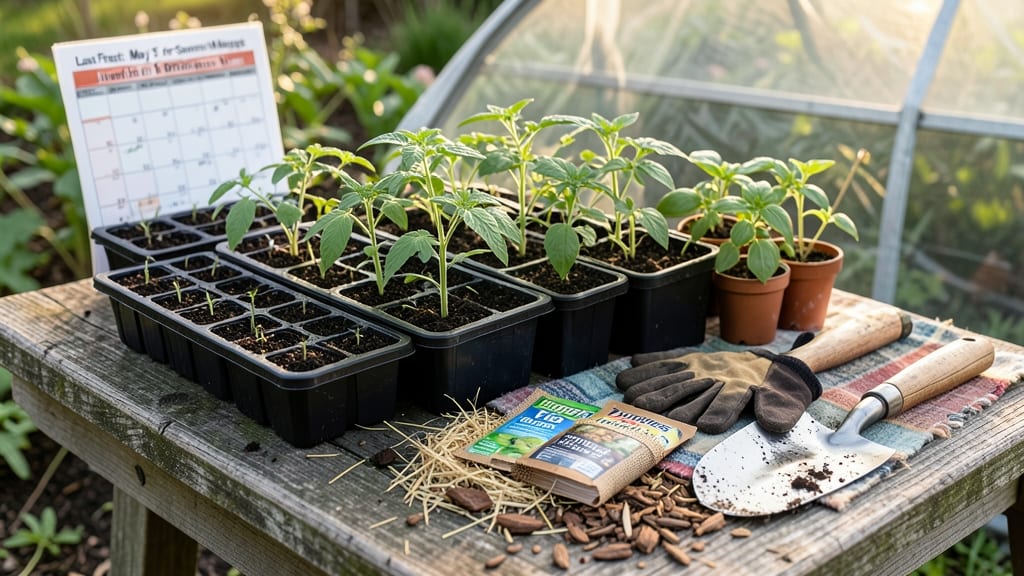
Timing your garden in Maine isn’t just about the calendar—it’s about beating the frost, and getting it wrong can mean lost plants and wasted effort. With USDA zones 5b-6a and unpredictable springs, knowing when to plant your 🌱 General Garden Plants (Maine) is the difference between a thriving harvest and a gamble.
Most gardeners wait until mid-April to mid-June, but coastal areas and inland regions can differ by weeks. The key? Waiting until the soil hits 50°F and the last frost has passed—usually around mid-May, though some years push it into June.
Skipping this step risks frost damage to tender crops like tomatoes and peppers.
Here’s the game-changer: adjusting for microclimates can add weeks to your growing season. Coastal Maine stays warmer longer, while inland areas may need row covers for early starts. I’ll break down the exact frost-free dates by county so you can plant with confidence.
Ready to maximize your harvest? Let’s dive into the perfect planting windows for every type of 🌱 General Garden Plant (Maine), from cold-hardy veggies to heat-loving favorites—and how to protect your garden when Mother Nature throws a curveball.
🌱
When to Plant General Garden Plants (Maine) Garden Plants (Maine)
Jan
❄️
Feb
❄️
Mar
🌱
Apr
🌱
May
🌱
Jun
🌱
Jul
☀️
Aug
☀️
Sep
🌱
Oct
🍂
Nov
🍂
Dec
❄️
Maine’s frost-free planting zones by county: exact dates for warm-season crops
Maine’s warm-season crops like tomatoes, peppers, and squash demand precision—plant too early, and frost will nip your seedlings. Too late, and you’ll miss peak harvests. Each county’s last frost date varies by 10–15 days, thanks to Maine’s coastal-inland divide.
Coastal areas (like York County) warm up faster, while inland spots (like Aroostook County) linger in chill longer. Below, I’ve compiled historical frost-free averages from USDA data and local weather stations, plus microclimate tips to fine-tune your timing.
For tomatoes and peppers, aim for soil temps above 55°F—these heat-lovers won’t thrive in cool ground. Squash, though hardier, still needs 60°F+ soil to germinate reliably. Use a soil thermometer to confirm readiness, especially in northern counties where springs can stall.
Pro tip: Coastal regions often see their last frost 2 weeks earlier than inland areas, so adjust accordingly.
Here’s your county-by-county guide to warm-season planting windows, including historical last frost dates and microclimate notes for coastal vs. inland gardens. Bookmark this—Maine’s weather can flip faster than a lobster roll at a picnic!
| County |
Last Frost Date (Avg.) |
Plant Tomatoes/Peppers |
Plant Squash |
Microclimate Notes |
| Androscoggin |
May 10–15 |
May 20–25 |
May 1–5 |
Inland; wait for soil 55°F+ |
| Aroostook |
May 25–June 1 |
June 5–10 |
May 15–20 |
Northern; use row covers |
| Cumberland |
May 5–10 |
May 15–20 |
April 25–May 1 |
Coastal; earlier near water |
| Hancock |
May 1–5 |
May 10–15 |
April 20–25 |
Coastal; mildest zone |
| Knox |
May 1–5 |
May 10–15 |
April 20–25 |
Coastal; protect from wind |
| Penobscot |
May 15–20 |
May 25–June 1 |
May 5–10 |
Inland; monitor night temps |
| Piscataquis |
May 20–25 |
June 1–5 |
May 10–15 |
Northern; late frosts common |
| Sagadahoc |
May 5–10 |
Cold-hardy vegetables to plant early in Maine (before last frost)
Maine’s short growing season demands strategy—especially for gardeners eager to harvest fresh produce early. The key lies in planting cold-hardy vegetables as soon as the ground thaws, often as early as March for the most resilient crops.
These plants thrive in cool soil temperatures (35–50°F) and can even survive light frosts, giving you a head start before the last frost date (typically mid-May).
By focusing on frost-tolerant varieties, you extend your harvest window and reduce the risk of losing seedlings to late frosts. My top picks include kale, peas, spinach, and potatoes, all of which can handle Maine’s unpredictable spring weather.
The reward? A bountiful early harvest and the satisfaction of beating the clock on the growing season.
-
1
Peas (Sugar Snap, Snow Peas): Plant March–April in 40–50°F soil. Thrives in cool weather; harvest in 60–70 days. Use trellises to save space.
-
2
Spinach (Bloomsdale, Giant Winter): Sow March–April in 45–50°F soil. Prefers partial shade; bolt-resistant varieties extend harvest until June.
-
3
Kale (Winterbor, Vates): Direct-sow March–May in 40–50°F soil. Sweeter after frost; harvest outer leaves to prolong production. Tolerates -10°F temps.
-
4
Potatoes (Yukon Gold, Kennebec): Plant late March–April in 45–50°F soil. Choose early-maturing varieties (90 days) for Maine’s short season. Hill soil for better yields.
-
5
Lettuce (Romaine, Buttercrunch): Start seeds March–April in 40–50°F soil. Succession plant every 2 weeks for continuous harvest. Avoid bolting with shade cloth.
-
6
Radishes (Cherry Belle, French Breakfast): Fast-growing (25–30 days); sow March–May in 40–50°F soil. Ideal for gap-filling in early beds. Thin seedlings to 2 inches apart.
-
7
Onions (Red Baron, Sweet Spanish): Plant March–April in 40–50°F soil. Use sets or transplants for faster growth. Harvest green onions early or bulbs in 90–120 days.
Timing is everything in Maine’s climate. For example, peas and spinach can handle light frosts and even improve in flavor, while potatoes need consistent soil warmth to sprout. My rule of thumb?
Start hardy crops as soon as the soil is workable (usually late March), then follow up with succeeding plantings every 2 weeks for a staggered harvest.
Don’t forget to protect young plants with row covers or cloches if a late frost is forecasted. I’ve lost entire beds of lettuce to a surprise frost in early May—lesson learned!
For coastal Maine gardeners, plant 1–2 weeks earlier than inland areas, as coastal regions warm faster due to ocean influence.
Extend your season further by planting cool-season crops again in late August for a fall harvest. Crops like kale and spinach often perform better in fall than in spring, thanks to Maine’s cooler autumn temperatures.
With the right planning, you can enjoy fresh homegrown greens from May through October—even in Maine’s chilly climate! 🌱
★★★★★4.5(7 reviews)
|