
Plants
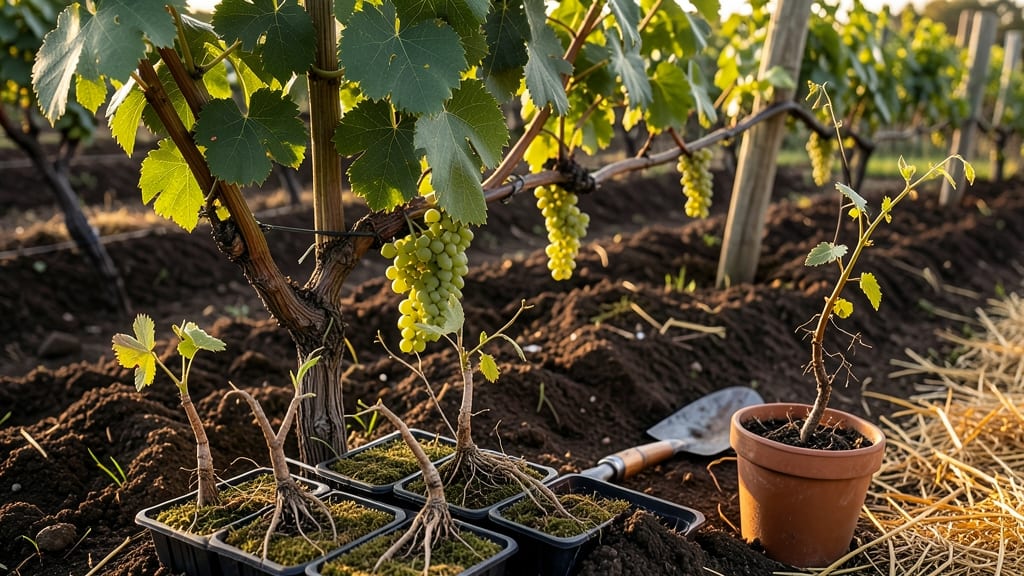
Planting grape vines in Texas isn't just about grabbing a cutting and sticking it in the ground—it's about matching the perfect timing to your variety's chill-hour needs. 🍇 With Texas' unpredictable frost dates and scorching summers, one wrong move could mean your vines struggle or even fail to fruit.
The key is understanding whether you're growing low-chill Muscadines or higher-chill Cynthianas, because their planting windows can differ by months.
If you've ever wondered why some Texas gardeners get lush harvests while others battle with weak vines, the answer often lies in when they planted.
Late winter to early spring (February-March) is ideal for most varieties, but fall planting (September-October) works too—if you choose the right type for your region's chill hours. Let me show you exactly how to time it right for your specific grape variety and Texas zone.
What you'll discover here is how to avoid common mistakes like planting too early (risking frost damage) or too late (delaying fruit development). We'll cover soil prep, trellis setup, and even how to adjust for North Texas' cooler winters versus South Texas' milder climate.
By the end, you'll know exactly when to plant for the best chance of sweet, plentiful grapes.
The secret to successful grape growing in Texas isn't complicated—it's about working with your climate, not against it. Whether you're a first-time gardener or a seasoned vineyard enthusiast, these insights will help you plant at the optimal time for your specific grape variety.
Let's get those vines in the ground the right way.
Texas grape planting timeline by chill-hour requirements
Texas gardeners know that planting grape vines isn’t as simple as sticking a vine in the ground and hoping for the best. The state’s diverse chill-hour zones—from 1,000+ hours in North Texas to 300 hours in South Texas—dictate which varieties thrive and when to plant them.
Get this wrong, and your vines may fail to bud or produce sparse fruit. Let’s break down the optimal planting windows for low-chill, moderate-chill, and high-chill grape varieties across Texas regions.
First, understand that chill hours (temperatures between 32°F and 45°F) are critical for grape dormancy. Vines need these hours to break dormancy in spring. Texas’ three main regions—North (e.g., Dallas, Amarillo), Central (e.g., Austin, San Antonio), and South (e.g., Houston, Corpus Christi)—have vastly different chill-hour averages.
For example, North Texas averages 1,200–1,500 chill hours, while South Texas sees only 300–500 hours. This means high-chill varieties like Cabernet Sauvignon won’t survive in the Rio Grande Valley, but low-chill Muscadines will.
Here’s the key rule: Plant grape vines when the soil is workable (60°F+) and the risk of frost has passed. In Texas, this typically means late winter to early spring (February–March) for most regions, but fall planting (September–October) is also viable in milder zones.
The table below maps out the best planting windows by chill-hour category and Texas region, so you can match your variety to your climate.
For North Texas gardeners, where chill hours are abundant, February–March is ideal for planting moderate- to high-chill varieties like Cynthiana or Cabernet Sauvignon. These vines need the winter chill to break dormancy and produce fruit.
In Central Texas, where chill hours are moderate (600–900), you can plant low-chill Muscadines in fall (September–October) to establish roots before summer heat, or opt for spring planting in February for varieties like Flame Seedless.
In South Texas, where chill hours are scarce (<300), fall planting (September–October) is your best bet. This allows vines to establish roots before the intense summer heat arrives. Low-chill varieties like Muscadine or Red Rio are your best friends here—they’ll survive and even thrive with minimal chill hours.
Avoid high-chill varieties entirely; they’ll struggle to bud and may die back in the heat.
Pro tip: If you’re in a transition zone (e.g., East Texas with 700–800 chill hours), consider heat-hardy rootstocks like 1103 Paulsen or Schwarzmann. These can help moderate-chill varieties like Bluebunch grapes perform better in warmer microclimates.
Always check the specific chill-hour requirements for your chosen variety—some Muscadines need as few as 100 hours, while others may require up to 400.
Timing isn’t just about chill hours—it’s also about soil temperature and frost risk. In North Texas, wait until mid-February to plant, as frost can still linger into March. In South Texas
Best grape varieties for Texas and their ideal planting months
Texas gardeners have a fantastic opportunity to grow grapes thanks to its long growing season, but choosing the right variety and planting time is critical. The state’s USDA Zones 8a-10b and extreme heat demand heat-tolerant and chill-hour-adapted varieties.
Whether you're in North Texas with cooler winters or South Texas with mild winters, timing your planting right ensures strong root establishment before summer’s intensity.
For best results, focus on Muscadine, Cynthiana (Norton), and Flame Seedless varieties, which thrive in Texas conditions.
Each variety has specific planting windows to maximize survival and fruit production. Soil preparation is equally important—Texas soils often lack organic matter, so amending with compost and ensuring proper drainage is non-negotiable.
Muscadine grapes are native to the Southeast and perfect for Texas’s heat and humidity. They require 200-500 chill hours, making them ideal for Central and South Texas. Plant them in late winter (February-March) to allow roots to establish before the heat peaks. Cynthiana (Norton), a cold-hardy variety, needs 500-800 chill hours and is better suited for North and Central Texas. Aim for early spring (March-April) planting to align with bud break.
Flame Seedless grapes are a popular choice for table grapes and are well-suited for Central and South Texas with their 300-500 chill hours. Plant them in February-March to ensure they establish roots before summer’s heat. Scuppernong grapes, another muscadine variety, require 200-400 chill hours and thrive in South Texas. Their planting window mirrors Muscadine, in February-March, to capitalize on the mild winter conditions.
When preparing the soil, focus on drainage and organic matter. Texas soils can be clay-heavy or sandy, so amend with compost or aged manure to improve texture. A pH of 5.5-7.0 is ideal for most grape varieties.
For microclimate considerations, plant in areas with afternoon shade if you’re in West Texas, where heat can be more intense. In East Texas, prioritize well-draining sites to avoid waterlogging during heavy rains.
For container growing, choose compact varieties like Flame Seedless and use large pots with drainage holes. Plant in late winter