
Trees
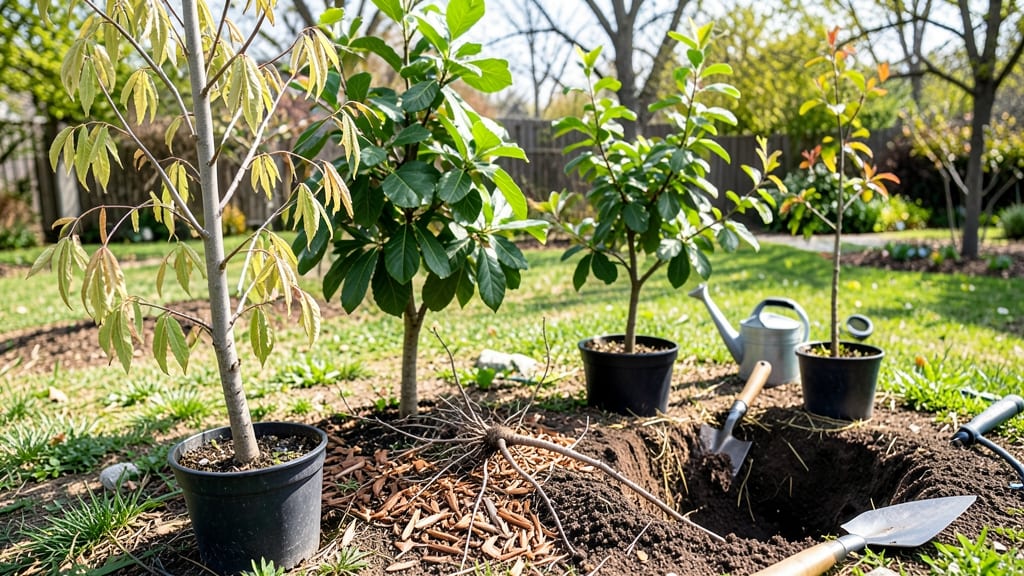
Planting fruit trees in North Texas at the wrong time means watching your hard work wither before it even begins. Whether you're dreaming of juicy peaches 🍑 or sweet plums, getting the timing right—especially between February and March—is the difference between a thriving orchard and a sad, frost-bitten sapling.
Here’s the deal: North Texas’s 7b-8a climate demands precision. Plant too early, and a late frost will zap your young trees. Too late, and they won’t have enough time to establish roots before summer’s brutal heat.
The sweet spot? Late winter, when the soil is workable but the last frost hasn’t arrived—usually around February 15.
But it’s not just about the calendar. Chill-hour requirements matter too—some varieties need 500 hours of cold, while others thrive with 1,000+**. A peach tree in Dallas might do great where a plum tree in Lubbock could struggle.
I’ll break down the best varieties for your microclimate and how to match them to your yard’s unique conditions.
Ready to plant with confidence? You’ll learn how to prep your soil, choose the right trees for your zone, and avoid the 3 biggest mistakes that kill fruit trees before they even bear fruit.
Let’s get those roots in the ground the right way—so you can enjoy homegrown harvests for years to come.
North Texas fruit tree planting timeline: frost dates & chill-hour zones
North Texas gardeners face a unique challenge when planting fruit trees: balancing chill-hour requirements with unpredictable frost dates. Unlike cooler climates, our 500-1,000 chill-hour zones demand careful variety selection.
For example, peaches and plums need 500-800 hours, while apples and pears thrive with 800-1,000 hours. Planting at the wrong time risks frost damage or poor fruit set.
The average last-frost dates vary dramatically across North Texas: Dallas typically sees its last frost around February 15, while Wichita Falls and Lubbock can experience frost as late as March 1.
This means your planting window shifts depending on location. Understanding these patterns ensures your trees establish roots before spring warmth triggers growth.
For Dallas gardeners, I recommend planting bare-root trees in late January through early March. This window gives roots time to establish before the last frost hits around February 15.
Container-grown trees can be planted slightly later, up to early April, but they’ll need extra care to avoid transplant shock during our unpredictable spring weather.
In Wichita Falls and Lubbock, where frosts linger longer, focus on low-chill varieties like 'Santa Rosa' plums or 'Celeste' figs. These can handle the extended cold and still produce fruit reliably.
Plant between February 1 and March 15 to avoid late-season frost damage while allowing roots to settle before summer heat arrives.
One common mistake I see is planting high-chill varieties like traditional apple trees in urban heat islands. These areas can experience 10-15°F warmer microclimates than rural zones, reducing effective chill hours. Instead, opt for heat-tolerant varieties and plant in
How to match fruit trees to North Texas microclimates for success
North Texas’ diverse microclimates—from urban heat islands in Dallas to windy plains near Lubbock—can make or break your fruit tree’s success. The key is selecting low-chill varieties and adjusting planting times to match your specific conditions.
For example, 'Redhaven' peaches thrive in 500-700 chill hours, while 'Ein Shemer' figs need just 200-300 hours. Let’s break it down by your local growing challenges.
First, identify your local microclimate. Urban areas like Dallas-Fort Worth experience urban heat islands that delay frost, while rural spots near Wichita Falls may have earlier freezes. Soil drainage is another critical factor—clay-heavy soils in East Texas need amending, while sandy soils in West Texas dry out faster.
Adjust your planting window accordingly to avoid stress on young trees.
- 📅 Urban Heat Islands (Dallas, Fort Worth): Plant figs and peaches in late February to early March to avoid early spring heat stress.
- 🌬️ Wind-Prone Areas (Lubbock, Amarillo): Delay planting until mid-March to let soil warm; use windbreaks for young trees.
- 💧 Poor-Drainage Zones (East Texas): Amend soil with compost and sand; plant in January-February for root establishment before wet springs.
- ☀️ High-Desert Areas (Far West TX): Choose drought-tolerant varieties like 'Santa Rosa' plums; plant in March after last frost.
- 🌿 Container Gardening (Balconies, Patios): Plant dwarf varieties like 'Bonanza' peaches in February-March; use self-watering pots.
For urban gardeners, prioritize container-friendly varieties like 'Bonanza' peaches or 'Celeste' plums. These thrive in pots and handle heat islands better than standard trees. If you’re in a windy region, opt for sturdy rootstocks like 'Lovell' peach and plant near fences or shrubs for wind protection.
Always check local chill-hour maps—your 500-chill-hour zone might support peaches, but apples need 800+ hours.
Soil prep is non-negotiable. Test your soil’s pH (6.0-7.0 ideal) and amend with organic matter like compost or aged manure. Clay soils? Mix in gypsum to improve drainage. Sandy soils? Add peat moss to retain moisture.
Mulch heavily with wood chips to keep roots cool in summer and warm in winter. This step alone can double your tree’s survival rate in North Texas’ extreme swings.
Adjust your planting date based on your tree’s chill-hour needs.
For example, 'Redhaven' peaches (600-700 hours) should go in the ground by mid-February in Dallas, but wait until late March in Lubbock to avoid late frosts. Figs, which need minimal chill, can handle April plantings in cooler microclimates.
Always monitor local frost forecasts—a 28°F night can kill young trees if they’re not hardened off.
Finally, don’t forget post-planting care. Water deeply once a week for the first year, aiming for 15-20 gallons per tree. In urban heat islands, increase to twice weekly during summer. Prune in late winter to shape the tree and remove suckers.
With the right variety, timing, and site prep, your North Texas fruit trees will thrive—even in the most challenging microclimates. 🍑🌳